Hi, I’m Annice, and for the longest time I hadn’t seen Die Hard.
In 2018 I watched Home Alone for the first time and loved it. That experience inspired me to catch up on another iconic film I’d somehow missed: Die Hard. Before I pressed play, there were only two things I thought I knew about the movie:
- There’s an ongoing debate about whether Die Hard counts as a Christmas movie.
- Alan Rickman is in it—and Alan Rickman is very attractive.
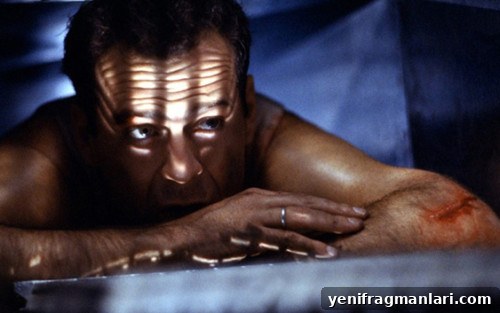
Die Hard opens with NYPD officer John McClane (Bruce Willis) flying to Los Angeles to visit his estranged wife and their children, who have moved west for her job. Holly Gennaro McClane (Bonnie Bedelia) is established as a successful career woman who made a bold move for her own professional life—a detail that immediately stood out to me.
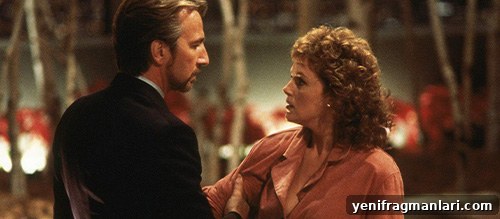
Holly is a striking presence: powerful, polished in her 80s power suits and confident in the office. She’s not defined by her marriage and, crucially, she doesn’t come across as a damsel waiting for rescue. When John suggests her move to LA changed their marriage, she shoots back that it changed his idea of what a marriage should be. That exchange highlighted a modern, independent woman who clearly has agency in her life and career.
Holly’s scenes gave me a jolt of admiration—especially when she stands up to the film’s antagonist with composed sass. When Hans Gruber (Alan Rickman) asks, “What idiot put you in charge?” she coolly answers, “You, when you murdered my boss.” It’s a sharp moment that reveals both her intelligence and moral backbone.
It’s worth pausing to note how refreshing it is that a mainstream 1988 action movie presents a female character who is convincing as an authority figure. Seeing that level of competence and independence in Holly made me reflect—sometimes with disappointment—on how many contemporary films struggle to match that depth.
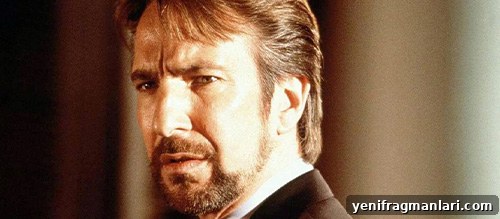
Then there’s Alan Rickman as Hans Gruber, who immediately impresses. Rickman brings charm, wit and a cold intelligence to the role—qualities that make him both dangerous and strangely magnetic. Watching him interact with Bruce Willis’s McClane is a highlight, especially in their first major confrontation where Gruber’s facade and McClane’s grit clash. According to behind-the-scenes discussions I’ve seen, some of the tension in those scenes felt very organic, the kind of on-set moments that elevate an otherwise predictable exchange into something electrifying.
One of the most satisfying aspects of that encounter is how it reframes McClane. He might at first appear to be the grumpy, out-of-place cop at an office party, but in that scene he proves he’s sharp, resourceful and far more capable than his antagonists—or some viewers—expect.
I’m not trying to reignite the “Is Die Hard a Christmas movie?” argument—others have debated that exhaustively. My take is simple: Die Hard is not a traditional Christmas movie. It’s set during the holidays, and the seasonal backdrop influences the mood and visuals, but the film’s core is an action thriller about a husband trying to reconcile with his wife while contending with violent criminals. The Christmas elements—carols, decorations, and the odd holiday joke—accent the setting; they don’t define the movie’s emotional center.
That said, the film has become a holiday ritual for many people who prefer something grittier than the usual, sentiment-heavy Christmas fare. For those who tire of overly saccharine seasonal films, Die Hard offers a different kind of tradition: festive trimmings coupled with adrenaline and dark humor. It’s similar to how some people choose an unconventional title—like Trainspotting—on holidays that don’t match the film’s tone.
So will I watch Die Hard every Christmas from now on? Yes. Not because it’s a Christmas story in the classic sense, but because it blends holiday atmosphere with sharp characters, memorable dialogue and intense set pieces. It’s one of those films that rewards repeat viewing: the performances (notably Rickman and Willis), the confident supporting characters such as Holly, and the tight pacing combine to create a surprisingly layered action movie that still feels fresh decades later.
Die Hard may be set at Christmas, but its lasting appeal is broader: it’s an action movie with heart, wit and a female character who stands confidently on her own. For anyone who hasn’t seen it yet, it’s worth watching—if only to understand why it continues to spark conversation and loyalty so many years after its release.