
Hong Kong Cinema: Identity, the Handover, and the City’s Stories
This article was written exclusively for The Film Magazine by James Southcott.
At the southern edge of China, the compact territory of Hong Kong has produced some of the most inventive and influential cinema of the past half-century. Its filmmakers have created a rich, distinct film culture that reflects the city’s energy, contradictions, and deep social concerns.
Colonial history and the filmic imagination
Hong Kong’s cinema cannot be separated from its complex history. After more than a century of British rule that began in 1841, sovereignty was returned to China on July 1, 1997. That transition — a political, cultural and psychological rupture — left many residents with an ongoing identity question that filmmakers have wrestled with on screen. Rather than serving merely as a glossy backdrop, Hong Kong’s streets, alleys and high-rises function as a canvas for films that probe belonging, displacement and the uneasy interaction of East and West.
Film as a mirror of anxiety and identity
Directors such as Wong Kar-wai, John Woo, Tsui Hark and Andrew Lau have used genre and style to reflect the city’s internal tensions. Whether through kinetic action, melancholic romance or urban noir, these filmmakers examine how colonial legacies and the pressures of reintegration with China shape personal and public life. Cinema in Hong Kong has become a forum to explore fears about political interference, the erosion of freedoms, and the competing moral frameworks that now coexist in the city.
Crime, corruption and political allegory
Western coverage has often highlighted crime narratives from Hong Kong, and its own industry has repeatedly returned to stories of undercover cops, Triad networks and institutional corruption. These narratives are rarely just about criminality; they serve as allegories for broader anxieties — concerns about infiltration, loyalty and hidden power dynamics. In many films, the battle between criminal syndicates and law enforcement can be read as a metaphor for competing authorities and cultural influences vying for the soul of the city.
“Infernal Affairs”: duality and the handover
Andrew Lau and Alan Mak’s Infernal Affairs (2002) is one of Hong Kong’s best-known exports, later remade by Martin Scorsese as The Departed. The film stages a landscape of doubled identities and shifting loyalties: undercover officers and moles who embody the city’s cultural and political duality. The antagonism between the Triads and the police evokes a larger struggle for influence between Chinese authority and the lingering traces of British colonial order. Characters are designed to mirror that tension — outward appearances, professions and mannerisms signal different cultural alignments and personal compromises.
For example, Andy Lau’s character projects a polished, Western-influenced image, while his counterpart’s descent into a dishevelled, gang-affiliated guise suggests the destabilizing pressures of competing allegiances. Even the film’s release history became political: a different ending shown to mainland Chinese audiences — in which the undercover agent is discovered and arrested — illustrates how cinematic narratives were adapted to align with mainland sensibilities and regulatory expectations. That alteration highlights how the same story can be reframed depending on the prevailing power structures.
Wong Kar-wai: loneliness in a crowded city
In contrast to crime sagas, Wong Kar-wai’s films — including Chungking Express and In the Mood for Love — meditate on urban isolation and emotional displacement. His characters live in cramped apartments and fractured relationships, a striking irony in one of the world’s most densely populated cities. That solitude becomes a visual and thematic shorthand for Hong Kong’s political and cultural ambivalence: geographically close to mainland China yet distant in customs, memory and everyday practices.
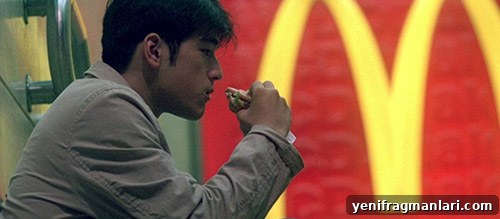
Chungking Express, released in 1994, uses motifs of time and expiration to underscore anxieties about the approaching handover. In one subplot, a character buys canned pineapples and sets an emotional deadline: if reconciliation does not occur before the cans expire, he will move on. The tins act as a simple but powerful allegory for an impending deadline — a countdown toward an uncertain future. Lines such as “At the closest point of our intimacy we were just one centimetre apart from each other. I knew nothing about her” capture the paradox of physical closeness and cultural distance between Hong Kong and mainland China.
Continuing relevance and the future of Hong Kong cinema
Hong Kong’s cinematic history has helped shape the city’s identity and global image. Its films have not only entertained but also recorded social moods and political fears, offering subtle and overt critiques of power and belonging. In recent years, the region’s political landscape has continued to evolve, and its film industry faces new challenges and fresh opportunities. What remains clear is that Hong Kong cinema, with its diverse genres and voices, will continue to serve as a crucial forum for exploring identity, memory, and the pressures of change.
Written by James Southcott
You can support James Southcott in the following places:
Twitter – @James_Southcott