Se7en (1995)
Director: David Fincher
Screenwriter: Andrew Kevin Walker
Starring: Morgan Freeman, Brad Pitt, Kevin Spacey, Gwyneth Paltrow
When Se7en arrived in 1995 it quickly became a benchmark for modern crime thrillers and a defining film in David Fincher’s career. Combining a tightly controlled atmosphere, a stark visual palette, and a script focused on the psychology of evil, the movie remains influential in the serial-killer subgenre. The screenplay by Andrew Kevin Walker frames a methodical, moral puzzle built around the seven deadly sins, while the cast—led by Morgan Freeman and Brad Pitt, with chilling support from Kevin Spacey and Gwyneth Paltrow—delivers performances that still resonate decades later.
Warning: Major Spoilers
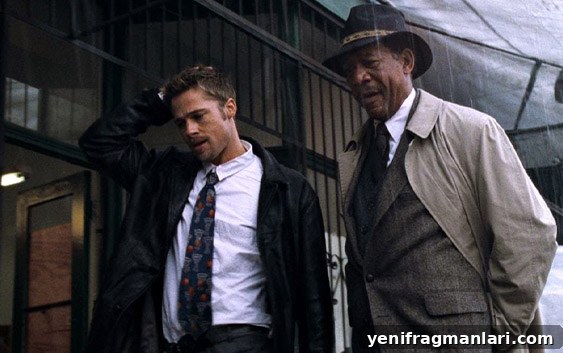
The plot follows veteran detective William Somerset (Morgan Freeman), on the verge of retirement, who is partnered with the impulsive and idealistic David Mills (Brad Pitt). Together they investigate a series of grotesque murders, each staged to represent one of the seven deadly sins. The killer, identifying himself as John Doe (Kevin Spacey), stages each crime as a perverse moral lesson. After the majority of the killings, John Doe surrenders and offers to lead the detectives to the remaining victims, setting the stage for a devastating final act. The film’s climax reveals Doe has murdered Mills’ wife, Tracy (Gwyneth Paltrow), as an expression of envy and manipulates events to provoke Mills into committing the sin of wrath, bringing the case and the characters to a ruinous moral conclusion.
What elevates Se7en beyond a procedural is the way it uses setting, tone and character to build dread. Fincher’s direction favors low, oppressive lighting, muted color grading and meticulous production design, producing a cityscape that feels perpetually rain-soaked and morally decayed. The cinematography and editing emphasize silence and small details—staged corpses, handwritten notes, cramped interiors—allowing suspense to grow organically rather than relying on overt shocks. Yet the film also contains one of its most memorable and effective jump scares, a sequence that juxtaposes long, tense buildup with an unexpected, visceral moment that still startles on repeat viewings.
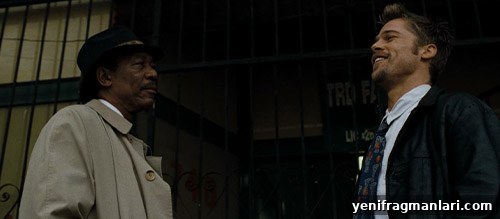
Central to the film’s success is the evolving relationship between Somerset and Mills. Their bond—at first a professional necessity that turns into mutual respect—provides the emotional core that keeps the story grounded. Somerset’s weary wisdom contrasts with Mills’ passionate impatience; together they form a study in different responses to violence and justice. The revelation of Tracy’s pregnancy and the subsequent emotional stakes convert a crime investigation into a personal tragedy, making the climax feel inevitable and tragically earned. Kevin Spacey’s portrayal of John Doe adds another layer: calm, controlling, and disturbingly self-righteous, he embodies a villain who believes his acts are pedagogical rather than senseless.
Each murder scene is crafted to reveal character and theme as much as shock value. The grotesque tableaux are not gratuitous; they function as statements about the way each sin corrodes a life. The film repeatedly forces the audience to confront uncomfortable questions: how culpable are victims of their own vice, and can orchestrated punishment ever be justified? These thematic concerns give the movie depth, prompting viewers to reflect on morality beyond the immediate thrills.
Although the film’s awards recognition at the time was limited—receiving only one Oscar and one BAFTA nomination in 1995—its cultural and cinematic impact has grown steadily. Se7en remains a frequently cited influence for filmmakers working in darkness, mood and psychological crime drama. Its combination of precise storytelling, memorable performances and uncompromising tone ensures it remains relevant and rewarding on repeated viewings.
After twenty-five years, Se7en still holds up: a masterclass in tension, character-driven drama and moral ambiguity. Its legacy endures not because of spectacle, but because Fincher and his collaborators trusted the fundamentals of filmmaking—direction, acting, design and writing—to create something unsettling and unforgettable.
20/24
Recommended for you: David Fincher Movies Ranked