Rocks (2020)
Director: Sarah Gavron
Screenwriters: Theresa Ikoko, Claire Wilson
Starring: Bukky Bakray, Kosar Ali, D’Angelou Osei Kissiedu, Shaneigha-Monik Greyson, Sarah Niles
British cinema often gravitates toward period drama, literary adaptations, and war stories—productions where received accents, stiff-upper-lip stoicism, and traditional images of Britain dominate. While those films frequently attract awards attention, they can obscure the everyday realities of many communities across the country. Rocks, directed by Sarah Gavron, resists that narrow view. The film presents an authentic, contemporary portrait of teenage life in East London, crafted through collaboration with the young people whose experiences inform the story.
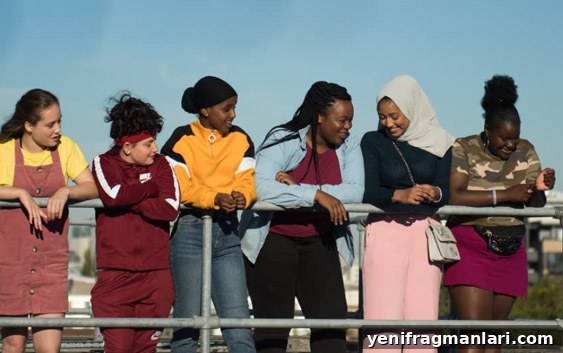
In her striking debut performance, Bukky Bakray plays Olushola—known to everyone as Rocks—a fifteen-year-old whose maturity and resilience belie her age. Rocks lives in a tower-block estate with her mother and younger brother, Emmanuel (played by D’Angelou Osei Kissiedu). She is part of a tight-knit group of friends at school, a collective of girls who support one another fiercely. Small details—like a poster in Rocks’ room that reads “Real Queens fix each other’s crowns”—give the film an intimate, lived-in texture.
The screenplay, conceived and written with Theresa Ikoko and Claire Wilson, was developed through collaborative workshops in schools and youth centers. Because many of the young cast contributed to the film from its earliest stages, the performances feel grounded and immediate: these are teenagers you recognize from school, the street, and the bus. The ensemble reflects London’s diversity and the ambition of young women growing up in the city, and the film benefits from an unforced, improvisational energy that keeps its tone honest and spontaneous.
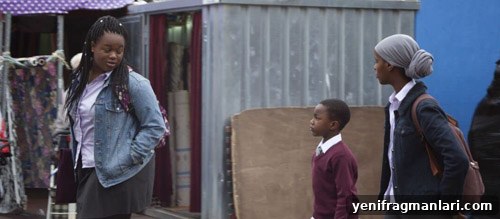
The story begins when Rocks returns home to find her mother missing. Responsibility for Emmanuel and for keeping their home falls squarely onto her shoulders. Accustomed to stepping up, Rocks does everything she can to sustain a sense of normalcy: she borrows couches, sleeps in friends’ houses, takes low-paid shifts at a local salon doing makeup, and shields Emmanuel from the chaos. But practical realities—bills, dwindling cash, and the attention of social services—escalate quickly. Desperate to postpone intervention and ashamed to reveal the full truth, Rocks avoids asking for help. As pressures mount, her school life frays and the friendships that once steadied her begin to strain.
Rather than sensationalizing poverty or sliding into “poverty porn,” Rocks treats its subjects with warmth and respect. The film confronts themes of austerity, mental health, and instability with sensitivity, but it never reduces characters to their hardships. Gavron and the writers allow space for humor, tenderness, and joy—moments that balance the film’s darker currents and underscore the resilience of its young protagonists. The result is a coming-of-age story that feels bright, hopeful, and deeply humane.
Central to the film’s emotional power is the relationship between Rocks and her closest friend Sumaya, played by Kosar Ali. Their bond is depicted with palpable affection and realism: it’s loud, messy, protective, and life-affirming. Rocks resists common cinematic clichés about female relationships; instead of portraying girls as catty or hypersexualized, the film celebrates their solidarity and mutual care. Surrounded by friends who offer practical and emotional support, Rocks finds moments of empowerment even amid crisis.
Cinematographer Hélène Louvart captures the film with a grounded, documentary-like eye. Her naturalistic palette and fluid camera work lend authenticity to the streets, schools, and high-rise blocks of London, presenting a cityscape that isn’t often shown in mainstream prestige cinema. Louvart’s visuals complement Gavron’s direction, emphasizing the textures of daily life and the small, telling details that build character and context.
Rocks stands out as a collaborative achievement: a film shaped by its young cast and community contributors, and guided by filmmakers intent on honoring their voices. It invites a new generation of British storytellers to the fore and offers an urgent corrective to narrow representations of the country. The London on screen here is diverse, vibrant, and alive with talent—particularly among its young women who deserve to tell their own stories.
Rating: 23/24