Hannibal (2001)
Director: Ridley Scott
Screenwriters: David Mamet, Steven Zaillian
Starring: Anthony Hopkins, Julianne Moore, Gary Oldman, Ray Liotta, Frankie Faison, Giancarlo Giannini, Francesca Neri, Zeljko Ivanek, Hazelle Goodman
Hannibal is a film that frequently frustrates. Tasked with following up the extraordinary cultural and critical success of The Silence of the Lambs a decade earlier, this sequel adapts Thomas Harris’s controversial novel with a blockbuster director, high-profile screenwriters and a cast of major stars. The result is ambitious and visually striking, but often uneven: while individual choices and performances contain real merit, the film struggles to balance spectacle, psychological complexity and the moral weight of its subject.
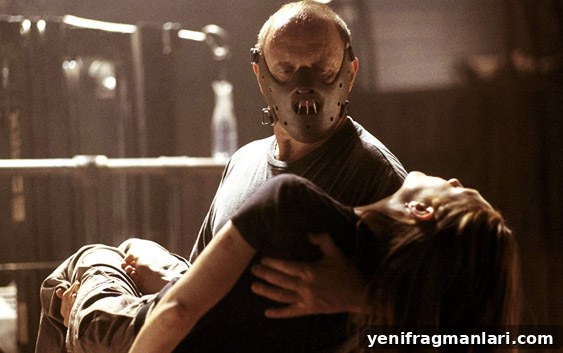
Set ten years after Clarice Starling’s (Julianne Moore) involvement with imprisoned cannibal Dr. Hannibal Lecter (Anthony Hopkins), the story finds Starling’s career under pressure after a high-profile DEA raid goes disastrously wrong. At the same time, Lecter has been living in hiding in Florence, Italy. He is drawn back into the spotlight when Mason Verger (Gary Oldman), a wealthy victim of Lecter’s past cruelty, manipulates events to restart the manhunt and arrange his own revenge.
One of The Silence of the Lambs’s most powerful techniques was omission: it often suggested horror through implication rather than explicit depiction, which left a lingering psychological impact. Ridley Scott’s Hannibal takes the opposite approach in several key sequences. Flashbacks and explicit depictions of violence—scenes that Harris’s novel describes in lurid detail—are shown directly on screen. This more literal approach removes much of the ambiguity and mystery that made the earlier film so unsettling, replacing slow-building dread with immediate, visceral shocks.
The film is consistently gruesome. Graphic imagery—slit throats, peeled faces, exposed organs and grotesque displays—dominates the narrative. While the material naturally revolves around a cannibalistic serial killer, the constant presentation of such images reduces suspense over time and risks desensitising the viewer. The pacing and emphasis shift the film away from the slow-burn psychological thriller of its predecessor toward something closer to splatter cinema, albeit one dressed in high production values.
Despite that, Hannibal is not without its strengths. The film’s darkly comic moments—most of them centred on Gary Oldman’s Mason Verger—offer a counterpoint to the brutality. Oldman, beneath heavy prosthetics, crafts a memorably malevolent and entitled figure, balancing grotesque physicality with a venomous, privileged charm. His scenes provide some of the film’s sharpest texture and often steal the show.
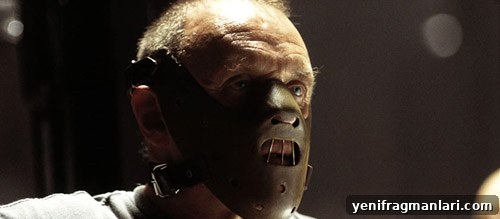
Julianne Moore gives a committed performance as Clarice, embodying the character’s vulnerability and determination while navigating bureaucratic hostility and public scrutiny. Comparisons to Jodie Foster’s original portrayal are inevitable; Moore’s interpretation is different, and some viewers will prefer the nuance Foster brought to the role. Anthony Hopkins remains captivating as Lecter—his intellect, charm and menace are still indelible—but in this film the character sometimes tips into an almost cartoonish, larger-than-life figure, complete with an offbeat catchphrase that lessens the menace in places.
Visually and sonically, Hannibal demonstrates its budget. With an estimated $87 million production budget, the film benefits from lavish production design by Norris Spencer, elegant and varied locations, polished cinematography by John Mathieson and a bold score from Hans Zimmer. One standout creative choice is the original aria “Vide Cor Meum,” composed by Zimmer with Patrick Cassidy for a key opera sequence; those few minutes of music provide a notably tranquil and haunting interlude amid the film’s macabre excesses.
Where The Silence of the Lambs thrived on a trio of complementary elements—the director’s restraint, an actress’s interior performance, and Hopkins’s precise menace—Hannibal lacks that same alchemy. With different creative forces in place, the sequel rarely rises above competent spectacle and surface-level thrills. It is watchable and occasionally brilliant in isolated moments, but the film’s relentless explicitness and tonal inconsistencies prevent it from achieving the same psychological depth as its predecessor.
Ultimately, Hannibal can be seen as a bold but flawed continuation of Clarice Starling and Hannibal Lecter’s story: visually sumptuous and frequently shocking, with strong performances that are sometimes outweighed by an appetite for spectacle. For those interested in a more measured exploration of the characters and themes, it would take more than a decade for another adaptation to approach the material with greater subtlety.
11/24
Recommended for you: Hannibal Movies Ranked