
This article was written exclusively for The Film Magazine by Jack Cameron.
The Mauritanian (2021)
Director: Kevin Macdonald
Screenwriters: Michael Bronner, Rory Haines, Sohrab Noshirvani
Starring: Tahar Rahim, Jodie Foster, Benedict Cumberbatch, Shailene Woodley, Zachary Levi
From its opening moments, The Mauritanian signals confidence and care. Director Kevin Macdonald, returning to narrative drama after years of documentary filmmaking, steers this true-story legal drama with steady assurance. The cast—anchored by Tahar Rahim, Jodie Foster and Benedict Cumberbatch—delivers performances that elevate the film beyond straightforward courtroom mechanics. Cumberbatch’s measured restraint and Foster’s compelling presence balance Rahim’s quietly magnetic turn, confirming his place among today’s most powerful and nuanced performers.
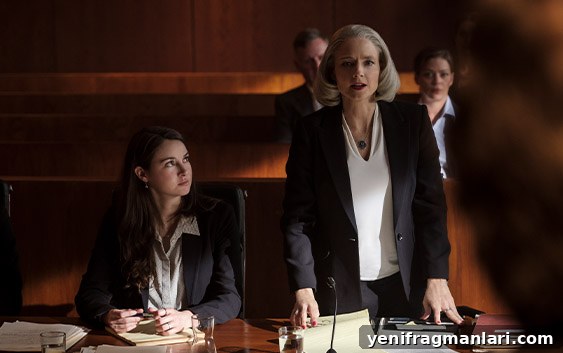
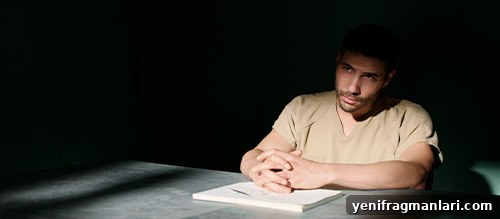
Adapted from the real-life experiences of Mohamedou Ould Slahi (portrayed by Rahim), the film opens shortly after the 9/11 attacks and quickly follows Slahi’s arrest and transfer to Guantánamo Bay. Years later, the narrative finds him confined to a small cell as potential defense attorney Nancy Hollander (Foster) enters his life. Accused of aiding the 9/11 plot, Slahi faces a government case that is thin on hard evidence, prompting a push for judicial review and a formal trial. On the other side of the legal divide stands Stuart Couch (Cumberbatch), a military prosecutor haunted by a personal connection to the attacks and driven to secure accountability.
At the heart of the movie is a clash of principles: Hollander’s insistence on the rule of law and the necessity of a lawful trial versus Couch’s conviction that he already knows the truth and must obtain justice. The tension extends beyond the courtroom to the moral and political landscape surrounding Guantánamo Bay, where legal gray zones and extraordinary measures threaten to override established protections. Though Slahi is nominally the defendant, the film makes it clear he is entangled in a far wider struggle about how democracies treat suspected enemies and how truth can be shaped, withheld, or manufactured.
Rahim’s performance is the film’s emotional anchor. Confined to a narrow physical space, he creates a rich, inward life through subtle gestures and expressive restraint. His voice carries softness even when recounting horror, and the smallest facial movements reveal layers of trauma and resilience. That restrained, humane approach allows the audience to see Slahi not as a caricature or solely as an emblem of controversy, but as a complex human being caught between suspicion and injustice.
As the plot unfolds, Macdonald shifts the film’s focus from the question of guilt to the wider injustice of unlawful detention and torture. The discovery that Slahi was treated as a coerced source of information—pressured and abused to produce confessions—reorients the story into an indictment of methods used under the guise of national security. This pivot reduces the early dramatic uncertainty about culpability but intentionally reframes the stakes: the film wants the viewer to confront institutional wrongdoing and the subjective nature of so-called “truth” extracted under duress.
Macdonald stages the torture sequences with a cinematic tone that borrows from horror, forcing the audience into acute discomfort. That deliberate choice creates a tonal shift: The Mauritanian moves from a tense legal procedural into a more morally unsettling drama, where the procedural apparatus itself becomes the antagonist. The film’s willingness to linger on these brutalities without sensationalizing them underscores its moral clarity and emotional force.
Supporting performances are uniformly strong. Jodie Foster’s Nancy Hollander is principled and tenacious, a lawyer whose commitment to due process is both legal and ethical. Benedict Cumberbatch’s Stuart Couch inhabits a conflicted role—an officer trying to reconcile duty with doubt—and his portrayal highlights the human cost of political pressure. Together, the leads convey the film’s central dilemma: how institutions tasked with protecting citizens can also become instruments of injustice when accountability is suspended.
Technically, the film is polished: efficient editing, restrained cinematography and a screenplay that tightens the historical record into dramatic shape without glossing over complexity. The Mauritanian does not aspire to melodrama; instead, its power lies in restraint and in letting its characters’ moral reckonings unfold with gravity.
Ultimately, The Mauritanian is a rigorous and affecting film that refuses easy answers. It is less a conventional thriller and more a probing examination of law, power and human dignity. By centering Mohamedou Ould Slahi’s experience and trusting its actors to carry the emotional load, the movie introduces viewers to a remarkable, troubled figure and forces a long overdue conversation about justice in an age of fear.
18/24
Written by Jack Cameron
You can support Jack Cameron in the following places:
Twitter – @JackCam86118967
Contently – Jack Cameron