
Peter Pan & Wendy (2023)
Director: David Lowery
Screenwriters: David Lowery, Toby Halbrooks
Starring: Alexander Molony, Ever Anderson, Jude Law, Alyssa Wapanatâhk, Jim Gaffigan, Joshua Pickering, Jacobi Jupe, Yara Shahidi, Molly Parker, Alan Tudyk
Seventy years after Walt Disney’s animated musical brought J.M. Barrie’s Neverland to generations of viewers, David Lowery returns to reimagine the classic tale with a fresh live-action vision. Following his well-received work on Pete’s Dragon, Lowery updates the material with contemporary sensibilities while preserving the sense of wonder that has defined Peter Pan for decades. This adaptation balances reverence for the original with new thematic emphasis and visual choices that aim to engage modern families and critics alike.
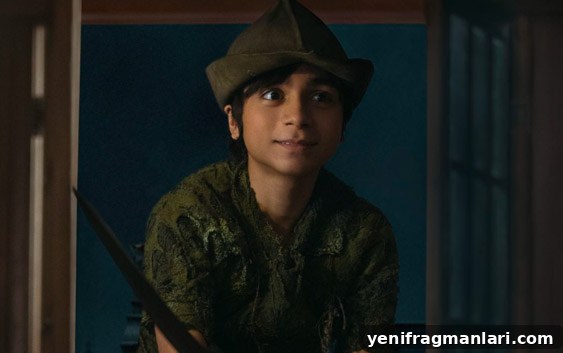
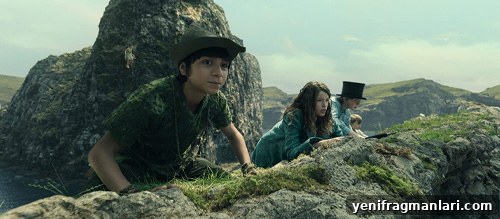
Ever Anderson plays Wendy Moira Angela Darling, an imaginative Edwardian pre-teen facing the anxiety of growing up as she prepares to leave for boarding school. Worried about losing her childhood and the playful bond with her younger brothers John (Joshua Pickering) and Michael (Jacobi Jupe), Wendy’s world shifts the night Peter Pan (Alexander Molony) arrives at the nursery window. He whisks the siblings off to Neverland, where they join the Lost Boys and contend with Captain Hook (Jude Law) and his band of pirates.
Lowery’s cinema frequently explores captivity and freedom, both literal and metaphorical, and this film continues that thread. The central question—whether imagination must be surrendered to adulthood—frames the narrative from the first scene, when Mrs. Darling (Molly Parker) gently advises Wendy about the responsibilities that come with growing up. That tension between wonder and responsibility drives Wendy’s emotional arc and anchors the film’s thematic core.
Visually, the film often leans on simple but effective ideas. In the nursery, objects buoyantly float alongside Peter, emphasizing the magical rules of his presence and creating a distinct visual language for flight. Alexander Molony’s Peter moves with a surety that makes his aerial stunts feel natural rather than mechanically forced, and the film captures the exhilaration of the Darling children’s first flights. Although some visual effects are imperfect, the sequences generally convey the liberating joy of soaring above the ordinary world.
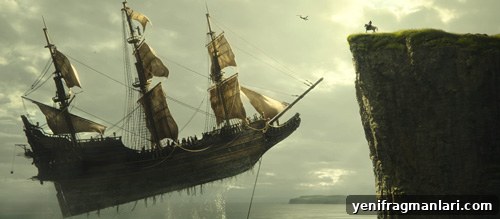
Jude Law’s Captain Hook is reinterpreted as a neurotic, embittered figure—less the suave gentleman pirate of some versions and more a man unnerved by age and loss. His vanity and desperation are shown through small details, from attempts to hide greying hair to the menacing meat hook at his arm. Lowery emphasizes a different emotional resonance between Hook and Peter here, framing Hook as a tragic antagonist whose cruelty stems from having lost himself. This approach shifts the rivalry away from the simple child-versus-adult trope and toward a darker reflection on the cost of growing up.
Performance highlights include Jude Law’s theatrical relish in the role of Hook and Ever Anderson’s nuanced portrayal of Wendy’s blend of bravery and doubt. Alexander Molony brings playful confidence to Peter, capturing the character’s boundless energy and mischief. Some supporting characters, however—the pirates, Lost Boys and the Neverland natives—receive less development than the leads, and Wendy’s brothers have relatively few lines, which limits the emotional range of the ensemble.
Fans of the story’s darker comedic elements will appreciate the crocodile sequence, which, though brief, looks impressive at scale and delivers a lively, big-screen version of the classic animated chase. The film stages the slapstick encounter with a sense of spectacle, letting practical and digital effects combine to thrilling effect.
On the musical front, Lowery’s composer Daniel Hart opts for an original score that nods sparingly to the 1953 film. Those hoping for frequent callbacks to the older songs may be disappointed; familiar motifs, such as the famous “You Can Fly” refrain, arrive subtly and are more pronounced during the credits. The film occasionally hints at musical moments without fully committing to large-scale song sequences, preferring to keep the emotional and narrative momentum in spoken drama and action.
Young viewers are likely to enjoy the film’s swashbuckling action and child-friendly thrills, though some scenes could benefit from tighter choreography and clearer editing to maximize punch and clarity. At times, the camera favors wide choreography shots that capture the chaos of brawls but blur the emotional focus. Still, the production’s ambition and charm keep the adventure engaging for family audiences.
Peter Pan & Wendy revisits timeless themes of imagination, family bonds, and the bittersweet nature of growing up. While other adaptations have explored certain elements with greater depth or originality, this version offers meaningful reinterpretations of key characters and fresh visual ideas. It isn’t David Lowery’s most daring work, but it succeeds as a memorable fantasy adventure that can enchant both parents and children.
Score: 16/24