
Society of the Snow / La Sociedad de la Nieve (2023)
Director: J.A. Bayona
Screenwriters: J.A. Bayona, Bernat Vilaplana, Jaime Marques, Nicolás Casariego
Starring: Enzo Vogrincic, Agustín Pardella, Matías Recalt, Esteban Bigliardi, Diego Vigezzi, Fernando Contingiani
“This is a place where life is impossible. Out here, we are an anomaly.”
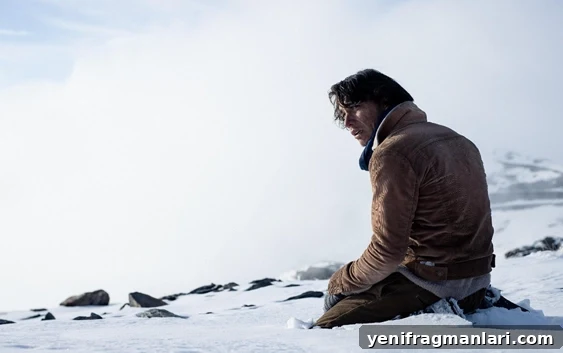
On October 13, 1972, a plane carrying 45 passengers crashed into the Andes. After 72 brutal, unimaginable days, a number of those aboard survived. Nominated for Best International Feature Film at the 2024 Academy Awards, Society of the Snow recounts that harrowing episode, exploring endurance, moral ambiguity, and how extreme circumstances reshape human bonds.
The tragedy of Flight 571 has been dramatized before—most famously in Frank Marshall’s 1993 film Alive and echoed in contemporary works such as the television series Yellowjackets. J.A. Bayona’s film, however, takes a distinct approach. It witnesses the mountain’s horrors without lingering on shock value, choosing instead to honor both victims and survivors. The story emphasizes how the remaining passengers had to redefine what it meant to be human, forming new rules and relationships simply to survive one more day.
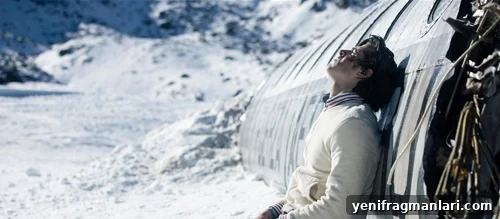
Although the film does depict real and disturbing realities—cannibalism, frostbite, disfigurement, and the wrecked fuselage—its tone remains primarily dramatic rather than sensational. Practical effects, makeup, and costuming convey injury and decay with realism and restraint, avoiding gratuitous spectacle. Bayona and his team worked closely with survivors and families, crafting scenes that respect lived experience rather than exploit it. The film centers on character, emotion, and the long-lasting bonds that formed among the young men, rather than turning the survivors into simplistic heroes or villains.
The narrative is anchored by Numa Turcatti (Enzo Vogrincic), one of the longest-lasting survivors, whose voiceover gives the film a sobering and reflective frame. Through Numa’s perspective, we glimpse the group’s internal conflicts and philosophical struggles as well as the more immediate terrors of survival. The voiceover balances exposition with introspection, allowing the film to probe ethical questions—about sacrifice, faith, and communal duty—while keeping us close to the characters’ emotional states. In one poignant exchange, Numa confesses how deeply he wants to cry, laugh, and dance; a fellow survivor’s reassurance—“you can and you will”—signals how they sustain one another.
The term “Society of the Snow” reportedly reflects how the survivors described themselves: a makeshift community where equality and cooperation mattered above all. The film reflects that ethos—portraying divergent survival strategies and clashes of personality, but ultimately emphasizing reconciliation and mutual understanding. A pivotal scene centers on a debate about how to face imminent starvation; individual choices provoke discomfort and moral questioning, but the group continually strives to keep one another alive and to reconcile personal beliefs with brutal necessity.
Bayona’s film is deliberate in pace. At 144 minutes, it asks viewers to remain with the survivors through wind, cold, and dwindling hope; the length is purposeful, allowing scenes of grief and quiet camaraderie to breathe. The first quarter-hour presents a sunlit, carefree life before the crash, creating a stark contrast with the frigid ordeal to come. The film compresses some of the later survival days, reflecting how the daily struggle became a grim routine. Even amid suffering, Bayona inserts moments of joy—small, fragile celebrations of life that restore balance and prevent the story from becoming relentlessly bleak.
Bayona adapted the film from Pablo Vierci’s book, whose author knew many of the passengers personally. The director and cast conducted extensive interviews with survivors and families to ensure authenticity; this is the first adaptation in which all survivors and victims’ relatives agreed to the use of real names. One haunting moment features survivor Carlitos Páez playing his own father, a testament to the film’s fidelity to memory and personal truth.
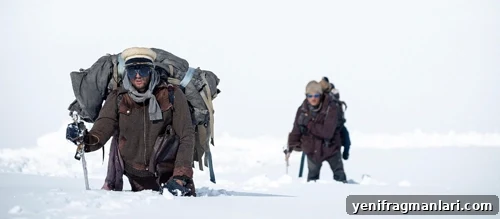
Rather than focus narrowly on a single protagonist, as earlier adaptations did, Society of the Snow attempts to portray the group dynamic across many individuals. That breadth occasionally makes distinguishing characters challenging, and some character exposition arrives through voiceover or direct conversation. Still, the mostly unknown, native Spanish-speaking cast delivers raw, affecting performances that make the ensemble gradually feel familiar and real.
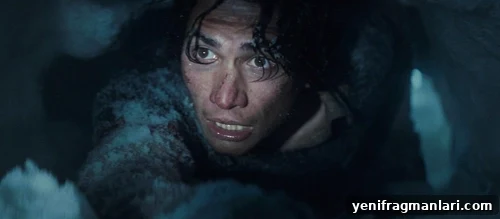
Technically, the film is assured. The crash sequence—arriving within the first 20 minutes—is viscerally executed and sets the tone for the drama that follows. Sound design, cinematography, and small visual details convey panic, prayer, and the crushing cold of life at 11,500 feet. Bayona’s restraint—avoiding manufactured thrills and melodrama—makes the film’s emotional punches more powerful.
Faith and the question of divine forgiveness recur as major themes. Some characters wrestle with whether God will pardon them for the measures they took to survive; others question whether allowing death would have been an act of faith. A striking idea presented in the film is that the survivors create their own form of divinity: faith in one another. This communal belief, nurtured through sacrifice and mutual care, becomes the source of resilience and hope.
Society of the Snow is an essential awards-season film: a deeply human portrait of endurance, ethics, and solidarity in the face of almost unimaginable odds. It pairs harrowing realism with quiet dignity, asking how people can find light—and faith—in one another amid the bleakest circumstances.
Score: 20/24
Rating: 4 out of 5.
By Kyra Lieberman
Support the author: Kyra Lieberman — Portfolio, Blog, X (Twitter), Instagram