
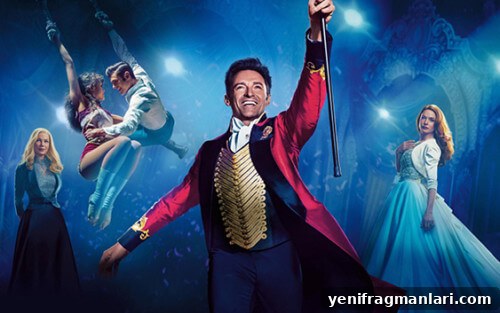
Review: The Greatest Showman — A Historian’s Critique of P.T. Barnum and the Film’s Inaccuracies
I didn’t think I could hate anything as much as I hated Death Note, but here we are. Tonight I’m writing about a different kind of film: The Greatest Showman. This is a review from a historian’s perspective, focused on historical accuracy, ethical concerns, and the film’s artistic choices.
Normally I watch a movie, take notes, and craft a careful review. This time I’m writing with raw frustration. I’m an historian who studies public displays of the human body across time — often nineteenth-century material culture and exhibition practices. For my recent dissertation I examined wax figures and anatomical displays, which meant I already knew a fair amount about P.T. Barnum and the world of spectacle before I walked into this film.
When The Greatest Showman was announced I was intrigued. The aesthetic looked fun, Zendaya was cast, and the trailer promised a colorful musical centered on a nineteenth-century showman. But when the movie released, I opted out after learning that it largely glorified Barnum and played fast and loose with history. After some prodding from family, I finally watched it — and I was not impressed.
It takes very little research to discover that P.T. Barnum was far from a noble figure. He operated as a showman and promoter whose methods frequently exploited vulnerable people. That reality complicates any attempt to celebrate him without addressing the harm embedded in his business. The filmmakers elected instead to sanitize and romanticize Barnum, offering a morally convenient version that feels dangerously misleading.
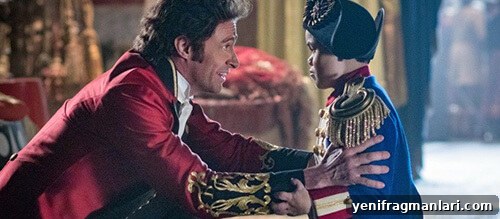
My primary objection is historical: why use the real name “P.T. Barnum” if the film refuses to engage honestly with his life and actions? Artistic license is valid, but Barnum’s actual history is strange and morally fraught enough that it didn’t require softening. In truth, Barnum’s career included exploitation of people with disabilities, sensationalism, and ethically questionable exhibitions. By whitewashing those elements, the film misses an opportunity to wrestle with the complexities of fame, exploitation, and public spectacle.
The film also mishandles the people presented as Barnum’s performers. The presence of historically identifiable figures — such as the conjoined twins Chang and Eng — is inconsistent and confusing. They appear visually but are not acknowledged within the story, and yet they are credited by name. Other figures are renamed or reimagined: the bearded woman becomes “Lettie Lutz” on screen instead of being presented as the historical Annie Jones, and Tom Thumb’s early child career—central to his real-life association with Barnum—is softened to fit a safer narrative. These choices dilute the historical context and avoid confronting how Barnum profited from young performers and those with visible differences.
That decision to “play it safe” matters. Sanitizing exploitative practices into a celebratory origin story risks normalizing or excusing them. Presenting Barnum as a visionary champion of inclusion, rather than as someone who capitalized on vulnerability, is a dangerous simplification—especially when audiences often treat popular films as authoritative narratives about the past.
Musically, the film relies on a handful of repetitive anthems that are played to exhaustion. The choreography and visuals distract many viewers, but beneath the glitz the score feels limited: the same themes repeat until they lose impact. Repetition becomes substitution, and spectacle takes the place of depth. As a piece of musical cinema, that’s a missed opportunity to use song to interrogate character and context more meaningfully.
The romantic subplot — the relationship between the female performer and her co-star — is another weak spot. The characters are underdeveloped and their chemistry feels manufactured. Two actors sharing a couple of scenes does not equal a convincing emotional arc, and the film’s insistence that they are deeply in love strains the viewer’s willingness to engage. The romantic thread often feels incidental to the spectacle, rather than an integrated part of a coherent story.
Toward the end the film gestures toward progressive values, suggesting Barnum was an advocate for equality. That claim is misleading. A responsible dramatization would acknowledge contradictions: a man who promoted inclusion on stage but also profited from and controlled the lives of his performers. Omitting those tensions flattens the historical figure into a simplistic hero.
I’m wary of a broader cultural trend where historical accuracy is sacrificed for feel-good narratives. Historical dramas and adaptations carry responsibility: many viewers take cinematic portrayals as a form of history. Shows like The Tudors offer stark examples of how entertaining fabrication can reshape public understanding. The Greatest Showman, with its flashy production and appealing aesthetic, falls into the same trap by prioritizing spectacle over nuance.
In short: The Greatest Showman is visually vibrant and musically catchy in places, but it is historically negligent and morally complacent. It romanticizes a figure whose real-life practices deserve scrutiny, softens the lived experiences of the performers it claims to uplift, and substitutes repetitive musical hooks for true storytelling depth. If you care about historical accuracy and ethical representation, this film is a disappointing, and sometimes dangerous, misrepresentation.
Don’t take the movie as gospel. Do your own research and consider how entertainment can both reflect and distort the past.