

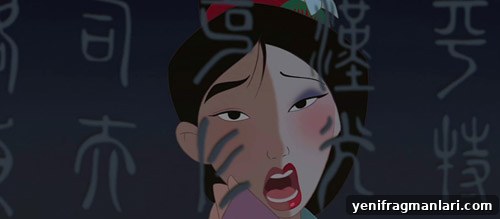
Mulan (1998)
Directors: Barry Cook, Tony Bancroft
Screenwriters: Rita Hsiao, Philip LaZebnik, Chris Sanders, Eugenia Bostwick-Singer, Raymond Singer
Starring: Ming-Na Wen, Eddie Murphy, BD Wong, Miguel Ferrer, James Hong, Harvey Fierstein, Pat Morita, George Takei
Disney’s animated Mulan (1998) remains one of the studio’s memorable entries from the late 1990s, blending a classic Chinese folktale with the distinctive production values of the Disney Renaissance era. While the film’s influence has been echoed across later projects and even inspired an ambitious live-action remake, the original animated feature holds up because of its visual style, strong vocal performances, and emotionally resonant musical moments.
At the heart of the story is Fa Mulan, voiced by Ming-Na Wen, who disguises herself as a man to take her aging father’s place in the army. Her journey to protect family honor and to prove her own worth drives a narrative that mixes comedy, pathos, and wartime stakes. Eddie Murphy provides comic energy as Mushu, the devoted and loud family guardian, and the ensemble cast includes solid turns from BD Wong as the conflicted Captain, James Hong as a scheming Imperial advisor, and Miguel Ferrer as the imposing invader Shan-Yu.
The film follows many of the familiar beats audiences expect from a Disney musical: an outsider protagonist, comic animal sidekicks, a cast of strong supporting characters, and memorable songs. These elements are handled with the polish and craft typical of Disney’s animated features, and they deliver the kind of emotional highs and catchy moments that helped define the studio’s Renaissance output. Songs such as “Reflection” and “I’ll Make a Man Out of You” remain standout numbers—“Reflection” for its heartfelt expression of identity and personal conflict, and “I’ll Make a Man Out of You” for its rousing energy and sing-along appeal.
Visually, Mulan uses influences drawn from Chinese art traditions. Many sequences evoke the look of watercolour paintings, with confident line work and a restrained but evocative color palette that sets the film apart from other Disney cartoons of the period. The animators also embraced technological innovation: to depict massed armies and large-scale action, new tools and techniques were employed to create convincing crowd movement and dynamic battle sequences without losing the hand-drawn aesthetic.
Jerry Goldsmith’s score complements the film’s visuals by incorporating East Asian musical touches into a sweeping orchestral framework. While some lyrical moments in the film can feel tied to Westernized notions of “honour” and cultural shorthand, the overall musical design supports the drama and helps elevate emotional scenes.
The performances are a major strength. Ming-Na Wen captures Mulan’s mix of vulnerability and determination, and the supporting cast provides texture and humor. Eddie Murphy’s Mushu, in particular, delivers comedic beats that land for many viewers, though some lines and character choices have been criticized for cultural insensitivity. Still, when the film leans into quieter, more human moments—such as the scene where the soldiers confess their fears and failures—those interactions underscore the film’s emotional core.
The antagonists are where the film is somewhat weaker. The Huns, led by Shan-Yu, are depicted as a menacing force, but their design and characterization have drawn criticism for veering into caricature. The villain’s screen time and development are limited compared with the richly drawn protagonist arc, a shortcoming that contemporary re-evaluations and later adaptations have aimed to address.
Importantly, Mulan is not merely a family-friendly musical: it’s also a war story that acknowledges the cost of conflict. The film presents the consequences of battle and the sacrifices the characters must make, giving the story a seriousness that sits alongside its lighter moments. This balance helps the film feel more complex than a straightforward animated comedy.
Looking back, Mulan may no longer be as revolutionary as it felt on release, but it remains a compelling example of Disney’s late-90s animation—visually distinct, performance-driven, and emotionally honest. For viewers revisiting the film or discovering it for the first time, Mulan offers strong leads, memorable songs, striking imagery, and a narrative about identity and courage that still resonates.
19/24