
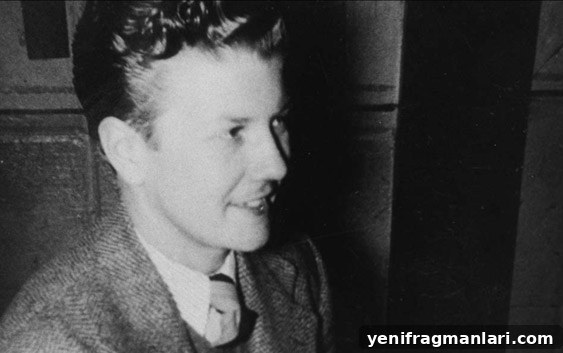
No Ordinary Man (2020)
Directors: Aisling Chin-Yee, Chase Joynt
Screenwriters: Aisling Chin-Yee, Amos Mac
No Ordinary Man confronts a persistent myth: that transgender people are somehow a recent cultural phenomenon. Through the life and legacy of jazz musician Billy Tipton, Aisling Chin-Yee and Chase Joynt craft a documentary that traces a lineage of trans experience while interrogating the media narratives that have historically surrounded it.
The film interweaves archival material, intimate testimony from Tipton’s family, contemporary reflections from trans people today, and a striking creative device: auditions by trans men vying to portray Tipton in a hypothetical biopic. These elements combine to create a layered portrait that is both a historical investigation and a present-day conversation about identity, visibility, and representation.
Billy Tipton’s story entered the public spotlight in 1989, when his death revealed that he had been assigned female at birth. The discovery prompted sensationalized press coverage that focused less on his artistry than on his body and private life. Tipton’s son, Billy Jr., and his wife, Kitty, have consistently maintained that they were unaware of Tipton’s anatomy during his life. No Ordinary Man examines how the press’s invasive response both exploited a grieving family and reduced a complex life to a scandal.
The documentary explicitly reviews the transphobic language and exploitation that dominated media accounts of the time. It also shows how the reaction exposed overlapping prejudices: journalists and commentators were invested not only in unmasking Tipton but in policing gender and sexuality, often implying that Kitty’s role as his partner meant she must be lesbian. These scenes are difficult to watch, yet they contextualize how public discourse has historically framed and mistreated transgender people.
At its heart, No Ordinary Man is an emotional journey for Billy Jr. As he meets contemporary trans men who view Tipton as an inspiration, we see how rare it has been to hear his father spoken of affirmatively. Those encounters are moving; they demonstrate how recognition and respect for trans lives can reshape family narratives and personal histories. The auditions, in which trans actors reflect and perform, add another dimension: they allow contemporary trans men to respond creatively to Tipton’s legacy and to offer their own interpretations rooted in lived experience.
That creative choice—framing the film around staged auditions—will divide viewers. Initially, the auditions provide an engaging entry point and a way to center trans performers in telling a trans story. Over time, however, the device can feel contrived, since the auditions exist solely for the documentary rather than for a real production. Some viewers may prefer a more direct documentary approach in which interviewees speak about their lives without performative framing.
Another limitation of the film is its uneven attention to Tipton’s musical career. Interviewees repeatedly express a desire to speak to Tipton about his music, yet the documentary does not always weave his recordings and performances throughout the narrative as fully as it could. Greater integration of Tipton’s music and more archival focus on his artistic accomplishments would have better balanced the film’s cultural and personal inquiries, reminding viewers that he was foremost a musician whose work deserves preservation and appreciation.
Despite these critiques, No Ordinary Man is an important contribution to cinematic representation of trans masculine lives. Cinema has historically underrepresented trans men, and this film does meaningful work by centering trans voices, connecting past and present, and exposing how sensationalism can overshadow humanity. It serves as both a corrective to historical neglect and a celebration of resilience, community, and creative response.
The documentary’s strengths lie in its sensitivity to family grief, its willingness to name harmful media practices, and its foregrounding of contemporary trans perspectives. While the film could have sharpened its focus on Tipton’s musical legacy and avoided occasional stylistic missteps, it nevertheless opens critical conversations about identity, memory, and the ethics of storytelling.
19/24