
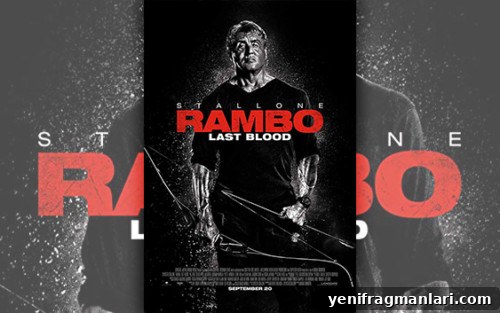

Rambo: Last Blood (2019)
Director: Adrian Grunberg
Screenwriters: Matt Cirulnick, Sylvester Stallone
Starring: Sylvester Stallone, Paz Vega, Sergio Peris-Mencheta, Adriana Barraza, Yvette Monreal
The earlier Rambo films often put the spotlight on people caught in geopolitical violence—veterans neglected at home, soldiers left behind, and civilians trapped in foreign conflicts. First Blood examined the treatment of Vietnam veterans returning to a country that misunderstood them. Rambo: First Blood Part II, Rambo III, and Rambo (the fourth installment) broadened that scope, showing the human cost of war in places like Vietnam, Afghanistan and Burma. By contrast, Rambo: Last Blood narrows the lens, centering the story on John Rambo himself and the personal stakes that finally pull him back into violence.
In this installment, Rambo lives quietly on a ranch in Arizona, sharing a modest life with Maria and her granddaughter Gabrielle. When Gabrielle travels to Mexico to search for her father against Rambo’s advice, she falls victim to a cartel and is abducted. That breach of the home Rambo has built forces him to leave the ranch and use the full range of his survival and combat skills one last time to rescue someone he loves.
The film takes a distinct visual turn from previous entries: Mexico’s neon-lit streets and nightclubs are drenched in blues and yellows that signal danger and moral ambiguity. This bold color palette gives the movie a sharper identity compared with some of the flatter landscapes of past sequels. The production also leans into more detailed practical effects and improved CGI when it comes to the film’s confrontational moments. Framing and camera composition add a measure of subtlety that helps sell the quieter domestic scenes as well as the sudden eruptions of violence.
Performances are a highlight. Sylvester Stallone brings a weary gravitas to an older Rambo without stretching credibility. He conveys more with a look or a posture than with lines—perfect for a character defined by restraint and devastating action. Young Yvette Monreal as Gabrielle and her friend Jezel provide convincing, grounded portrayals in the film’s emotional core, while the cartel figures deliver a menacing, one-note presence that fits the genre’s expectations.
The movie falters in pacing and structure. Its plot often feels engineered to hit certain emotional beats rather than letting events flow organically. Scenes such as Gabrielle’s brief, inconsequential house party interrupt momentum, and the frequent jumps between the U.S. and Mexico complicate an otherwise straightforward premise. Some supporting characters are underdeveloped, which makes parts of the narrative feel dispensable until the final act redeems much of the film’s earlier unevenness.
That final act is the most satisfying sequence in the series. Without giving away plot specifics, it revisits Rambo’s guerrilla instincts: traps, improvised weaponry and a claustrophobic setting where a lone warrior evens the odds against a better-equipped opponent. It’s brutal, cunning and staged with a grim creativity that fans of the franchise will recognize and appreciate. The showdown reconnects the character to his Vietnam-era roots while providing a visceral, cathartic payoff.
The film has drawn criticism from some quarters for its depiction of Mexico and cartel violence. While the setting is undoubtedly grim and many characters associated with the cartel are portrayed as dangerous, the movie does not offer an explicit political manifesto against a nation or its people. Instead, the antagonist forces are tied to criminal elements and personal betrayals that drive Rambo’s personal quest for justice. Interpreting the film as intended political commentary overlooks its primary aim: a character-driven, action-focused finale.
In many ways, Rambo: Last Blood feels like a cross between a traditional Rambo picture and a personal revenge thriller. It resembles films such as Taken in its premise—an abduction followed by an obsessive rescue—but it gives Rambo more domestic dimension and a sense of finality. The film is not without flaws, but it delivers enough strong visuals, committed performances and a pulsing final act to satisfy fans of gritty action and Stallone’s iconic character.
14/24