
In Rob Reiner’s 1987 fantasy comedy The Princess Bride, we meet Buttercup (Robin Wright), a young woman on a small farm in the kingdom of Florin. According to the Narrator (Peter Falk), Buttercup enjoys two things above all: riding her horse and tormenting the farmboy, Wesley (Cary Elwes). Whenever Buttercup tells Wesley to do something, he replies, “As you wish.” Over time she comes to understand that what Wesley really means is, “I love you.”
On the big screen, passionate and dramatic declarations of love are thrilling. You likely remember where you were when Princess Leia (Carrie Fisher) finally told Han Solo (Harrison Ford) she loved him in The Empire Strikes Back, or when Harry lists all the reasons he loves Sally in When Harry Met Sally. Yet sometimes saying “I love you” means something different—and sometimes it means nothing at all.
In this 10-best list from The Film Magazine, we explore the heartbreaking, breathtaking, and hilarious ways movies say “I love you” — from awkward mistakes and comic mishaps to some of the most quoted lines in cinema.
Follow @thefilmagazine on X (Twitter).
10. The Awful Truth (1937)
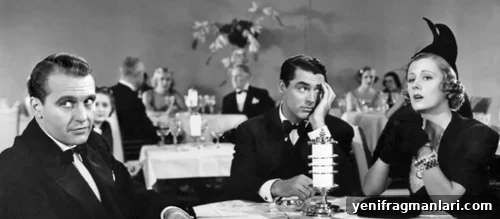
When the screwball comedy rose in the early 1930s as a subgenre of romantic comedy, it loudly proclaimed that love need not be only sentimental—it can be uproarious and absurd. Screwball films often flung logic aside, showing characters acting foolishly in the name of love. After all, who among us hasn’t acted a fool for someone we care about?
In The Awful Truth, Irene Dunne and Cary Grant play Lucy and Jerry Warriner, whose marriage collapses into divorce amid mutual suspicions of infidelity. Although their divorce is set for finalization in 90 days, jealousy and misunderstandings keep pulling them toward one another. When Jerry bursts into Lucy’s apartment expecting to catch her with another man, he instead interrupts a singing lesson. Lucy’s response—an amused, lighting-up laugh—tells us everything: she’s still in love. Her laughter, her warm acceptance of Jerry’s clumsy intrusion, reveal the affection beneath the quarrel.
Lucy’s quiet reaction and Jerry’s slapstick attempts to hide his feelings reveal a truth about love: it often shows itself through actions and small, unrehearsed moments more than through speeches.
Recommended for you: Where to Start with Cary Grant
9. It Happened One Night (1934)
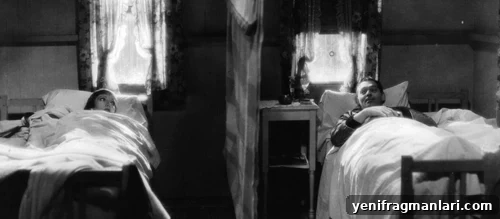
In It Happened One Night, Clark Gable plays Peter Warne, a down-on-his-luck reporter who meets heiress Ellie Andrews (Claudette Colbert) as she tries to reunite with her husband before her father annuls the marriage. They make a bargain: Peter will help Ellie if she gives him the story. What follows is a series of adventures that reveal mutual attraction.
Their famous motel-room scene centers on a makeshift privacy divider Peter hangs between their shared bed—a blanket he dubs the “Walls of Jericho.” The barrier is both literal and symbolic: a physical partition that mirrors the emotional distance between them. After they marry and the walls fall, the couple reenacts the moment with a playful trumpet cue as the divider drops—an amusing and suggestive cinematic shorthand for union and intimacy.
8. Pride and Prejudice (2005)
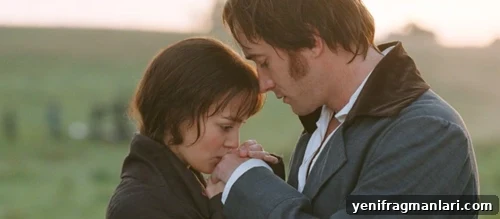
Jane Austen’s novels are filled with eloquent declarations and measured critiques of sentiment. She often warns that love without reason or self-awareness is fragile. That tension lies at the heart of Pride and Prejudice.
In Joe Wright’s 2005 adaptation, Mr. Darcy (Matthew Macfadyen) blurts out his love for Elizabeth Bennet (Keira Knightley) in a clumsy, prideful proposal—listing objections and class differences even as he asks her to marry him. Elizabeth’s rejection is fierce and justified. Yet the story pivots on Darcy’s willingness to change. He writes a revealing letter, confronts his mistakes, and acts selflessly to mend situations he once complicated—bringing Bingley back to Jane and protecting Elizabeth’s family from greater shame. Darcy’s evolution—from prideful suitor to humble, selfless partner—illustrates that true love often requires personal growth and sacrifice.
The film suggests that loving someone well is not only a matter of feeling but of becoming the person they deserve.
Recommended for you: 100 Unmissable BBC Films
7. Pretty Woman (1990)
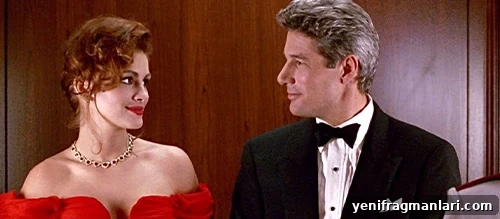
Edward Lewis (Richard Gere) is rich, aloof, and emotionally shut down. Vivian Ward (Julia Roberts) is vivacious and life-affirming. Their relationship begins as a transaction but transforms as both characters learn from one another. Edward’s initial proposal—to keep Vivian close but separate—reveals his inability to truly commit. Vivian refuses to be a footnote in someone else’s life; she has discovered her own value. When Edward, changed by her influence, arrives at her apartment scene like a modern fairy-tale prince—sun roof down, roses in hand—he risks vulnerability to show he genuinely cares. Vivian’s reply, “She rescues him right back,” underscores the reciprocity of their love: both people save each other in different ways.
6. Ever After (1998)
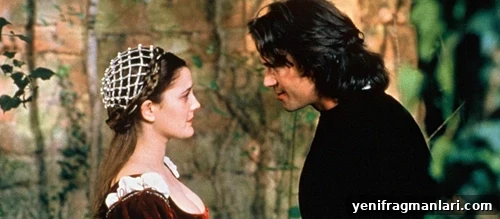
Love can reveal who we are beneath the masks we wear. In Ever After, Drew Barrymore’s Danielle De Barbarac hides her true station to help others and to keep her dignity. When she meets Prince Henry (Dougray Scott), she uses her mother’s name, fearing vulnerability. After her deception is revealed, Henry’s journey toward understanding and humility culminates when he acknowledges her by calling her by her real name. That simple recognition—Henry using Danielle’s true name—restores her identity and proves he loves the person she truly is, not an image she projected.
5. Brokeback Mountain (2005)

Not all love stories end happily. Ang Lee’s Brokeback Mountain depicts a love that endures despite a hostile society. Jack (Jake Gyllenhaal) and Ennis (Heath Ledger) share a profound, complicated bond that spans years and is continually thwarted by social expectations and fear. Their final meeting is raw and painful; Jack’s desperate line, “I wish I knew how to quit you,” is deceptively simple and devastating. It captures the agony of love that cannot be extinguished, even when the relationship is damaging or forbidden.
4. Bones and All (2022)

Luca Guadagnino’s Bones and All tells a dark love story about Maren (Taylor Russell) and Lee (Timothée Chalamet), who belong to an outcast community of “eaters.” The film is less about shock value than about otherness and acceptance. In the final, harrowing scene, Lee’s dying wish is for Maren to “eat him, bones and all.” Her compliance is a final act of love: to take someone entirely, flaws and all. In this context, the act symbolizes the desire to accept another person without reservation, regardless of the world’s judgment.
3. Dirty Dancing (1987)
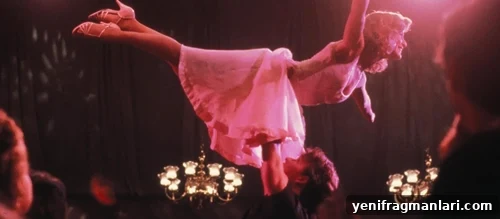
Baby (Jennifer Grey) and Johnny (Patrick Swayze) communicate through dance. Their evolving chemistry is expressed physically: through rhythm, trust, and the shared risk of the climactic lift. Baby’s ability to perform the lift symbolizes her growth and the couple’s mutual trust. The iconic finale—where they move as one—becomes a cinematic declaration of love that needs no words.
Recommended for you: 10 Best Films of All Time – Margaret Roarty
2. Casablanca (1942)
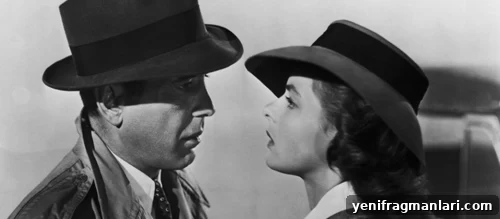
Casablanca Review
Sometimes the truest form of love is letting someone go. In Michael Curtiz’s 1942 classic, Rick Blaine (Humphrey Bogart) reunites with his former lover Ilsa Lund (Ingrid Bergman), who is now married to Resistance leader Victor Laszlo (Paul Henreid). Torn between personal desire and moral duty, Rick chooses the greater good. His decision to send Ilsa away with her husband—sacrificing his own happiness—becomes one of cinema’s most powerful acts of love. His final, laconic farewell, “Here’s looking at you, kid,” carries the weight of that sacrifice and cements the film as a masterpiece of romantic tragedy.
1. Titanic (1997)
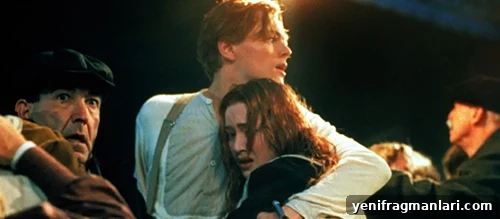
James Cameron’s Titanic remains one of the defining tragic romances of modern cinema. Jack (Leonardo DiCaprio) and Rose (Kate Winslet) share an intense, brief love as the ship meets its fate. Rose’s line, “You jump, I jump, right?” is more than a promise—it’s trust, devotion, and complete surrender. Rose chooses to defy expectations, leave her old life, and risk everything for Jack. When she later refuses a lifeboat and runs back into the sinking ship to be with him, the moment crystallizes the film’s most poignant idea: love often defies reason, and in its purest form, people will face danger together rather than live apart.
Recommended for you: Top 10 Contemporary Rom-Com Ensembles
Love appears in many forms on screen—through words, gestures, sacrifices, and gestures that sometimes mean everything without being said aloud. These ten films demonstrate how movies capture the varied, often complicated ways we let others know we care. What’s your favorite way to say “I love you”? Which film captures it best for you? Share your thoughts and memories and continue exploring the many faces of cinematic love.