
Spellbound (1945)
Director: Alfred Hitchcock
Screenwriters: Ben Hecht, Angus MacPhail
Starring: Ingrid Bergman, Gregory Peck, Michael Chekhov, Leo G. Carroll, Rhonda Fleming
Spellbound occupies an interesting place in Alfred Hitchcock’s filmography: it is widely admired by many fans and critics, yet it often slips under the radar when people list his most iconic works. The film is carefully crafted, featuring strong performances and striking visuals, and it’s held in particular regard for one daring sequence. Yet when audiences name Hitchcock’s masterpieces, titles like Psycho and Vertigo tend to dominate the conversation, leaving this more experimental piece somewhat neglected.
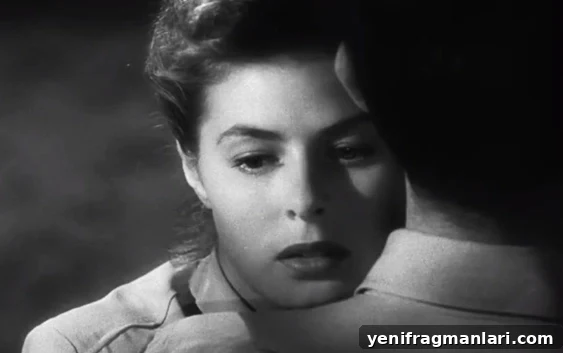
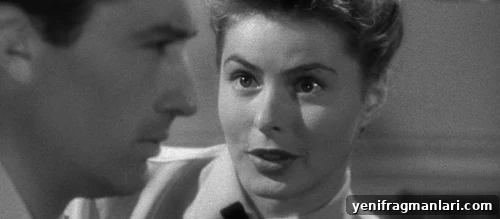
The story centers on Dr. Constance Peterson (Ingrid Bergman), a psychoanalyst working at a psychiatric hospital, and the new hospital director, Anthony Edwardes (Gregory Peck). Constance is drawn to Anthony almost immediately, and their fragile, fast-developing romance becomes the emotional core of the film. As Anthony experiences alarming episodes and unexplained behavior, Constance begins to suspect something is seriously wrong. Her investigation into his past and subconscious uncovers troubling memories that gradually reveal a deeper mystery and point toward a criminal act.
Although the film received six Academy Award nominations and won Best Original Score for Miklós Rózsa, modern viewers most often remember the surreal dream sequence. Designed with input from the surrealist artist Salvador Dalí, this brief but unforgettable segment includes dreamlike images—melting forms, a painted eye intersected by scissors, and other disturbing tableaux. These striking visuals were unusual for mainstream Hollywood at the time, and they remain one of the film’s most distinctive elements. Notably, the dream sequence appears deep into the story, well after much of the relationship drama and mystery has unfolded, so the film’s reputation rests on both this experimental fragment and the more conventional narrative that surrounds it.
As an early mainstream exploration of psychoanalysis on screen, the film treats Freudian ideas and dream interpretation as central investigative tools. In the context of the 1940s, these concepts were still relatively novel to many viewers; the language and methods of psychoanalysis felt fresh and even sensational when deployed within a Hollywood thriller. Michael Chekhov’s character, Dr. Alexander Brulov, functions as the film’s representative of classical psychoanalytic authority. The screenplay uses dream analysis to unlock repressed memories and deliver clues that steer the plot toward its conclusion.
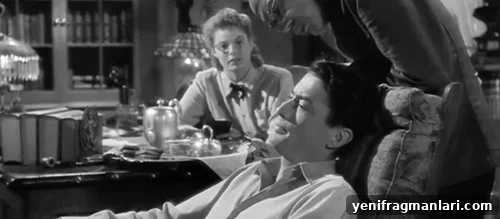
Thematically, the film explores the boundary between conscious behavior and the unconscious mind. Constance’s logical, clinical side frequently contends with her instinctive attraction to Anthony, and Hitchcock uses their dynamic to reflect the broader tension between reason and impulse. The plot hinges on psychological misdirection—memory, repression, and mistaken identity play crucial roles—and Hitchcock stages these elements with his usual attention to visual detail. Small gestures, slips of the tongue, and sudden recollections accumulate into the final revelation, making the psychological method a functional part of the thriller mechanics.
At times the romance feels rushed and implausible—a plot device that requires immediate emotional entanglement—but the chemistry between Bergman and Peck grounds those moments and makes their connection persuasive enough to drive the story. The film’s pacing is uneven in places: the opening requires a patient viewer to settle in, and some sequences away from the central action can feel slow. However, even in its quieter stretches Hitchcock’s direction remains assured, and the main cast consistently delivers compelling performances that hold the audience’s interest.
Technically the movie is notable for its production design, the evocative score, and the memorable dream sequence that helped push cinematic language forward. These elements together give the film a distinctive identity within Hitchcock’s oeuvre. While it may not command the same cultural prominence as the director’s most famous works, Spellbound endures as an imaginative blend of psychological drama, romance, and suspense. Its willingness to foreground psychoanalytic ideas and to incorporate surreal imagery marks it as daring for its time, and those qualities continue to interest viewers and scholars alike.
In short, Spellbound is a compelling, occasionally uneven film that rewards patience. The actors’ performances, Hitchcock’s visual control, and the striking dream sequence make it worth revisiting. Nearly eight decades after its release, the film still engages with ideas about memory, identity, and the hidden forces that shape human behavior—questions that remain resonant and intriguing today.
Score: 19/24
Rating: 3 out of 5.
Recommended for you: Top 10 Alfred Hitchcock Films