
Argylle (2024)
Director: Matthew Vaughn
Screenwriter: Jason Fuchs
Starring: Bryce Dallas Howard, Sam Rockwell, Bryan Cranston, Henry Cavill, Dua Lipa, John Cena, Samuel L. Jackson, Catherine O’Hara, Sofia Boutella, Ariana DeBose
Matthew Vaughn has become one of the defining voices of contemporary action cinema. From the kinetic energy of Kick-Ass to the stylish reinvention of the spy genre in the Kingsman films, Vaughn’s films are marked by slick production design, bold action choreography, and a playful sense of spectacle. That reputation explains how Argylle secured a massive production budget—yet the result is puzzling: a movie that often looks and sounds like a blockbuster but repeatedly undermines its own potential.
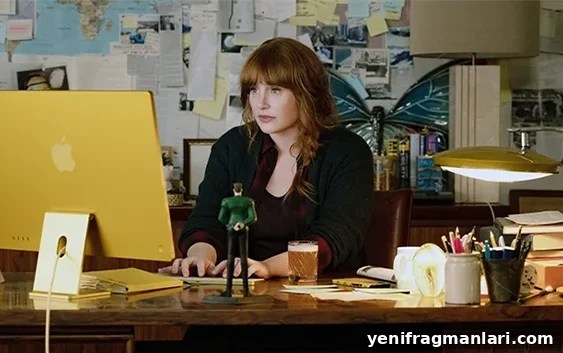
At its core, Argylle pitches an intriguing premise: a successful author of spy thrillers, Elly Conway (Bryce Dallas Howard), becomes the target of shadowy intelligence organizations who believe she possesses an uncanny ability to foresee real-world spying events through her fiction. When multiple agencies compete to control Elly and her mysterious narratives, the distinctions between her novels and reality blur, propelling her into a labyrinth of intrigue. Henry Cavill plays the fictional spy at the center of her books, and the film explores what happens when imagination and real danger collide.
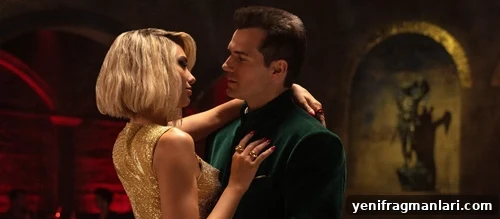
The idea of a creator whose fictional work bleeds into real life is not new, but it remains fertile ground for genre-mixing. In Argylle, Vaughn leans into that metafictional angle and layers it with his signature action-comedy sensibilities. The cast is uniformly capable: Bryce Dallas Howard anchors the film with a performance that balances vulnerability and dry wit, while Henry Cavill supplies the idealized, cinematic spy presence. Supporting turns from Sam Rockwell, Bryan Cranston, and Samuel L. Jackson add texture and charisma.
Technically, the film often impresses. Vaughn’s direction can be exhilarating—his command of choreography, pacing, and visual rhythm elevates many action set pieces. The production design and costume work populate both the fictional world and the supposed “real” world with deliberate contrasts, and the film smartly plays with tone by alternating between cartoonish set pieces and quieter character beats. In several moments, the notion of Elly hallucinating her perfect hero into her life is both amusing and poignant, offering genuine charm amid the spectacle.
Yet Argylle is undone by excess. The movie repeatedly overruns its best ideas with extended sequences that feel indulgent rather than essential. Action scenes often stretch beyond their narrative worth; an early train fight that initially delights continues far longer than necessary, draining momentum rather than building it. At nearly two hours and twenty minutes, the film could benefit from tighter editing. Many beats linger without serving character development or forward motion, leaving the audience to endure spectacle when restraint would have better served the story.
Another problem is tonal inconsistency. Vaughn knowingly deploys deliberately artificial, almost toy-like CGI to represent the fictional Argylle world, intending to signal that those scenes are stylized and consequence-free. That approach works at first, evoking camp and comic-book fantasy. However, the real-world sequences gradually adopt the same cartoonish extremes, eroding the film’s emotional stakes. When grounded moments want to convey real peril, the surrounding visual language insists everything is unassailable and absurd, which undercuts Elly’s arc from timid author to resourceful protagonist. Instead of watching her confront fear and grow, we often witness a series of gravity-defying, consequence-free set pieces that distance us from genuine tension.
The film’s best achievements—snappy dialogue, confident performances, and a few inventive action set pieces—are frequently overshadowed by a tendency toward “cool” over story. Visual flair and showstopping moments dominate, but they rarely pay off narratively. The emotional throughline becomes secondary to spectacle, and an otherwise intriguing premise is reduced to an excuse for visual tricks. Even the film’s lighter elements, intended to broaden its family-friendly appeal, sometimes feel like distractions rather than meaningful contributions to character or theme.
Small choices also grate. A notable animal character, intended as comic relief, is obviously CGI in many shots, and those effects are inconsistent enough to be distracting. The film’s finale falls prey to the common blockbuster habit of prolonging climactic revelations and revelations that should have landed earlier, stretching the resolution and sapping the ending of its potential emotional payoff.
Argylle is, ultimately, a mixed bag: a visually bold, occasionally clever action film that never fully commits to its stronger ideas. It showcases Vaughn’s proven talents but also his weakness for excess. There are moments of genuine entertainment and flashes of an insightful metafictional concept, but those moments are too often buried under an avalanche of spectacle. For viewers who prioritize high-energy set pieces and stylized action, Argylle delivers plenty; for those seeking a tighter, more emotionally rewarding spy thriller, it will likely frustrate.
Score: 10/24
Rating: 2 out of 5.