
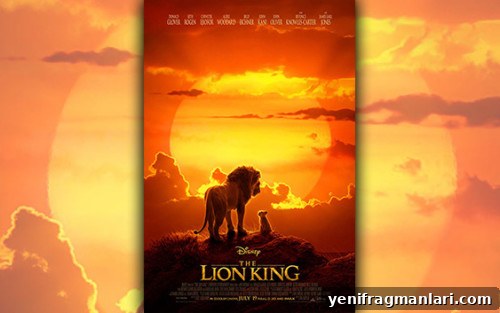

The Lion King (2019) — Review
Director: Jon Favreau
Screenwriter: Jeff Nathanson
Starring: Donald Glover, Chiwetel Ejiofor, Seth Rogen, Billy Eichner, Beyoncé, John Oliver, Alfre Woodard, John Kani, James Earl Jones
The Lion King is Jon Favreau’s follow-up to his successful 2016 reimagining of a Disney classic. That earlier effort brought fresh life to an old story by combining cutting-edge visual effects with a lively voice cast. Expectations for Favreau’s return to Disney’s catalogue were understandably high. Unfortunately, while this new version of The Lion King delivers on visual spectacle, it struggles to match the emotional warmth and expressive character work of the original animated film.
The plot will be familiar to most: Mufasa (James Earl Jones) rules the Pride Lands, and his young son Simba (JD McCrary) is set to inherit the throne. Scar (Chiwetel Ejiofor), Mufasa’s resentful brother, engineers a tragic betrayal that leads to Mufasa’s death and sends Simba into exile. In the wilderness, Simba grows up alongside the carefree duo Timon (Billy Eichner) and Pumbaa (Seth Rogen), who teach him to live worry-free — “Hakuna Matata.” Years later, Nala (Beyoncé) finds the grown Simba (Donald Glover) and urges him to reclaim his place on Pride Rock. Guided by Rafiki (John Kani) and haunted by his father’s memory, Simba must confront Scar and restore balance to the kingdom.
Where this version truly shines is its visual realism. Favreau and his team create breathtaking vistas of the African plains, detailed animal fur, and dramatic natural phenomena. Several moments linger long after the credits: the opening “Circle of Life” sequence, with its wide, sweeping camera and golden light, is a vivid reminder of the original’s grandeur and remains one of the film’s finest achievements. Small visual touches — like fireflies illuminating Rafiki’s face against a sunset — are rendered with a painterly realism that rewards patient viewing.
But those visuals are a double-edged sword. By aiming for near-photorealism, the film sacrifices some of the emotional expressiveness that hand-drawn or stylized animation can deliver. The animals look and move like real creatures, which is remarkable technically, but it limits how much personality can show through facial expressions. That creates a disconnect between the strong vocal performances and the comparatively restrained physical acting. Moments that demand overt emotion sometimes feel muted or oddly distant, simply because the faces on screen are not built to emote in the exaggerated, readable way of traditional animation.
The voice cast is talented and committed, yet their work occasionally feels constrained by this visual choice. Some lines land powerfully; others seem recycled or lifted too directly from the original film, which can make certain scenes feel less organic. James Earl Jones’ return as Mufasa is moving for fans who remember his original performance, but there are moments where the delivery feels like an echo rather than a fresh interpretation. John Oliver’s Zazu, meanwhile, suffers from a mismatch between a hilariously expressive vocal performance and a very literal, anatomically accurate bird face that doesn’t broaden to match the comic tone.
Musically, the film offers a mixed bag. A few songs are thoughtfully reworked and benefit from the new cast — the updated take on “Can You Feel the Love Tonight” featuring Beyoncé and Donald Glover stands out — but other iconic numbers are altered in ways that may disappoint longtime fans. Scar’s “Be Prepared,” for example, loses some of its original menace and flow, and other lighter numbers from the 1994 film are either shortened or omitted entirely, which changes the rhythm and emotional contour of the story.
Favreau’s adaptation is ambitious and visually arresting, but that emphasis on realism comes at the cost of some of the emotional clarity and animated expressiveness that made the original so memorable. For viewers who want to experience a technical achievement and revisit a beloved tale in a new visual register, this version is worth a look. For those seeking the full-hearted theatricality and distinct charm of the 1994 film, the remake may feel more like a carefully constructed imitation than a necessary reinvention.
12/24
Written by Samuel Sybert