
Oldboy (2003)
Director: Chan-wook Park
Screenwriters: Chan-wook Park, Chun-hyeong Lim, Jo-yun Hwang
Starring: Min-sik Choi, Ji-Tae Yoo, Hye-jeong Kang
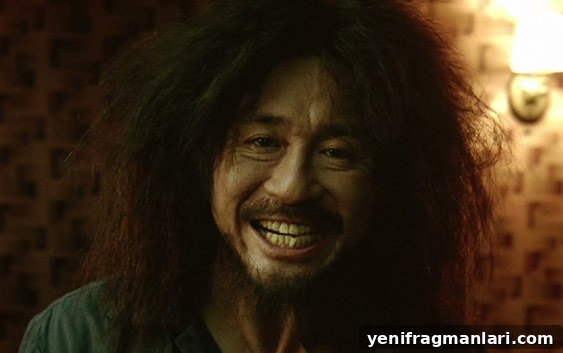
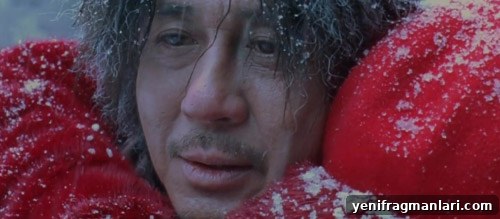
Chan-wook Park’s Oldboy is the second film in his Vengeance Trilogy and remains his most widely recognised work. The film follows Oh Dae-su, an ordinary man who is abducted on a drunken night out and wakes to find himself imprisoned in a small, windowless room with no explanation. For fifteen years he endures confinement with only a television for company. During his captivity he learns from news reports that his wife has been murdered and that he is the prime suspect. Then, as abruptly as his disappearance, he is released with no answers. Dae-su has only a short window of time to uncover who orchestrated his imprisonment and why.
Oldboy is a dark, visceral study of revenge, memory, and fate. Its most famous sequence—the long, single-shot corridor fight—captures the film’s raw energy: crude, bloody and relentless, it rejects the balletic polish of classical martial arts choreography and replaces it with brutal street violence. That sequence has become iconic in world cinema and is frequently cited as a touchstone for choreographed long-take action scenes in later productions.
The film explores perception and the uneven nature of reality. A seemingly trivial act for one person becomes an irreversible catastrophe for another. Park stages this theme visually as well as narratively: flashbacks set in a school become a maze-like architecture reminiscent of an Escher print, underlining that there are no simple routes to truth or reconciliation. Characters inhabit their own versions of reality, and the film asks which version will claim dominance.
Vengeance drives the plot, but Park complicates the idea of who the avenger truly is. Much like other memory-and-deception narratives, Oldboy plays with the possibility that the protagonist may be manipulated, serving another character’s hidden agenda. This moral ambiguity deepens the film’s psychological intensity and maintains suspense until its unsettling climax.
The performances anchor the film’s emotional and tonal extremes. Choi Min-sik delivers a fierce, committed portrayal of Dae-su, taking the viewer through pity, rage, pain and humiliation with unflinching force. Ji-Tae Yoo is chilling as the elegant, composed antagonist, while the supporting cast populate the story with vivid, sometimes grotesque characters who embody the film’s bleak atmosphere. Park works with a familiar repertory of performers across the trilogy, which gives the films a cohesive tone and an ensemble trust that serves demanding material well.
Park’s direction is operatic and highly stylised. He stages many moments like tableaux before the action erupts, using gliding camera movements and overhead compositions to suggest that characters are playing out fated roles. The cinematography is inventive and cinematic, drawing comparisons to directors known for strong visual signatures; lighting, framing and colour are deployed to underline mood and story rather than realism.
Oldboy also courted controversy on release. Certain scenes provoke visceral responses and ethical debates, and the film’s willingness to shock is part of its artistic strategy. That provocation sits within a wider context: the film helped bring international attention to a wave of contemporary Korean cinema that combined genre energy with bold auteurism.
Beyond its raw spectacle, the film functions as a modern tragedy with classical undertones. Themes of forbidden desire, catastrophic consequences from small acts, and the corrosive effect of revenge give the film a moral and emotional heft that lingers. Its narrative refuses tidy closure, instead leaving audiences with difficult questions about culpability, manipulation, and the cost of retribution.
Seventeen years on, Oldboy still stands as a striking and influential work. It remains essential viewing for those interested in contemporary Korean cinema, provocative storytelling, and daring visual filmmaking. While it is a challenging and at times deeply uncomfortable film, its craftsmanship—performance, direction and design—continues to make it a compelling exploration of vengeance, identity and the irreversibility of certain choices.
20/24
Written by Andy English
You can support Andy English in the following places:
Twitter – @anglish15