
Dolly Parton’s Christmas on the Square (2020)
Director: Debbie Allen
Screenwriter: Maria S. Schlatter
Starring: Dolly Parton, Christina Baranski, Jenifer Lewis, Josh Segarra, Mary Lane Haskell
Netflix added a steady stream of holiday titles in 2020, and among them was Dolly Parton’s Christmas on the Square, a musical directed by Debbie Allen with a screenplay by Maria S. Schlatter. The film arrives squarely within the seasonal musical tradition, aiming for warmth, spectacle and big-hearted sentiment. It’s a glossy, theatrical production with all the trimmings: an ambitious opening number, bright costumes, and a familiar redemption arc centered on community, memory and the spirit of Christmas.
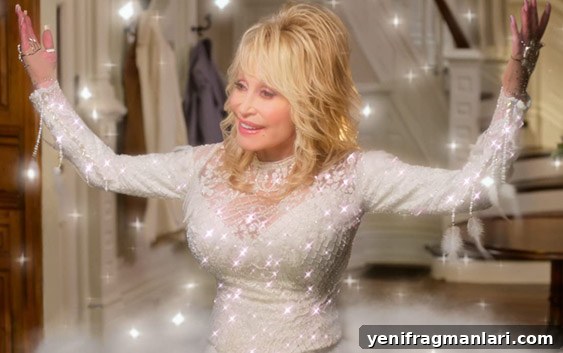
The film opens in the bustling, festive town square of Fullerville with an extended, highly choreographed dance sequence. The number sets a bold tone—big, bold, and repetitive—establishing early on that the filmmakers meant to deliver a showy musical rather than a subtle drama. Dolly Parton appears early as Angel, a mysterious figure who takes on the guise of a homeless woman asking for help. Parton’s presence carries a warmth and a twinkle that the movie frequently leans on: she is the film’s moral compass and charm point, a cast-iron singer with an easy way of making a scene feel like a stage performance.
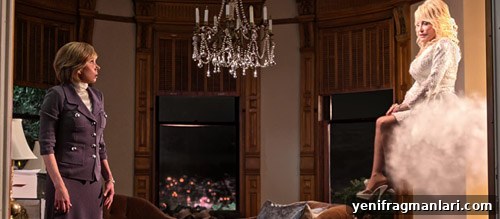
The central antagonist is Regina, played by Christina Baranski, who arrives in Fullerville with plans to demolish the town in order to build a shopping complex. Baranski plays Regina with exaggerated, pantomime flair—she’s theatrical, sharp-edged and often intentionally over the top. Against her are the town’s residents, including a pastor named Christian (Josh Segarra) and his wife (Mary Lane Haskell), who are facing their own private heartbreaks. Their wish for a family is interrupted by the threat to their town, and their response helps drive the film’s emotional stakes.
Supporting performances are a mixed bag. Christina Baranski and Jenifer Lewis are among the film’s strongest anchors, bringing comedic timing and emotional energy that frequently lift scenes. Other members of the cast have pleasant singing voices but struggle to move beyond surface-level characterizations. Many secondary characters feel underdeveloped, leading to several subplots that never quite reach satisfying conclusions.
Musically, the film is plentiful. Songs are woven through the narrative in abundance, sometimes to the film’s detriment. Where a more restrained score might have sharpened emotional beats, the volume of musical numbers often slows pacing and diminishes impact. The choreography and production design aim for spectacle, and in places they succeed, but there are also stretches where the film’s earnestness tips into excess. The result is a holiday musical that knows how to be festive, even when it becomes overly sentimental.
On thematic terms, Christmas on the Square is a familiar story of redemption, reconciliation and the importance of community. Regina’s arc—her confrontation with past choices, strained friendships and unexpected truths—follows the classic holiday-musical blueprint. The film also touches on modern social themes, sometimes clumsily, by attempting to populate the town with a range of characters and personal struggles. Those attempts occasionally feel heavy-handed and rely on stereotypes more than nuance, which undercuts some of the film’s goodwill.
Production-wise, the film is polished but not without flaws. The visual style emphasizes theatricality over realism, and some digital effects are noticeable in ways that distract rather than enhance. The direction prioritizes showmanship: large ensemble beats, colorful set pieces and crowd choreography dominate the frame. For viewers seeking a relentlessly upbeat, stage-like Christmas musical, that’s a feature; for those who prefer subtlety, it can be grating.
Ultimately, Dolly Parton’s Christmas on the Square delivers what its title promises: a holiday musical steeped in sentiment, music and theatrical flair. Its strengths lie in Parton’s warmth, Baranski’s committed performance and moments of genuine heart. Its weaknesses include a crowded script, too many songs that blunt emotional payoff, and occasional reliance on broad stereotypes. It’s a film that will likely be most enjoyable to audiences who embrace unabashed holiday cheer and big musical numbers, while viewers seeking a more restrained or nuanced holiday drama may find it uneven.
5/24