
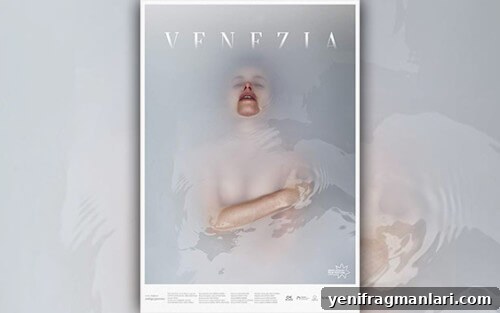
Venezia (2019)
Director: Rodrigo Guerrero
Screenwriter: Rodrigo Guerrero
Starring: Paula Lussi, Margherita Mannino, Alessandro Bressanello
Venezia (2019) is a contemplative film from writer-director Rodrigo Guerrero that places the city of Venice at the center of its story. The film follows a newlywed woman who becomes an unexpected widow and navigates the city while processing her grief. More than plot-driven drama, Venezia is a visual meditation—an exploration of place, memory, and the quiet moments that define human experience. Guerrero’s direction privileges images and atmosphere over exposition, inviting viewers to inhabit the protagonist’s viewpoint and to interpret much of the emotional landscape for themselves.
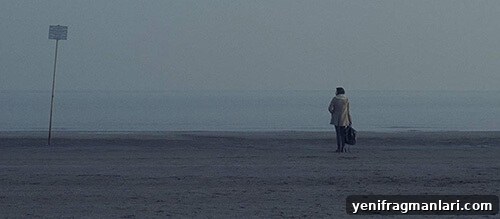
The film’s greatest strength is its treatment of Venice as a character. Guerrero captures the city in its beauty and its everyday realities: historic architecture, crowded tourist sites, narrow alleys, canals, and the subtle details that reveal how people live there. Venice is shown with neither romanticization nor condemnation; it is portrayed as a layered space where beauty and commerce, history and contemporary life, coexist. By focusing on ordinary scenes—market stalls, passing strangers, weathered stone surfaces—the movie suggests that meaning often hides in the routines and textures of a place.
Cinematography plays a central role in conveying that intimacy. Gustavo Tejeda’s camera work anchors the film in a personal, observational point of view. Favoring a steady, human-scale movement rather than airy, stylized flourishes, the camera mirrors how a person actually experiences the city: walking, pausing, turning to look. The 16:9 framing reinforces the snapshot quality of the images, like framed moments lifted from a travel journal or a private memory album. The result is a film that feels tactile and immediate—an experience of Venice through a single, grieving consciousness.
Guerrero’s choice to limit subtitles and to present some interactions without full translation enhances this subjective experience. When dialogue is withheld or left ambiguous, viewers are asked to rely more on visual cues and emotional resonance than on explicit explanation. This technique makes the film more immersive: you don’t just watch the protagonist move through Venice, you become attuned to how she perceives the world around her. Moments of connection and miscommunication with strangers gain weight because they are felt rather than spelled out.
Performance-wise, Paula Lussi stands out. Her portrayal of the widow is restrained and quietly powerful. Guerrero’s direction encourages silence and stillness, and Lussi uses small physical gestures—an expression, a glance, a hesitation—to communicate profound interior life. This minimalism creates authenticity: the grief she carries feels private and believable rather than theatrical. Supporting performances, including Margherita Mannino and Alessandro Bressanello, help populate the protagonist’s journey with varied encounters that underscore themes of kindness, indifference, and human fragility.
The film is compact—just over an hour in length—which suits its intent. Rather than stretching a single mood into a conventional narrative arc, Guerrero condenses impressions and encounters into a focused portrait. That economy makes Venezia feel more like a cinematic essay than a plot-led feature: a short, intense examination of place and feeling that lingers after the credits roll.
In the end, Venezia is an intimate, observant film that rewards patient viewing. It will appeal to audiences who appreciate films that prioritize mood, composition, and human detail over exposition. By centering Venice itself and trusting viewers to fill in emotional gaps, Rodrigo Guerrero crafts a work that is both specific to its setting and universal in its concern with memory, loss, and the traces we leave behind.
20/24