
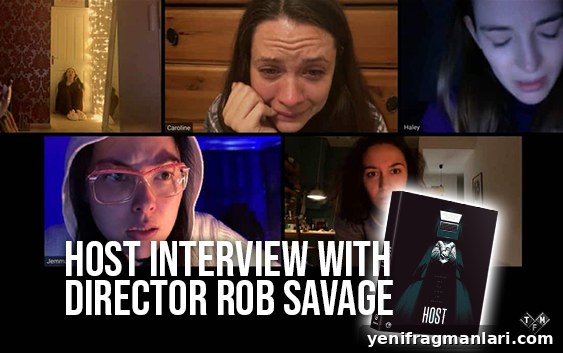
Between enforced isolation, rising anxiety and the sudden dependence on video calls, the terrifying Zoom séance feature Host became one of the clearest cinematic reflections of 2020. Created under lockdown conditions, the film captured the fear and claustrophobia of the year while turning our everyday communication tools into the setting for a genuinely unsettling horror experience.
To coincide with the limited edition Blu-ray release of Host by Second Sight Films on 22 February 2021, director Rob Savage sat down for an interview—conducted by Zoom—about the unexpected difficulties of shooting remotely, the film’s impact on audiences and what lies ahead now that his profile has grown substantially.
How are you holding up during the current lockdown?
Things are good. Like everyone, I’m waiting for life to feel normal again, but I feel fortunate: we recently wrapped another movie for Blumhouse and I was in post-production when lockdown returned, so I’ve been able to keep working. That continuity has been sustaining and gives me a purpose through these restrictions.
Was the Blumhouse project filmed right after Host?
Yes. After the rapid, intense process of making Host, staying active on another project felt essential. We moved quickly into production on the Blumhouse film because, after working so fast on Host, it felt like time wasted not to keep making things.
Has Zoom become second nature to you?
In some ways, absolutely. During the press cycle for Host and much of the post on the new project, Zoom has been my default workspace. That said, being on a traditional set with crew, cameras and actors felt almost like a return to normal when we had it, and moving back into a remote workflow is still surreal. Still, I know my way around Zoom now.
Did the lockdown inspire Host, or was the idea already there?
The lockdown is what made Host possible and what made it work. We made it to keep ourselves sane, to have a creative purpose during a strange, isolated period. I honestly didn’t expect the film to reach many people—I thought it might be dismissed as a novelty. But even if nobody had seen it, the process was worthwhile: it kept me creatively engaged and gave me the rare chance to focus closely on making something with a small group of friends and limited resources.
Did the constraints of lockdown make you more creative?
Definitely. The limitations highlighted the collaborative nature of filmmaking. Making Host in such an improvised way emphasized co-authorship; it wasn’t just director-led, it was a collective effort. We worked backwards from what was possible in lockdown—what locations, stunts and people were available—and wrote those elements into the story. That freedom to invent within constraints felt liberating and led to ideas we might never have explored under normal circumstances.
What was the hardest part of directing a film remotely?
The biggest challenge was relinquishing control and placing a lot of trust in the cast and crew. Horror depends on tiny timing and precise beats; a scare can hinge on a single second. When non-professional camera operators filmed in their own flats with basic lighting, it demanded patience and repeated takes. Fortunately, the actors were committed and learned quickly—by the end they had become students of horror, understanding why a beat needed to be repeated until it landed correctly.
Which filmmakers influence your approach to horror?
James Wan is a major influence—his mastery of visual storytelling and his ability to stage complex, emotionally effective set pieces is something I constantly revisit. Films like Unfriended and the Paranormal Activity series were also reference points for Host. At first I resisted comparisons, but those films informed what I wanted to do and what I wanted to avoid, and they offered valuable lessons for shaping scares in an online format.
Has Host changed how people treat video calls?
I hoped the film would make viewers feel less secure at home—and in that sense, yes. The movie’s goal was to unsettle the assumption that interior spaces are inherently safe. Great horror often perverts domestic comfort, turning familiar environments into sources of dread. With Host, I wanted to suggest that the camera that connects us can also be the doorway for something wrong.
Have people tried their own online séances after the film?
Yes—some viewers and even acquaintances have experimented with Zoom séances. I’d already looked into real-life mediums who shifted to online formats, which informed parts of the film. Seeing people engage with the concept in real life has been interesting and at times surprising.
What can fans expect from the limited edition Blu-ray?
The special edition is something I’m genuinely excited about. It includes the original treatment as a booklet and a commentary track featuring Douglas Cox, who produced Host and was involved from the earliest Zoom calls through post-production. Douglas remembers countless details I’d forgotten, and his perspective helps tell the behind-the-scenes story of how the film came together under unusual circumstances.
Are viewers still finding new details in Host?
Yes—people continue to discover subtle references and small touches we packed into the film. That kind of layered detail is rewarding for viewers who revisit the film, and it’s gratifying to know the work still reveals new things long after release.
One final, popular question: was it all Jemma’s fault?
(Laughs) Yes—let’s blame Jemma.
Host Limited Edition Blu-ray is released on 22 February. Pre-order details were available at the time of the release.