
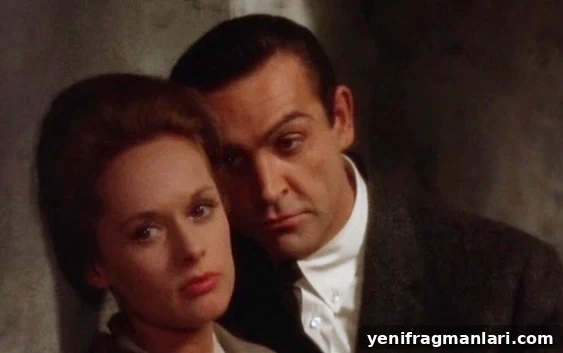
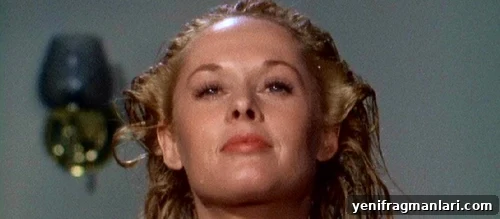
Marnie (1964)
Director: Alfred Hitchcock
Screenwriter: Jay Presson Allen
Starring: Tippi Hedren, Sean Connery, Diane Baker, Martin Gabel, Louise Latham, Bob Sweeney
Alfred Hitchcock’s reputation as a master of suspense rests on a body of work that includes unmistakable highlights. For many viewers, the director’s last truly iconic film arrived in 1963 with The Birds, a movie that lodged itself in popular culture and is familiar even to casual filmgoers. Marnie, released a year later, has often been overshadowed by that success and by Hitchcock’s earlier classics. Yet it remains a complex, compelling film that rewards careful viewing, even if it falters in places.
Tippi Hedren plays the title role: Marnie Edgar, a consummate con artist who gains employment as a secretary or typist, steals from her employers, then flees and assumes a new identity. She accumulates enough money to maintain a precarious independence, while nurturing an intense, almost childlike attachment to horses and to the idea of pleasing her emotionally distant mother. Marnie’s compulsions and vulnerabilities make her a fascinating, contradictory protagonist—both resourceful and deeply damaged.
Sean Connery’s Mark Rutland enters the story when he recognizes Marnie from a previous job. What begins as curiosity turns into an increasingly controlling obsession: Rutland pursues Marnie, uncovers her crimes, and ultimately coerces her into marriage under the threat of exposure. Their relationship is central to the film and is where Hitchcock explores power, manipulation, and misguided notions of romance. The chemistry between Hedren and Connery is uneasy and magnetic; they play two people whose attractions and flaws feed into one another, producing some of the film’s most arresting moments.
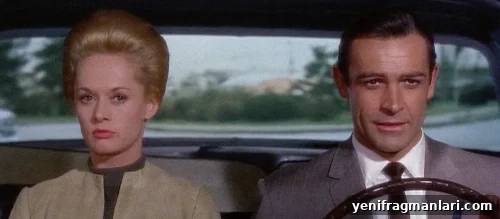
Hitchcock, then well into a long and celebrated career, shows throughout Marnie that his craftsmanship and sense of visual tension remain sharp. One standout sequence — a near-silent robbery at a company safe — demonstrates how economy of sound and image can build suspense to a thrilling pitch. The director’s attention to framing, pacing, and the actors’ measured performances gives the film moments of pure cinematic mastery.
Yet the movie also carries multiple narrative strands that do not always cohere. Alongside the criminal plotline and the disturbing dynamics between Marnie and Rutland, the screenplay introduces a psychological backstory: Marnie experiences traumatic flashbacks triggered by the color red, clues to a darker event in her childhood that the film gradually reveals. These psychoanalytic elements, reflecting mid-century Freudian influences, aim to provide depth but sometimes feel like a separate movie grafted onto the thriller.
The result is a film that is rich in ideas but uneven in balance. The first act unfolds with taut suspense and economy; once the personal and psychological material begins to dominate, the tone shifts and the momentum slows. Scenes that probe Marnie’s past and her fragile psyche are effective on their own terms, but their integration into the theft-and-pursuit plot is imperfect, producing a sense of two competing narratives. At times the film seems uncertain whether it is primarily a character study, a crime thriller, or a study of romantic control, and that indecision dilutes the overall impact.
Despite these structural faults, Marnie succeeds as a character portrait of a woman who is at once resilient, damaged, and morally ambiguous. The film poses uncomfortable questions about consent, domination, and the ways a destructive past can shape present behavior. Connery’s Mark believes his actions are protective or romantic even as they are coercive, and that paradox is central to the film’s chilling undertow. Hedren’s performance captures Marnie’s guarded exterior and fragile interior, making her both sympathetic and unnerving.
Stylistically, Hitchcock’s choices — from the careful use of color to the deliberate pacing and the evocative use of silence — remind viewers of his strengths as a director who understood cinematic language. The film’s final sequences tie together the psychological and emotional threads, even if they do not resolve every narrative tension neatly. Ultimately, Marnie feels like several strong films overlapped: a psychological drama, a crime story, and a troubled romance. Each element has merit, but their combination is not always seamless.
Viewed on its own terms, Marnie remains a rewarding, if uneven, work. It offers memorable performances, striking set pieces, and a willingness to probe uncomfortable human truths. For those who approach it as a study of character and control rather than a conventional thriller, it reveals depth and ambition that deserve recognition.
Score: 18/24
Rating: 3 out of 5.
Recommended reading: Top 10 Alfred Hitchcock Films (refer to curated lists and retrospectives for broader context on Hitchcock’s career and where Marnie fits among his works)