
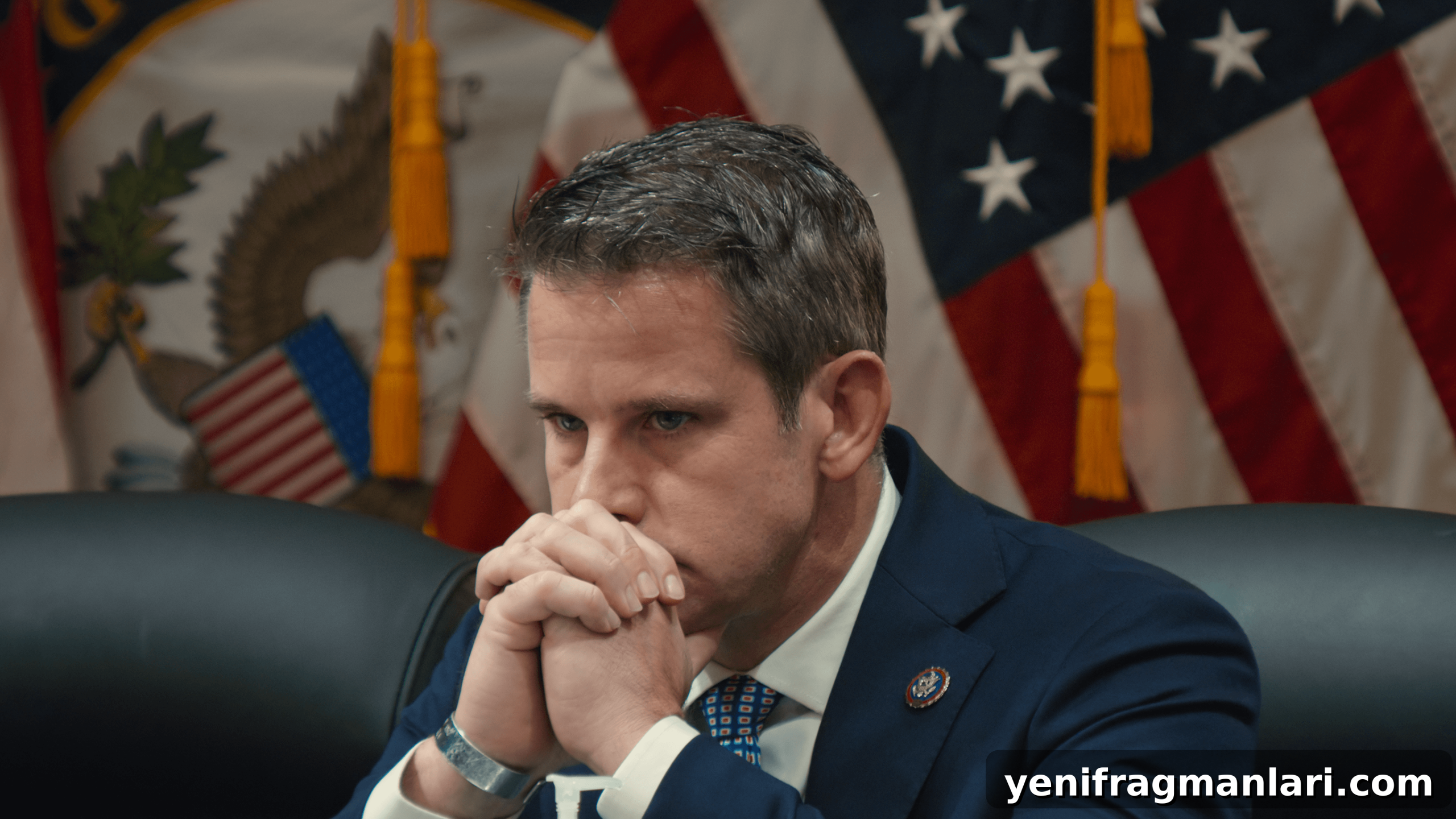
The Last Republican is a Fair, Balanced Portrayal of Adam Kinzinger’s Final Days (Which is Why It’s Destined to Fail)
The Last Republican | Adam Manery
Released into a moment of intense political division, The Last Republican feels urgently relevant. Directed by Steve Pink, best known for comedies like Hot Tub Time Machine and Accepted, the documentary follows former Illinois Congressman Adam Kinzinger during the final year of his time in office as he confronts the consequences of breaking with his party.
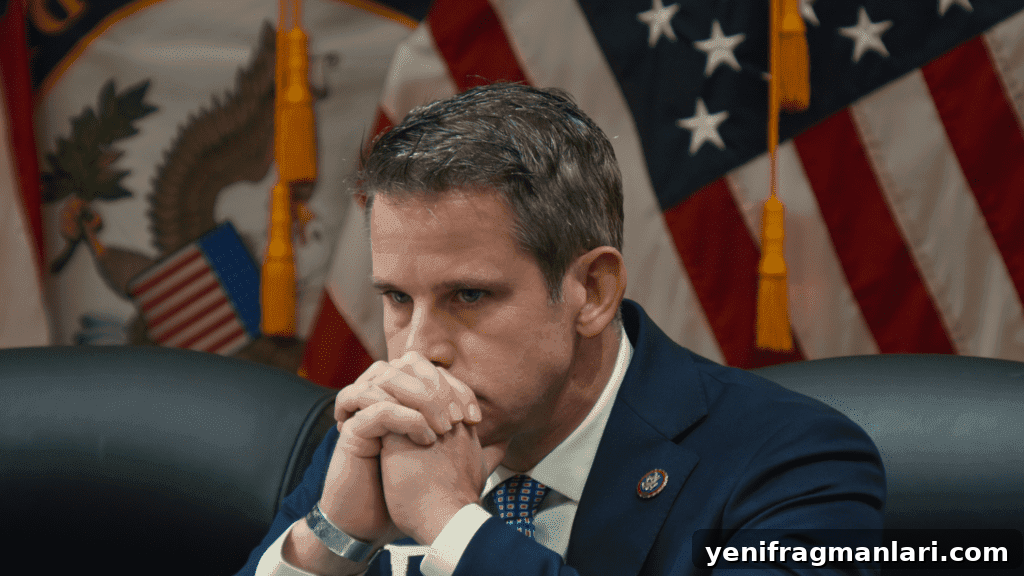
Pink, who describes himself as politically left-leaning, approaches the subject with an unexpectedly restrained tone. Rather than staging confrontations or pushing a partisan agenda, the film gives Kinzinger space to tell his story in his own words. That restraint produces a documentary more focused on human consequence than on provocation, favoring reflection over ratings-chasing outrage.
For viewers tuned to the rhythms of contemporary American politics, Kinzinger’s arc is instructive. Once a reliable conservative voice, he became openly critical of former President Donald Trump after the January 6 attack on the Capitol and was one of ten House Republicans to vote for impeachment. The film traces how that choice reshaped his relationships, led to explicit threats, and effectively ended his congressional career. It presents these developments not as a melodramatic fall from grace, but as the lived cost of choosing principle over party loyalty.
Those who have studied or taught American government will recognize themes that echo across the film: the strain on bipartisan norms, the erosion of institutional checks, and the human toll of political courage. The director’s perspective—an unlikely friendship between a left-leaning filmmaker and a conservative congressman—produces candid moments that feel earned rather than engineered. Pink’s interviews with Kinzinger, interspersed with quieter scenes of the congressman with staff and family, highlight the personal stakes involved in political dissent.
Adam was probably engaged in the greatest subversion of expectation in American politics I’ve ever seen,” Pink noted
The documentary does not sanctify Kinzinger. It explores his coping habits—such as speaking in the second person in interviews—and his doubts without casting him as a martyr. Instead, the film frames his choices as a microcosm of wider institutional and cultural breakdowns. Kinzinger is shown confronting the transactional nature of modern politics, noting how financial incentives and political pressure shaped votes and allegiances in the months after the insurrection.
Several sequences land with real emotional force: voicemails left on Kinzinger’s answering machine that include threatening language, a tense call with a former ally, and televised criticism that publicly mocked his emotional response to events. These scenes are presented plainly, allowing viewers to draw their own conclusions about the personal and civic costs of polarization.

“$300,000 is the difference between ‘I support democracy’ and ‘I don’t,’” Kinzinger remarks
That line—about money determining political choices—resonates through the film. Pink and Kinzinger discuss how campaign funding and outside influence can reshape political behavior, a critique aimed as much at systems and incentives as at specific personalities. The documentary avoids easy villainization, instead inviting viewers to consider how incentives and fear can distort public service.
Because the film intentionally resists sensationalism, it may struggle commercially. In an attention economy that rewards extremes and viral conflict, a modestly paced, reflective documentary will likely be dismissed by parts of the political spectrum. Some on the right may view the film skeptically because of its subject and director, while some on the left may argue it doesn’t condemn the broader forces behind Trumpism harshly enough. Yet the film’s refusal to pander to outrage is also its primary strength: it asks audiences to listen rather than react.
For those seeking an entry point into how contemporary polarization affects individuals and institutions, The Last Republican offers a clear, humane look at one man’s choices and the networks around him. It performs a useful civic function by modeling how to document disagreement without turning it into spectacle. Whether that approach translates into popular success is another matter; in today’s media landscape, moderation is often invisible.
Happy certification, everyone.
Director’s Statement
By Steve Pink
As a longtime consumer of political stories, I set out to make THE LAST REPUBLICAN because Adam Kinzinger’s choices during a critical period of American history felt important to document. I went into the film as a left-leaning filmmaker and comedy writer-director, and I did not expect to develop the friendship that emerged. Spending time with Adam over his final year in Congress revealed complexities beyond partisan labels.
Making this film reminded me that maintaining relationships across ideological divides matters. In a polarized era, civil discourse and the willingness to engage with people we disagree with are vital to preserving democratic norms. That conviction guided my approach: to listen carefully and to let the story unfold without aggressive editorializing.
More About Adam Kinzinger
Adam Kinzinger served six terms in the U.S. House of Representatives, representing Illinois’s 16th Congressional District. During his tenure he sat on the House Committee on Energy and Commerce and the House Foreign Affairs Committee, serving as Ranking Member of the Subcommittee on Europe, Eurasia, Energy, and the Environment in the 116th Congress.
His priorities included strengthening U.S. energy policy, reducing dependence on foreign resources, and bolstering national security. He also served on the bipartisan Select Committee to Investigate the January 6th Attack on the United States Capitol.
After January 6, 2021, Kinzinger helped launch the Country First movement, which has reported significant membership growth. Since leaving Congress he has worked as a political commentator, authored the book Renegade, and continued involvement with the Country First initiative.
Before his time in Congress, Kinzinger served in the U.S. Air Force, including deployments during Operation Iraqi Freedom and Operation Enduring Freedom. He continued military service as an Air National Guard pilot while serving in Congress and retired in 2023 with the rank of Lieutenant Colonel.
Have a look at The Top 24 Films of 2024