
If Anything Happens I Love You (2020)
Directors: Michael Govier, Will McCormack
Screenwriters: Michael Govier, Will McCormack
The animated short If Anything Happens I Love You, written and directed by Michael Govier and Will McCormack, stands out as one of the most affecting pieces of short-form cinema in recent years. Released on Netflix, this hand-drawn 2D film compresses a profound emotional journey into just twelve minutes, using sparse dialogue, measured pacing, and a striking visual language to explore grief, memory, and the aftermath of a violent tragedy.
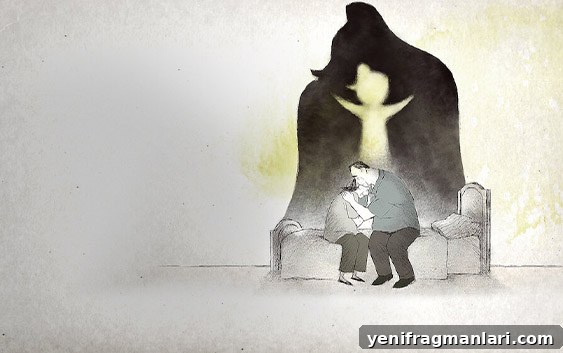
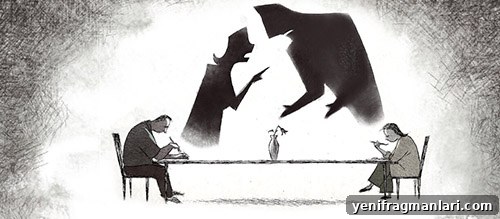
At first glance, the film’s palette and aesthetic are restrained: charcoal-like sketches and a near-monochrome world establish an atmosphere of emptiness and routine. The story opens on a couple sharing a silent meal, physically distant though seated across from one another. From their bodies emerge darker, shadowy doubles—manifestations of inner life that reach for comfort and connection. These shadow-figures move through the house and memories, desperate to piece together a family that once was.
The filmmakers use color with careful deliberation. Moments of tenderness and memory are punctuated by subtle hues—a bright blue mark on an exterior wall, the small, vivid blue of a child’s shirt—so that when color appears it hits like a memory returning sharply into focus. Those flashes of color provide both contrast and pain: they remind viewers of ordinary joys and ordinary routines now fractured by loss.
Through a series of quiet, evocative flashbacks, we see the family’s past: road trips, backyard baseball, playful domestic scenes. The contrast between those bright recollections and the present’s muted gray underscores the film’s central theme. Without heavy exposition, the narrative reveals that the child is no longer there, and that the parents are left to navigate a grief that is both private and public.
The film’s score is integral to its power. A gentle, lyrical composition weaves through the visuals, accentuating silence and amplifying moments of realization and sorrow. The music never overwhelms the images; instead, it moves with the characters, adding emotional texture to each cut and lingering shot. Sound design and negative space combine to make each quiet gesture—an empty swing, a small shirt pulled from a washing machine—resonate with meaning.
Part of what made If Anything Happens I Love You so widely discussed was its cultural impact beyond festivals and awards conversations. The short rose quickly in Netflix’s popularity charts and sparked a wave of social media reactions, including viral clips and response videos that captured how viewers were moved by the story. That viral attention helped the film reach audiences who might not otherwise seek out short-form animation, yet its emotional clarity is what anchors its staying power: this is a film meant to be felt, not just observed.
What makes the film remarkable is its restraint. There are no melodramatic gestures, no onscreen political rhetoric; instead, it offers a focused portrait of grief that feels intimate and true. In doing so, it becomes a vessel for collective mourning—an invitation to sit with difficult emotions and to reflect on the human cost of violence. The film is both a personal elegy and a broader meditation on loss.
Visually inventive, emotionally exact, and formally concise, this short is a potent example of how animation can tackle contemporary issues with sensitivity and artistic rigor. It lingers in the memory long after the credits roll, precisely because it resists easy closure and leaves space for the viewer’s own feelings and reflections.
24/24