
Genius Loci (2021)
Director: Adrien Merigeau
Screenwriters: Adrien Merigeau, Nicolas Pleskof
Starring: Nadia Moussa, Georgia Cusack, Jina Djemba
Genius Loci is a striking French animated short that stands apart from mainstream Western animation through its abstract visuals, immersive sound design, and mature thematic focus. Directed and co-written by Adrien Merigeau, and realized visually with the distinctive artistic touch of Brecht Evens, the film explores anxiety, identity and the porous boundary between inner life and external reality. The short was recognized as a nominee in the animated short category at the 2021 Oscars, drawing attention for its daring formal choices and emotional intensity.
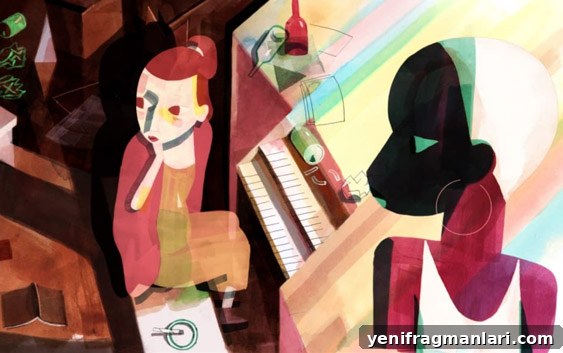
The film follows Reine (voiced by Nadia Moussa) as she leaves her bedroom and enters an evening landscape that unfolds like a living, breathing extension of her mind. Rather than following a conventional narrative arc, the film progresses through a sequence of encounters and transformations in which environments and figures shift shape and meaning. Reine’s surroundings seem to consume and reshape her, reflecting the ebb and flow of intrusive thoughts, fear, and avoidance. The result is an experience that feels immediate, unsettling and wholly personal.
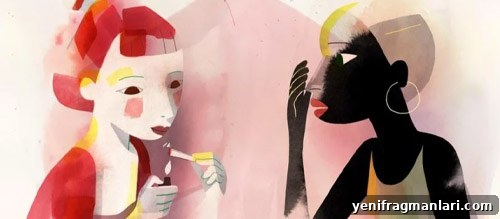
Central to the film’s power is the collaboration between Merigeau and Brecht Evens. Evens, renowned for his work in comics and visual design, brings a fluid, painterly approach to motion and space. Shapes stretch, colors collide, and familiar forms dissolve into abstractions that nonetheless communicate clear emotional states. Scenes can flow like a river of color one moment and snap into violent, jagged gestures the next. This visual dynamism mirrors the unpredictable rhythms of anxiety and helps the audience inhabit Reine’s perspective without filtering it through conventional plot mechanics.
Sound design plays an equally crucial role. Dialogue is often submerged beneath a layered soundscape—footsteps, a distant dog bark, the rustle of fabric, and more ambiguous acoustics—so that ambient noise and internal monologue blend into a single atmospheric field. This mixing strategy places viewers inside Reine’s sensory world, where external stimuli and internal turmoil are difficult to separate. Small auditory cues become overwhelming, and the layering of sounds intensifies the film’s claustrophobic mood.
Although brief, the short feels expansive because it invites viewers to project their own experiences into its abstract forms. The film does not offer tidy psychological explanations or easy resolutions. Instead, it presents episodes of avoidance, shame and confrontation that are recognizably human. Reine’s reluctance to take responsibility, her moments of paralysis and the surreal threats that envelop her all resonate with anyone who has faced overwhelming stress or persistent anxiety. The short’s abstraction is its strength: it does not prescribe a single meaning but allows multiple readings based on the viewer’s perspective.
Visually, the film benefits from Evens’ signature use of bold color contrasts and inventive compositions. Colors are not merely decorative but serve as an emotional vocabulary—warm tones can feel oppressive, cool hues can become ghostly, and abrupt shifts in palette emphasize ruptures in Reine’s mental state. The animation frequently uses metamorphosis as a device: characters and objects fold into one another, rooms expand into landscapes, and faces disintegrate into patterns. These techniques reinforce the theme of permeability between person and place—a “genius loci” in which the spirit of a location and the psyche of its inhabitant are inseparable.
For viewers drawn to experimental animation, contemporary art and character-driven psychological cinema, Genius Loci offers a concentrated, emotionally honest experience. It demonstrates how animation can move beyond entertainment to function as a medium for intense introspection and formal innovation. The film’s ambiguity invites repeated viewing and rewards attention to nuance—each repetition reveals new textures, sonic details and interpretive possibilities.
Rating: 20/24