Candyman (2021)
Director: Nia DaCosta
Screenwriters: Jordan Peele, Win Rosenfeld, Nia DaCosta
Starring: Yahya Abdul-Mateen II, Teyonah Parris, Nathan Stewart-Jarrett, Colman Domingo, Tony Todd, Virginia Madsen, Vanessa Williams
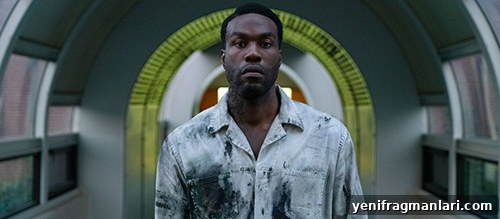
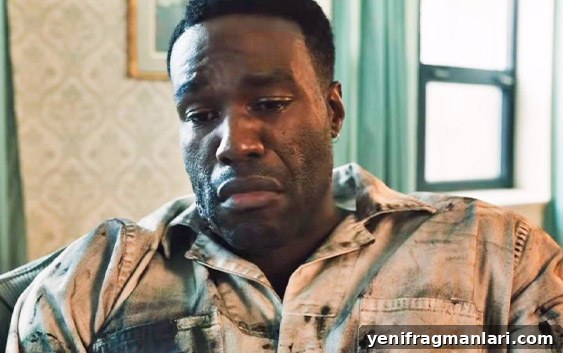
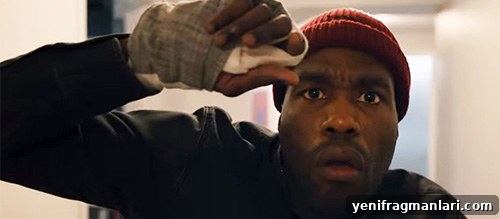
Candyman (2021), produced and co-written by Jordan Peele, arrives as a modern sequel to the 1992 original inspired by Clive Barker’s short story “The Forbidden.” Director Nia DaCosta and a strong cast—led by Yahya Abdul-Mateen II as Anthony McCoy—attempt to revive the urban legend of the hook-handed spirit known as Candyman. Anthony, a promising artist searching for new material, becomes consumed by the myth after investigating Cabrini-Green, the Chicago housing project tied to the original murders. As the legend takes hold again, the film traces how stories of violence and neglect can morph into myth and terror.
Urban myths have always reflected a community’s anxieties. Across cultures, stories are shaped by collective fears: natural dangers become monsters, household tragedies become supernatural creatures. In Chicago, decades of disinvestment, poverty, and racial inequality feed the Candyman legend—a narrative that turns real social wounds into a monstrous figure whispered about in mirrors. The film’s ambition is to connect that folklore with current conversations about memory, trauma, and artistic appropriation, but the balance between social insight and horror cinema proves uneven.
Technically, Candyman is often impressive. DaCosta’s direction shows visual confidence, with several memorable compositions and a willingness to play with perspective and tone. The production design vividly evokes both the renewed gentrification of Chicago neighborhoods and the decayed spaces where the legend once ran. Cinematographer John Guleserian captures many scenes with clarity and restraint, while the animation sequences—rendered in a silhouette style—add a whimsical, haunting texture. The performances are committed across the board: Abdul-Mateen anchors the story with believable obsession, and veteran actors such as Tony Todd and Virginia Madsen bring weight to the legacy the film inherits.
Where the movie falters is primarily in its script. The screenplay often feels too calculated, leaning on familiar slasher beats and predictable plot turns rather than letting the material breathe and unsettle. The original 1992 film had the sense of a fever dream—unexpected, haunting, and cohesive even in its most grotesque moments. This sequel, by contrast, feels self-aware to the point of stifling itself: it repeatedly signals its themes instead of weaving them organically through atmosphere and character. Moments intended to be subversive or clever sometimes come across as contrived, and the film’s attempts at twisty revelations grow tiresome rather than thrilling.
Another consequence of the script’s heavy-handedness is inconsistent character motivation. Certain choices made by protagonists and antagonists lack convincing emotional or psychological grounding, which weakens the moral ambiguity the film aims to explore. The ambiguous line between who is victim and who becomes the monster is an intriguing idea, but the execution dilutes that complexity. The ending is particularly abrupt: after building tension, the film resolves with rushed beats that undercut the payoff and leave the audience asking if the story truly concluded.
DaCosta often opts for suggestion over graphic display, preferring implication to explicit gore. This restraint can be effective—what is unseen can indeed frighten more than what’s shown—but here it sometimes leaves scenes emotionally thin. A few sequences cry out for a visceral counterweight, a rawness that would force the viewer to reckon with what the film is trying to say. Likewise, the score and sound design oscillate between evocative and monotonous, with a tendency toward droning textures that undercut key moments instead of amplifying them.
The film’s commentary on art, appropriation, and communal memory is sometimes sharp. A scene in which Anthony defends the meaning behind his work to an indifferent critic captures one of the movie’s central frustrations: a gap between artistic intention and real reception. That exchange acts as a microcosm of the film’s larger problem—ambition that doesn’t always translate into emotional resonance. Despite intelligent ideas and striking visuals, the film occasionally feels like an empty wrapper: polished on the surface but lacking a satisfying core.
There are still many merits: strong performances, thoughtful production design, and moments of genuine dread and poignancy. Fans of the original will appreciate the care taken with legacy characters and the film’s clear respect for the source material. Yet the film’s greatest weakness is its insistence on explaining and arranging the legend rather than allowing its mythology to unfold naturally. As a result, Candyman (2021) is an accomplished and interesting film that ultimately underdelivers on the emotional and narrative promises it makes.
13/24