Parallel Mothers / Madres paralelas (2021)
Director: Pedro Almodóvar
Screenwriter: Pedro Almodóvar
Starring: Penélope Cruz, Milena Smit, Israel Elejalde, Aitana Sánchez-Gijón, Julieta Serrano, Rossy de Palma
Pedro Almodóvar’s 2021 film Parallel Mothers (Madres paralelas) reaffirms the director’s mastery of color, emotion, and female-centered storytelling. The film made headlines early in its festival run for a controversial poster image, but that uproar belies what matters most: a tender, bittersweet drama anchored by two of the director’s finest central performances. Parallel Mothers blends intimate domestic drama with historical memory to explore motherhood, identity, and how the past persists in the present.
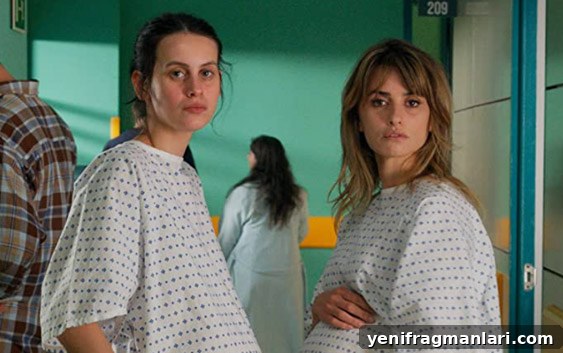
The plot follows Janis (Penélope Cruz) and Ana (Milena Smit), two women whose lives become intertwined when they give birth to daughters on the same day in the same hospital. Months later they meet again by chance; Janis, already established and searching into her family history, offers to let the struggling Ana move in and help look after her baby while she pursues a personal project. The arrangement brings both women face to face with the joys and sacrifices of motherhood, and with the ways new parenthood reshapes their identities.
A secondary but thematically important storyline concerns Janis’s effort to locate and lay to rest the remains of her grandfather, believed to lie in one of the many unexcavated mass graves from the Spanish Civil War. That search is led by Arturo (Israel Elejalde), who is also Janis’s charismatic yet absent father of the child. Almodóvar threads this historical thread through the personal narrative, asking how private lives are haunted by public history and how acts of remembrance can alter family bonds.
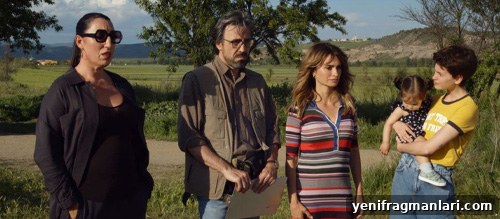
The legacy of the Spanish Civil War remains a sensitive cultural issue, and Almodóvar has long engaged with Spain’s troubled past in films such as Bad Education and Volver. In Parallel Mothers the excavation storyline occasionally feels somewhat detached from the intimate drama between the two women, functioning primarily to draw Arturo back into Janis’s life in the third act. Still, Almodóvar’s use of archival photographs and the act of exhumation provide a poignant counterpoint to the film’s present-tense emotional conflicts, reminding viewers how historical wounds reverberate across generations.
Visually, the film is pure Almodóvar. Working again with cinematographer José Luis Alcaine, he devises a recurring motif: as each chapter of Janis’s life closes, the background darkens while she remains brightly lit, visually isolating her in the frame and underlining her emotional solitude. Production design and costume also shine—modern Madrid is rendered in vivid colors and carefully curated interiors, creating a stylish backdrop for characters who often feel frayed at the edges. The city’s architecture and Alcaine’s camera work make Madrid look irresistible, even as its inhabitants unravel.
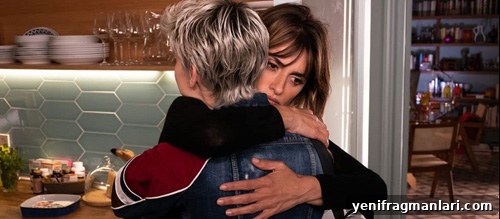
Penélope Cruz delivers an emotionally overflowing performance that anchors the film; Janis’s decisions and perspective propel much of the story. Milena Smit matches her with a performance that captures Ana’s impulsiveness, vulnerability, and evolving strength. The two actresses create compelling chemistry, and their relationship—full of mutual dependence, friction, and tenderness—is the core pleasure of the film. Rossy de Palma returns as Janis’s loud, loyal friend Elena, offering emotional ballast and comic relief, while Aitana Sánchez-Gijón plays a complicated mother figure whose choices underscore themes of abandonment and generational conflict.
Almodóvar’s style leans toward heightened melodrama rather than strict naturalism; some viewers who prefer subdued, documentary realism may find certain beats overstated. Yet the emotions on display feel authentic, and the film’s dramatic contrasts—moments of domestic warmth interrupted by anger, grief, or shocking revelations—are handled with care. The narrative flirts with darker possibilities without committing to the unsettling extremes of some of Almodóvar’s earlier, more transgressive work. Instead, Parallel Mothers returns to the director’s enduring interest: the lives of women, and how motherhood can reveal both tenderness and cruelty in unequal societies.
Ultimately, Parallel Mothers will delight established fans of Almodóvar and those who appreciate richly acted, visually sumptuous dramas about family and memory. It may not convert viewers who are uninterested in melodramatic storytelling, and the historical subplot sometimes feels like it belongs to a different film. Nevertheless, the two lead performances—and Almodóvar’s unmistakable flair for color, composition, and emotional truth—make this a memorable addition to his body of work. At its heart, the film is about connection: women supporting each other through fear, regret, and the messy realities of life and motherhood.
19/24