
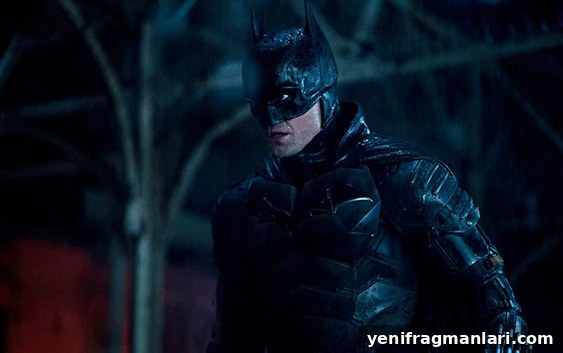
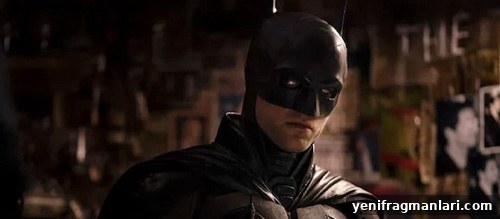
The Batman (2022)
Director: Matt Reeves
Screenwriters: Matt Reeves, Peter Craig
Starring: Robert Pattinson, Zoë Kravitz, Paul Dano, Jeffrey Wright, John Turturro, Peter Sarsgaard, Colin Farrell, Andy Serkis, Jayme Lawson, Alex Ferns
Batman has been reinterpreted many times across more than eight decades: as a moral guardian, a lonely outcast, a self-sacrificing vigilante and a brutal crusader. Each new iteration asks what fresh perspective it can bring to both the man behind the cowl and the myth. In Matt Reeves’ bold reimagining, Batman is presented as a younger, darker detective trapped between obsession and duty. Reeves, known for his work on the Planet of the Apes films, approaches Gotham with a focus on atmosphere, investigation and the psychological strain of a man who operates at night and vanishes by day.
Robert Pattinson plays Bruce Wayne as a withdrawn, grief-worn billionaire who has been operating as Batman for two years. This is not yet the polished symbol of hope audiences may expect; it’s a raw, unrefined figure driven by a need to expose corruption and punish wrongdoers. The plot tightens when Selina Kyle, portrayed by Zoë Kravitz, enters the scene as a morally ambiguous ally and foil, and when Paul Dano’s Riddler launches a campaign of terror that threatens to expose a vast conspiracy involving Gotham’s elite and law enforcement. Jeffrey Wright’s Lieutenant Gordon anchors the investigation on the side of the law, forming an uneasy but effective partnership with Batman and Catwoman.
At its core, The Batman is a film about perception and surveillance: who watches, who is watched, and how truth is assembled from fragments. Reeves emphasizes the detective side of Batman, a facet often downplayed in blockbusters that favor spectacle over sleuthing. Here the search for clues is painstaking and methodical. Batman uses practical, often improvised tools—most notably high-tech contact lenses that let him review gathered evidence later. Pattinson’s performance is measured and inward, his eyes—visible even through the cowl—constantly assessing and cataloguing detail. This quieter approach allows the story to lean into procedural elements, making the film feel like a noir thriller as much as a superhero movie.
The dynamic between Batman, Catwoman and Lieutenant Gordon becomes the emotional and narrative center of the film. Rather than portraying Batman as a lone wolf, Reeves gives him collaborators whose methods and motives clash with his own. That friction produces some of the film’s most compelling moments. Kravitz’s Selina is resourceful and conflicted, offering a counterbalance to Bruce’s single-mindedness. Wright’s Gordon provides moral clarity and legal restraint, while Pattinson delivers a tormented intensity that grounds the character’s internal conflict.
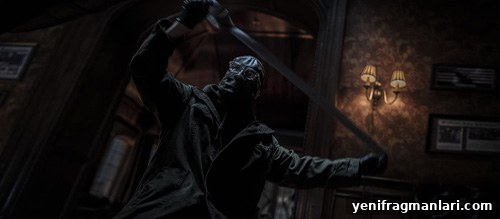
Paul Dano’s Riddler is among the film’s most unsettling elements. He channels a modern brand of fanaticism—an extremist who uses riddles and violent spectacle to broadcast a message about perceived corruption. His methods and rhetoric echo real-world phenomena of radicalization and manipulative online personalities, giving the antagonist contemporary resonance. Colin Farrell, largely unrecognizable beneath extensive prosthetics, brings a sly energy to the Penguin, offering a different kind of menace that contrasts with Dano’s fanaticism.
Visually, the film is drenched in mood. Shot by cinematographer Greig Fraser, Gotham is rendered as a rain-slicked, neon-tinged metropolis where architecture feels as oppressive as the criminal elements that infest it. Much of the story unfolds in lower, grittier neighborhoods rather than the gleaming towers of Wayne Enterprises, allowing the city’s decay and social divide to become characters in their own right. Fraser’s interplay of light and shadow enhances the noir atmosphere, making set pieces both striking and thematically resonant.
The film’s action is intentionally raw and consequential. Fight sequences are not sleek displays of choreography but brutal encounters with real physical stakes. Reeves often leans into the moral ambiguity of vigilantism, keeping audiences uncertain about whether Batman’s methods might cross a line. The movie begins with a visceral example of that moral gray area: an early beating demonstrates the intimidation Batman wields and sets up his arc from an almost monstrous presence to someone who becomes, eventually, a symbol with a clearer purpose.
Reeves’ screenplay references many canonical Batman stories and visual styles—noir, crime thrillers and gritty detective fiction—without becoming a direct adaptation of any single source. The film weaves familiar elements into a distinct narrative voice, balancing homage with original choices. Composer Michael Giacchino contributes a haunting, mature score that complements the film’s dark emotional landscape and deepens its dramatic impact.
There are a few narrative excesses—an overabundance of twists and a finale that, while effective, may not fully match the intense promise of earlier sequences. Still, the movie offers unexpected pleasures, including a satisfying sequence featuring an iconic Batmobile that will delight fans. More importantly, it reframes a famous line—“I am vengeance”—giving it renewed emotional weight as a marker of Bruce Wayne’s evolving identity.
Ultimately, The Batman stands out as a confident, character-driven reinvention. Its strengths lie in strong central performances, a richly realized Gotham, and a willingness to interrogate the ethics of vigilantism. The result is a darker, more contemplative take on the Caped Crusader that feels both modern and faithful to the character’s detective roots.
21/24