
Born from the shadow of nuclear catastrophe in 1954, Godzilla emerged as an enduring cultural icon. From his debut, the towering radioactive dinosaur captured Japanese audiences’ imaginations, symbolizing a nation still processing the trauma of war. Monster movies often carry meanings beyond their spectacle, and the first Godzilla film harnessed that potential, presenting a terrifying metaphor that resonated deeply with viewers.
Over the decades, Godzilla headlined 32 kaiju (giant monster) films produced by Tokyo-based Toho Studios, facing a gallery of colossal foes: prehistoric beasts, mutated animals, alien invaders, and even a colossal ape. While the series sometimes slid into camp and outright silliness, many entries saw Godzilla defending—or at least confronting—the planet in ways that reflected anxieties about humanity and technology.
English-language dubs and edits, a Hanna-Barbera cartoon series, and several American remakes of varying quality broadened his global reach, but Godzilla’s reign as the King of the Monsters endures into its eighth decade. The franchise has become the longest-running film series in history and one of the most commercially successful in horror and science fiction—a remarkable legacy for a concept that began with actors in rubber suits and miniature cities.
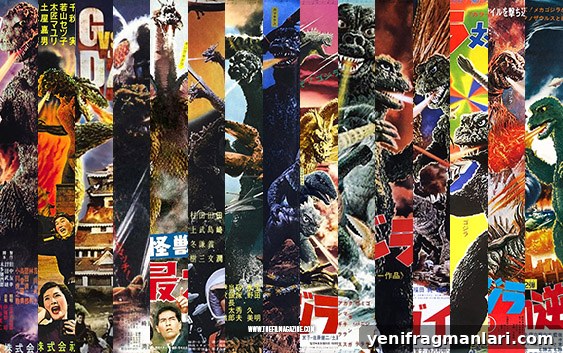
In this Ranked feature, we order Toho’s Showa Era Godzilla films—15 movies that defined the early franchise—based on filmmaking quality, historical significance, and lasting appeal. Fifteen films, fifteen epic clashes between Godzilla and his rogues’ gallery: who triumphs, who wreaks the most havoc, and who survives a sweaty day in a rubber suit with dignity intact? Let them fight.
Follow The Film Magazine on Twitter to stay updated with our latest features.
15. Godzilla Raids Again (1955)
A rushed and economical follow-up to the original, Godzilla Raids Again struggles to recapture the gravitas of its predecessor. The film reintroduces a Godzilla-like threat—this time a different creature—and centers on a lackluster human subplot and an uninspired monster duel. The fight between Godzilla and the spiny Anguirus is hampered by a performer forced to crawl on all fours, and the film pads its runtime with recycled footage from the first movie. Despite a few unintentionally humorous moments, this entry lands lowest on the list for being the dullest of the Showa-era films.
14. All Monsters Attack (1969)
All Monsters Attack is essentially a clip-show built around a child’s fantasy. While its anti-bullying message and the young protagonist’s imaginative escape to Monster Island are touching, the heavy reliance on stock footage from earlier films and the thin, disjointed narrative make it feel like a truncated compilation rather than a fully realized movie. A brief bright spot comes when the child outsmarts a gang of inept criminals, but overall the film is wearisome and forgettable.
13. King Kong vs Godzilla (1962/1963)
One of cinema’s earliest pop-culture crossovers, King Kong vs Godzilla has an intriguing production history but inconsistent results on screen. The original Japanese cut carries more energy and cohesion than the American version, which suffers from awkward dubbing and clumsy edits. While entertaining at times, the film’s tone is uneven and includes troubling depictions in some islander scenes. It remains an important and historically interesting entry, even if it falls short of greatness.
12. Godzilla vs Mechagodzilla (1974)
By the mid-1970s, alien plots and metallic doppelgängers had become franchise staples. Godzilla vs Mechagodzilla delivers a familiar formula—space invaders, a robotic double, and an action-driven climax. The alien designs and some effects are unconvincing, but the reveal of the mechanical Godzilla and the final magnetic showdown offer memorable moments in an otherwise derivative installment.
11. Ebirah, Horror of the Deep (1966)
A lighter Godzilla entry with a likable band of protagonists—a grieving brother, a charming thief, and two hapless companions—Ebirah, Horror of the Deep mixes adventure elements with kaiju spectacle. The film’s set pieces and location shooting blend well with miniature work, and the semi-submerged duel between Godzilla and the giant lobster Ebirah is satisfying. However, some awkward narrative choices and problematic portrayals temper the film’s strengths.
10. Son of Godzilla (1967)
Son of Godzilla leans into slapstick and family-friendly tropes by introducing Godzilla’s son, Minilla. The father-son dynamic mixes humor with occasionally uncomfortable tones—Godzilla’s stern parenting can feel harsh—and the film’s lighter musical and comic beats may not suit all viewers. Yet performances and the arrival of the monstrous spider Kumonga in the finale lift the film, delivering an unexpectedly intense climax.
9. Godzilla vs Gigan (1972)
Godzilla vs Gigan pairs a classic alien invasion story with inventive creature design. Gigan—part cyborg, part space-beast—brings a striking silhouette, and the film ups the franchise’s on-screen violence in response to audience expectations. Budget constraints and recycled effects are evident, but the movie’s energy and some memorable visual moments keep it engaging.
8. Godzilla vs Megalon (1973)
A colorful, campy romp, Godzilla vs Megalon embraces playful absurdity. An advanced underwater civilization sends the beetle-like Megalon to wreak havoc while human villains seek to weaponize an inventor’s robot, Jet Jaguar. Despite obvious stock footage and reused effects, the film’s brisk pace, vibrant tone, and the camaraderie between Godzilla and Jet Jaguar make it an enjoyable, if unserious, entry.
7. Ghidorah, the Three-Headed Monster (1964)
Ghidorah introduced the franchise’s most iconic villain: a golden, three-headed dragon from space. The film brings together Godzilla, Rodan, and Mothra in a memorable alliance, and its spectacle and imaginative touches inspired later blockbusters. While the climactic kaiju battles can feel repetitive, the film remains a landmark for its scale and for establishing Ghidorah as a recurring cosmic threat.
6. Terror of Mechagodzilla (1975)
Ishiro Honda’s final Godzilla film and his last as a director, Terror of Mechagodzilla benefits from tighter direction and focused storytelling. Though the opening recaps the previous Mechagodzilla film, the movie delivers disciplined pacing, an inventive “Dinosaur Task Force,” and a dramatic conclusion that made it a fitting capstone for the Showa series’ initial run.
5. Destroy All Monsters (1968)
Ambitious and action-packed, Destroy All Monsters embraces spectacle: a secret research facility houses numerous kaiju until they’re remotely controlled and unleashed to attack cities worldwide. The film’s simple premise lets it go full throttle on monster battles and miniature carnage, showcasing a wide variety of creatures and some of the most elaborate miniature sets in the series. It’s not subtle, but it’s thrilling and grand in scope.
4. Godzilla vs Hedora (1971)
Also known as Godzilla vs Hedorah, this entry stands out for its environmental message and experimental style. Mixing animation, musical interludes, and surreal imagery, the film attacks pollution literally and figuratively by pitting Godzilla against an acid-spewing sludge monster born of human waste. Though hampered by rushed production values, the movie’s political bite and daring artistry make it one of the more memorable and provocative entries of the era.
3. Invasion of the Astro-Monster (1965)
Also known as Monster Zero, Invasion of the Astro-Monster blends pulp science fiction with kaiju action. Humanoid aliens “borrow” Godzilla and Rodan to battle Ghidorah on a distant world, and the film balances campy charm with thoughtful genre plotting. The effects are charmingly fragile but serviceable, and the narrative ingenuity and imaginative concepts make this one of the stronger mid-series entries.
2. Mothra vs Godzilla (1964)
Mothra vs Godzilla pairs spectacle with a strong environmental and anti-exploitation message. A giant egg washes ashore, sparking greed and conflict as Mothra’s priestesses and the islanders protect their sacred creature. Watching Mothra and her silk-spraying larvae take on Godzilla delivers the series’ signature mix of heartfelt themes and rubber-suit spectacle. Smart, politically charged, and emotionally resonant, this film ranks among Ishiro Honda’s finest.
1. Godzilla (1954)
The original Godzilla (Gojira) is the definitive film of the series: a lean, terrifying thriller that transformed the monster movie into a vehicle for serious themes. Rooted in director Ishiro Honda’s wartime experiences and the trauma of nuclear devastation, the film uses Godzilla as a powerful metaphor for destruction and human hubris. Its deliberate pacing, stark imagery of a burning Tokyo, and bleak, uncompromising ending set a benchmark the franchise has rarely matched. The film remains one of the most influential and emotionally resonant works in Japanese cinema.
Do you agree with this ranking of the first 15 Showa-era Godzilla films? Which kaiju or Godzilla movie is your favorite? Share your thoughts below—just try not to leave a trail of destruction while commenting.