
The Orphanage (2007)
Director: J.A. Bayona
Screenwriter: Sergio G. Sánchez
Starring: Belén Rueda, Fernando Cayo, Roger Princep, Mabel Rivera, Montserrat Carulla, Geraldine Chaplin, Andrés Gertrúdix, Edgar Vivar, Óscar Casas
When a noted filmmaker attaches their name to a project as a producer, it can transform how that film is perceived and financed. In the case of The Orphanage, Guillermo del Toro’s support for J.A. Bayona’s debut feature boosted the film’s profile, increased its budget and helped it reach a global audience. That influence is visible in the film’s tone: a compassionate view of supernatural elements and an interest in monsters as tragic, misunderstood figures. Bayona and del Toro share a sensibility that favors emotional resonance and moral complexity over cheap scares, and The Orphanage plays like a carefully crafted, heart-driven mystery that uses ghost-story conventions to examine trauma and grief.
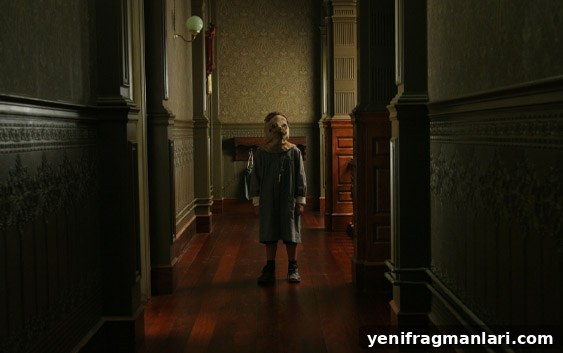
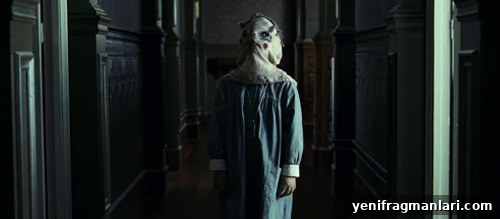
The story follows Laura (Belén Rueda), who returns to the decaying orphanage where she grew up with her husband Carlos (Fernando Cayo) and their adopted son Simón (Roger Princep). Laura plans to reopen the building as a home for disabled children, hoping to give it new purpose. Simón, an imaginative and sensitive boy, begins to talk to invisible playmates. His conversations with the unseen escalate into alarm when Simón mysteriously disappears. As Laura digs into the orphanage’s past attempting to quiet restless spirits, she confronts a history of loss and neglect and the presence of a solitary, masked child, Tomás (Óscar Casas), whose silence and intensity haunt the narrative.
Writer Sergio G. Sánchez and director J.A. Bayona return repeatedly to twin concerns—how trauma lingers and how grief shapes lives. These themes surface in their other collaborations and inform Bayona’s later work, giving The Orphanage a coherent emotional logic: supernatural occurrences in the film feel like manifestations of unresolved sorrow and guilt rather than mere special effects. The house itself acts as a repository of memory, a place where past abuses and heartbreak refuse to stay buried.
The film asks a central question familiar to gothic storytellers: what makes a ghost? Is a ghost a revenant seeking revenge, an echo of trauma, or a wounded soul needing recognition? Bayona approaches this question with sympathy, framing apparitions as echoes of human suffering. This humane perspective gives the horror a quietly tragic dimension; the frightening moments become moments of revelation rather than spectacle.
Children’s unique perspective plays a crucial role in the film. The Orphanage leans on the idea that children perceive reality differently—whether by sharper imagination, greater honesty, or an ability to notice what adults have learned to ignore. Scenes in which children converse with empty space, or react to invisible playmates, convey both tenderness and unease. The film uses these moments to explore innocence and vulnerability, showing how the needs and cruelties of childhood echo across time.
Sound design is among the film’s most powerful tools. Subtle audio cues—soft knocks, distant whistles, and the haunting tones associated with the child Tomás—build tension long before the visuals supply answers. One of the most unsettling sequences relies heavily on sound: an astral encounter led by a psychic (Geraldine Chaplin) unfolds as an auditory revelation, delivering its impact through a blend of whispered confession and spectral noise. The soundscape creates an immersive atmosphere where silence itself becomes ominous.
Bayona and his collaborators also introduce sympathetic supporting characters—mediums, neighbors, and childhood friends—who offer context and different perspectives on the orphanage’s history. Their interventions provide moments of relief and insight while advancing the plot, though a few secondary figures remain underdeveloped and primarily functional. Even so, Geraldine Chaplin’s psychic brings a memorable presence and a directness that helps move the story forward when Laura’s investigation reaches its most urgent turning points.
Many of the film’s most effective scenes rely on restraint and clarity. A standout example is the recurring children’s game used as a communication method between the living and the dead. Bayona stages it with patience: Laura counts and knocks on a wall while the camera paces the empty room, and the slow reveal of unseen figures creeping closer demonstrates how minimalism can generate maximum dread. Cinematographer Óscar Faura frames these moments with a careful economy that heightens suspense without resorting to cheap shocks.
The score by Fernando Velázquez largely supports the film’s eerie, melancholic mood, though one sequence—an upbeat montage in the final act intended to prepare the house for a spectral visitation—uses lighter music that sometimes undercuts the tension. Still, the overall composition reinforces the film’s blend of sorrow and suspense, amplifying emotional beats as the plot moves toward its revelation.
The Orphanage succeeds because it balances genre expectations with genuine human feeling. It is a ghost story that privileges empathy: spirits are not mere antagonists but vestiges of real pain. The film suggests that acknowledging past wrongs and offering care can break cycles of suffering, and it insists that love and attention—especially toward vulnerable children—can spare future generations from being haunted, in either metaphorical or literal terms. Its deliberate pacing, thoughtful performances, and thoughtful use of sound and framing make it one of the most moving and haunting takes on the haunted-house tradition.
Score: 20/24