
Where The Crawdads Sing (2022)
Director: Olivia Newman
Screenwriter: Lucy Alibar
Starring: Daisy Edgar-Jones, Taylor John Smith, Harris Dickinson, Michael Hyatt, David Strathairn
Where the Crawdads Sing arrives as a film that will feel familiar to anyone who has watched many contemporary adaptations of bestselling novels. The story traces the life of Kya, a young woman raised in isolation, who becomes the center of a murder investigation. The setup—an isolated heroine, social prejudice, a courtroom drama and an exploration of love and survival—echoes through many modern literary adaptations, but this film still offers moments of genuine emotional weight thanks largely to its performances.
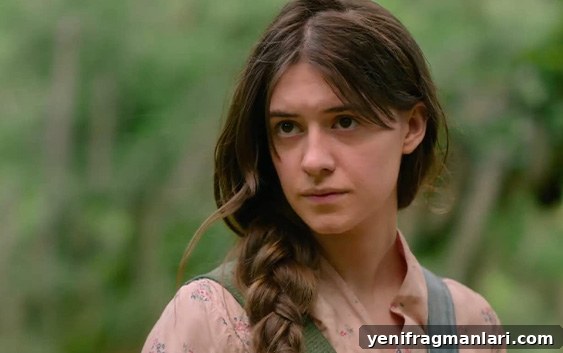
Daisy Edgar-Jones, known for her work in recent character-driven dramas, anchors the film with a quietly compelling performance. She carries much of the movie’s emotional burden, and when the screenplay allows, she provides convincing nuance: vulnerability mingled with a guarded strength born of loneliness and resilience. The supporting cast largely does respectable work, bringing life to characters who on the page sometimes verge on archetype. Michael Hyatt and David Strathairn, among others, deliver steady professional turns that help stabilize the film when its storytelling stumbles.
The film’s narrative structure alternates between past and present, revealing Kya’s upbringing, her encounters with local residents, and the relationships that shape her. The plot revolves around themes of abandonment, prejudice, and the way communities treat those who are different. These themes are effective in theory, and the marshland setting provides evocative visual potential for a story about solitude and survival. Unfortunately, the execution does not always match the potential.
Direction by Olivia Newman sometimes captures striking images of the natural world and the oppressive social environment that surrounds Kya, but the film’s momentum is uneven. The early scenes, which should establish atmosphere and allow the audience to inhabit Kya’s world, are edited in a way that often feels rushed. Instead of lingering to build mood and tension, many sequences move on too quickly, which undermines the film’s capacity to immerse viewers in its emotional landscape.
Editing choices influence the tone throughout. The pacing frequently shifts from breathless to plodding, which makes it difficult to settle into the story. When the film slows down to explore relationships or the courtroom drama, the beats can feel predictable; when it hurries, it loses the chance to develop quieter, more meaningful moments. This mixture leaves several threads underdeveloped and robs some of the more intimate scenes of the time they need to resonate.
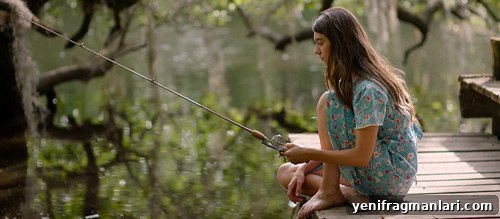
Musically, the score supports the film without ever becoming a distinctive voice of its own. The soundtrack underlines emotions but rarely surprises, and at times it feels like a placeholder rather than an expressive partner to the images. Cinematography does better: marsh vistas, muted light and the close-up details of daily survival are often well captured, reminding the viewer why the natural setting is central to the story’s themes.
Screenwriter Lucy Alibar adapts the novel into a screenplay that follows the book’s contours, preserving the key moments that fans will expect. The script wrestles with how to balance the mystery plot with the coming-of-age elements and the social critique implicit in Kya’s treatment by her town. The result is sometimes uneven—dialogue can tilt toward the expositional or the melodramatic—but the essential throughline remains clear: this is a portrait of a woman shaped by abandonment and judged by a community that never understood her.
One of the film’s persistent problems is predictability. Plot twists and relationship developments are frequently telegraphed well in advance, so the narrative rarely surprises. The courtroom sequences and revelations are mechanically assembled, which blunts the impact of what should be tense, emotionally charged moments. A prolonged coda at the end, meant to provide closure, stretches longer than necessary and tests the viewer’s patience rather than deepening the story’s emotional meaning.
Still, the film has merits. When it slows enough to let Daisy Edgar-Jones inhabit Kya’s solitude and strength, the emotional truth of the character comes through. The marsh setting and the film’s attention to the physical realities of survival create atmospheres that occasionally rise above the story’s more conventional aspects. For viewers who connect with the central performance and the visual world, the film offers satisfying passages of reflection and quiet power.
In the end, Where the Crawdads Sing is a mixed adaptation: it benefits from strong lead acting and atmospheric visuals but is hampered by uneven editing, predictable plotting, and an inconsistent pace. It will likely appeal most to readers of the novel and to viewers who favor character-driven melodrama, while casual moviegoers may find its storytelling approach familiar and its surprises few and far between.
Score: 9/24