
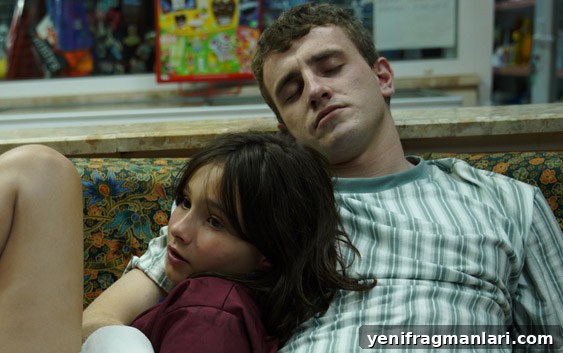

Aftersun (2022)
Director: Charlotte Wells
Screenwriter: Charlotte Wells
Starring: Paul Mescal, Frankie Corio, Celia Rowlson-Hall
Charlotte Wells’ feature debut, Aftersun, premiered to critical acclaim during Critics’ Week at Cannes and later opened the 2022 Edinburgh International Film Festival in the UK. The film follows a father and daughter, Calum (Paul Mescal) and Sophie (Frankie Corio), on a holiday at a seaside resort in Turkey. On the surface the plot is simple, but Wells builds a quietly powerful drama from small, intimate moments and the unsettled energy that runs beneath them.
Aftersun is crafted with an extraordinary sensitivity. Wells edits the film with a natural, almost conversational rhythm—cuts land softly, like the way memories surface in fragments. The effect is not flashy but remarkably intimate: you feel as if you’re slipping into private, irreplaceable instants of a summer that will shape both characters. The film’s real strength lies in those fine, detailed moments—glances, pauses, and the textures of everyday life that reveal more than expository dialogue ever could.
At first glance, the relationship between Calum and Sophie appears effortless and warm. They laugh, play, and share ordinary pleasures of a holiday: arcade games, long walks, and nights at the hotel. Yet beneath the comfort of their bond is a steady, understated tension. It’s not an eruption of dramatic confrontations; it’s an internal strain, the quiet weight of something unspoken. This persistent unease shapes the film’s emotional architecture. Wells allows that tension to linger and accumulate, creating a sense of expectation—an almost unbearable anticipation that something will finally give.
Paul Mescal and Frankie Corio give the film its emotional core. Corio brings a luminous, natural presence to Sophie—curious and slightly mischievous, she feels entirely truthful on screen. Her performance has the spontaneity of a child fully inhabiting a moment, making her reactions and gestures feel unscripted and sincere. Mescal, as Calum, provides a complex, layered counterpart. He conveys warmth and patience while also carrying an undercurrent of melancholy and private struggle. Mescal’s performance is restrained but resonant, showing a man trying to be present for his daughter while wrestling with his own shadows.
>The chemistry between Mescal and Corio is the film’s backbone. Wells writes and directs their relationship with tenderness and clarity; there is no doubt that they love each other deeply. At the same time, Wells does not sentimentalize their bond. The filmmaker is careful to show both the joy and the strain of parenting—how devotion can coexist with exhaustion and how small misunderstandings can magnify when left unspoken. Moments such as Calum watching Sophie play with another child or Sophie refusing sunscreen are small but telling, charged with layers of meaning about boundaries, independence, and concern.
Wells’ approach to tension is subtle and masterful. Instead of overt confrontations, she cultivates a slow-burning unease that keeps viewers attentive and emotionally invested. That restraint makes the film feel honest and lived-in; it mirrors how family dynamics often unfold in reality, through accumulation instead of single dramatic incidents. The result is a portrait of parenthood that is both compassionate and unsparing.
Aftersun also excels in its portrayal of memory and the way the past refracts through present experiences. The movie often feels like a collected series of recollections—moments that, when viewed together, form an impressionistic portrait rather than a linearly argued thesis. This stylistic choice enhances the film’s emotional weight: it invites the audience to piece together what is said and unsaid, to read the space between scenes and to feel the ache of things left unsaid.
Beyond performance and structure, the film is notable for its visual and sonic restraint. Wells uses light, sound, and camera movement to accentuate intimacy and to allow small gestures to carry significant emotional weight. The result is a moving and subtle film about love, memory, and the fragile responsibilities of parenthood.
Aftersun is a remarkable directorial debut: modest in its scale but immense in its emotional reach. It proves that complexity can be achieved through simplicity, and that the quiet, everyday moments of a relationship can reveal vast, frequently hidden truths. This is one of the most affecting portrayals of a father-daughter relationship on screen in recent years—compassionate, precise, and unforgettable.
Score: 24/24