

Mr Harrigan’s Phone (2022)
Director: John Lee Hancock
Screenwriters: John Lee Hancock
Starring: Jaeden Martell, Donald Sutherland, Kirby Howell-Baptiste, Joe Tippett, Cyrus Arnold, Colin O’Brien
Stephen King built his reputation on stories that blend everyday life with uncanny dread, but not every King adaptation prioritizes shock over character. Mr Harrigan’s Phone (2022), directed and written for the screen by John Lee Hancock, is a measured, character-driven film that leans into coming-of-age themes rather than conventional horror. Adapted from a short story included in King’s 2020 collection, the film preserves the emotional core of the source material while presenting the supernatural elements as reverberations around a young boy’s passage into adulthood.
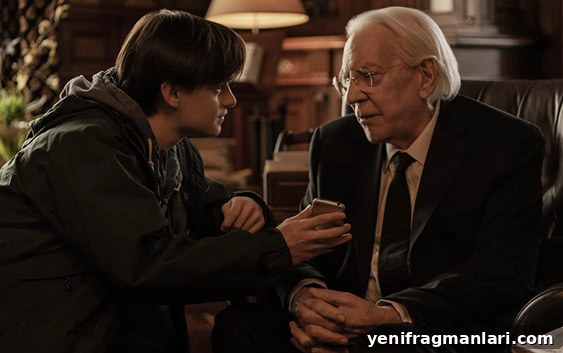
The narrative centers on Craig, a bookish teenager played by Jaeden Martell, who lost his mother some years earlier and finds companionship and mentorship in John Harrigan, a wealthy, retired businessman portrayed by Donald Sutherland. Craig’s talent for reading aloud earns him a job visiting Harrigan several times a week, and a quiet, unlikely friendship develops between the two. Their bond deepens when Harrigan gifts Craig an original iPhone—an object that becomes central to the film’s moral and emotional dilemmas. After Harrigan dies, messages from his buried phone begin to reach Craig, and those messages force the boy to confront consequences, power, and grief.
Hancock’s approach is deliberate and restrained. Rather than rely on jump scares or frequent shocks, the film uses its supernatural premise to probe the psychology of its characters and the ethical choices Craig faces. Moments that might have been staged purely for fright are handled in ways that reinforce narrative logic and character motivation; the brief scares function less as cheap shocks and more as confirmations of what the audience already suspects. The director favors quiet observation over sensational spectacle, allowing the performances and small details to carry the story.
Jaeden Martell delivers a nuanced performance that anchors the film. His portrayal of Craig balances vulnerability, curiosity, and the confusion of adolescence, making the character’s moral struggles feel deeply personal and believable. Donald Sutherland brings a soft authority to Harrigan—equal parts lonely, stubborn, and fond of the boy who reads to him—creating a relationship that feels earned rather than sentimental. The chemistry between the two actors gives the film its emotional weight and keeps the audience invested even when the plot takes an eerie turn.
Technically, the film is unobtrusive in a way that serves its themes. Cinematography and editing generally support a calm, reflective tone; there are moments of over-editing and some unnecessary cuts in certain dialogues, but these are minor blemishes in an otherwise well-paced picture. The film’s production design and use of period details—particularly the presence of an older, early-model smartphone—emphasize how technology can become both a comfort and a conduit for consequence. Sound design and score are understated, choosing to complement rather than overpower the emotional tenor of the scenes.
At its heart, Mr Harrigan’s Phone is about growing up and the uneasy moral choices that come with agency. Craig’s interactions with Harrigan and the unfolding mystery of the messages force him to reckon with anger, grief, and a desire for control. The film explores how power can corrupt even when intentions are innocent, and how grief can steer decisions that last a lifetime. These themes are universal, and Hancock’s adaptation treats them with a quiet seriousness that elevates the material beyond simple genre fare.
This film will not satisfy every viewer who expects a traditional horror outing from a Stephen King adaptation. Some viewers may find the pace deliberate and the scares muted. Yet those same qualities are precisely what allow the film to function as a thoughtful meditation on childhood, responsibility, and loss. It resists sensationalism and instead dwells on character, consequence, and small moral reckonings—qualities that distinguish it from more sensational adaptations.
In sum, Mr Harrigan’s Phone stands as a mature, empathetic work that marries Stephen King’s keen ear for human detail with John Lee Hancock’s restrained directorial voice. Strong central performances, particularly from Martell and Sutherland, and a focus on moral complexity make the film more of a coming-of-age drama touched by the supernatural than a conventional horror picture. It is quiet where horror often screams, and that restraint is ultimately its greatest strength.
Score: 20/24