
The Bikeriders (2023)
Director: Jeff Nichols
Screenwriter: Jeff Nichols
Starring: Jodie Comer, Tom Hardy, Austin Butler, Michael Shannon, Mike Faist
Jeff Nichols has always followed his own instincts as a filmmaker, moving fluidly between intimate independent dramas and more ambitious, concept-driven work. His body of films ranges from quiet family conflicts to existential explorations of character under pressure. With The Bikeriders, Nichols turns his attention to motorcycle culture, inspired by a photobook that captured the look and attitude of bikers. Rather than relying on surface glamor, he focused on the human stories behind the jackets and bikes—what it means to belong to a club, why people are drawn to that identity, and how the idea of “cool” shapes behavior and relationships.
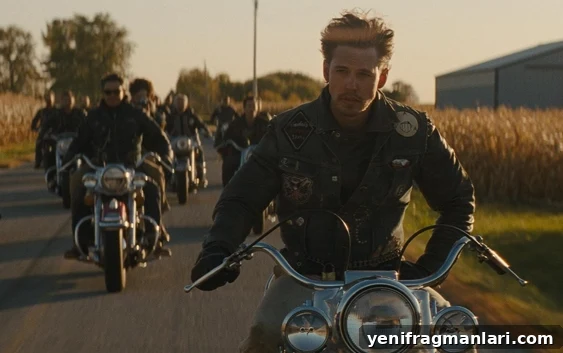
The film is aware of its place in the biker-movie tradition and nods to classics in the genre, but it chooses to dig deeper into motive and perspective. At the center of the story is Johnny, played by Tom Hardy, who becomes the club’s leader. One memorable sequence shows Johnny watching Marlon Brando’s performance and imagining himself as that kind of figure—an early lesson in how popular culture informs personal identity. Johnny’s leadership is defined by a code of respect and fairness, and Hardy brings a complex charisma to the role, portraying a man who is both aspirational and grounded.
Austin Butler’s Benny provides a striking contrast: quiet, intense, and volatile. He’s an outsider and an apprentice of sorts to Johnny, bonded by admiration and loyalty. Benny’s relationship with Kathy, portrayed by Jodie Comer, reveals a softer, domestic side of the biker lifestyle that many films in the genre overlook. Comer’s performance brings nuance and warmth to Kathy; her regional accent and restrained emotionality make her a believable partner and a compelling narrator of the group’s story. The film frequently uses Kathy’s point of view to give a more humane, observant account of the motorcycle club and its members.

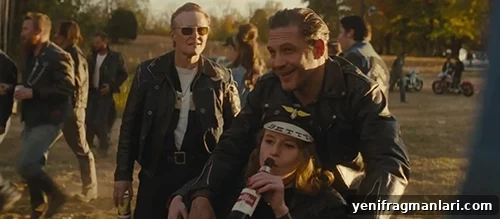
Over the course of the film we meet a variety of characters: new recruits eager to prove themselves, rival club members, and teenagers who idolize the bikers from afar. The drama arises not only from external conflicts but from the ways each character defines and defends their identity within the club. Kathy’s narration is especially effective because she stands just outside the inner mythology; she observes without ego and offers candid insight into the dynamics between Johnny, Benny, and the others. That distance allows the film to humanize characters who might otherwise be reduced to archetypes.
There are clear echoes of other notable films about organized groups, where ritual and reputation become central to members’ sense of self. The club’s structure and the pride associated with membership recall the detailed community codes often seen in crime dramas, and the film does fetishize the aesthetics of the gang to some degree—the jackets, the rituals, the public face of cohesion. But Nichols balances that depiction with a steady focus on personal motivations: grief, belonging, longing, and the desire to matter. Those motivations make the characters relatable even when their actions are extreme or self-destructive.
The film’s screenplay and performances emphasize subtlety over spectacle. Instead of glorifying violence or glamorizing outlaw culture, The Bikeriders explores the everyday realities that push people toward this kind of tribe. The cinematography and production design evoke an era and atmosphere without overwhelming the human drama, allowing performances to carry emotional weight. Jodie Comer, Tom Hardy, and Austin Butler deliver layered portrayals that anchor the film’s themes of identity, loyalty, and the cost of belonging.
While the film does not reinvent the biker genre, it reframes familiar tropes through character-driven storytelling. Its strengths lie in the perspective it chooses—especially Kathy’s voice—and in the way it examines what “cool” actually means to different people. Some viewers may wish for a broader social critique or more explicit stakes, but the movie’s sincere treatment of its characters makes for a resonant experience. It shows that these clubs, for all their posturing and spectacle, are ultimately composed of ordinary people seeking purpose and connection.
Score: 18/24
Rating: 3 out of 5.
Written by Rob Jones
Support the writer: rbrtjones.com · Twitter: @rbrtjones