
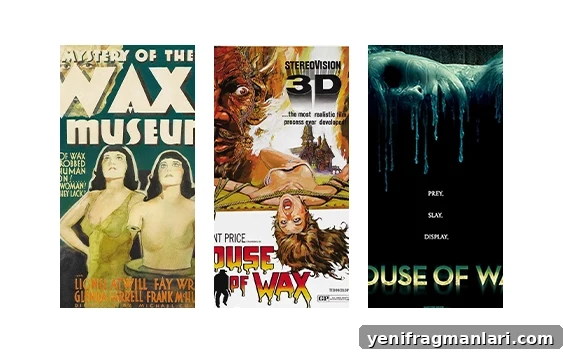
Horror remakes — what purpose do they serve? Often they’re obvious cash-ins, but given enough distance from the originals, some remakes offer interesting new takes on familiar stories. A small warning: if waxwork figures at tourist attractions like Madame Tussauds unsettle you, this comparison may not be for the faint-hearted.
Many horror aficionados know two versions of House of Wax: Vincent Price’s macabre 1953 film and the more contentious 2005 update starring Paris Hilton. Fewer may realise the 1953 picture itself was already a remake.
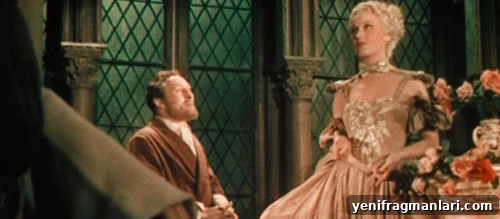
Directed by the versatile Michael Curtiz — who the year before had helmed a similar horror, Doctor X, and who later made the legendary Casablanca — Mystery of the Wax Museum premiered in 1933. The film is particularly notable today as a record of the two-strip Technicolor process, a short-lived early colour technique that now reads as a curious film-historical artefact. Its core plot — a brilliant sculptor who runs a failing wax museum, suffers horrific disfigurement, and is driven to violence after a conflagration set by a business partner — largely resurfaces in House of Wax (1953). The 2005 film borrows the wax museum setting only for its final act and otherwise spins the tale in a very different direction.
Pre-Code cinema — films made before the Production Code’s strict enforcement in 1934 — could be considerably more explicit and provocative than those that followed. That freedom shows in the 1933 picture: Lionel Atwill’s sculptor Ivan Igor (a memorably menacing name) becomes a scarred avenger, and the story incorporates grave-robbing, post-mortem mutilation, and substance abuse into its darker themes.
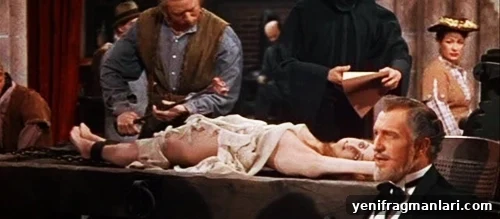
Two decades later the story was retitled and remade as House of Wax, in part to capitalise on the 3-D craze of the early 1950s. Vincent Price became one of America’s most recognisable horror stars thanks to this film, which showcased his theatrical flair. Directed by Andre DeToth — a seasoned Hollywood screenwriter and second-unit director who ironically had impaired vision and could not perceive 3-D effects — this was the first colour 3-D release from a major studio.
The 1933 and 1953 films share many story beats. Both feature a tormented sculptor (renamed Jarrod in 1953) portrayed as an underappreciated genius who refuses to pander to lowbrow spectacle, preferring stately historical figures to lurid displays. In the earlier film his obsession is a Marie Antoinette statue; in the later version it’s Joan of Arc. Both men become fixated on women who uncannily resemble their idealised subjects — women they seek to preserve in wax as centrepieces of new exhibits that are secretly composed of wax-coated corpses taken from the morgue.
House of Wax shifts the tale from a 1930s contemporary setting to the early 1900s to exploit foggy, gas-lit nights and give the film a Gothic atmosphere. The movie is an effective horror mystery, even if it leans on outdated tropes such as the idea that disfigurement automatically precipitates madness, or that a character can successfully feign a disability to avoid suspicion. Like its predecessor, its most indelible moment comes near the climax when the heroine smashes what appears to be a human face to reveal a hideously scarred countenance beneath.
Aside from period details and the addition of a hulking silent assistant named Igor — a nod to the original film’s mad sculptor — House of Wax is essentially a more polished retread of the earlier picture, benefiting from higher production values and improved effects. Despite mixed critical reception and a plot that could feel old-fashioned, the film was a major box-office success for Warner Bros., enthralling audiences with its sensationalism and technical novelty.
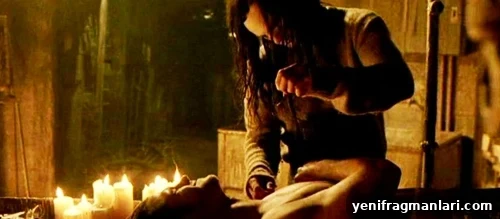
The next reinterpretation arrived 52 years later and reflected the early-2000s horror climate. Like many remakes from that era (such as The Texas Chainsaw Massacre and Halloween), this version aims to answer lingering questions, strip away ambiguity, and maximise on-screen gore.
The 2005 House of Wax effectively asks: what if House of Wax were filtered through the brutality of Texas Chainsaw Massacre?
Set-up is familiar: a group of teenagers on a road trip takes a wrong turn into an isolated former industrial town. They meet Bo and his brother Vincent (both played by Brian Van Holt), conjoined twins who are the town’s last inhabitants and who have preserved their family and neighbours in eerily lifelike wax tableaux. The wax artist here is born disfigured, silent, and masked; he collects victims to include in his ever-growing, grisly art project.
Most of the film unfolds as a conventional slasher: disposable young adults are dispatched in increasingly brutal, inventive ways. Director Jaume Collet-Serra opts for a gritty, physical style — for example, showing realistically what scalding hot wax on skin and the subsequent peeling-away would look like — and several scenes of bodily mutilation are especially cruel and explicit. While the 2005 film is the weakest of the three in terms of storytelling and character development, it redeems itself with a strong final act. The climax stages the survivors fleeing through a vast wax museum constructed almost entirely of wax; the blaze that consumes it melts the exhibits in spectacular practical effects, reportedly achieved with surprisingly low-tech techniques, including sticky substances like peanut butter to simulate melting surfaces.
The remake’s reception was largely negative. Paris Hilton’s casting provoked a harsh backlash among horror fans, prompting a controversial marketing tagline that promoted the film as a place to “See Paris Die.” Roger Ebert, in a tempered review, remarked the film “will deliver most of what anyone attending House of Wax could reasonably expect… assuming it would be unreasonable to expect very much.” Financially it didn’t match the success of the 1953 release, though it earned a modest cult following among gore enthusiasts.
The repeated revisiting of this story makes sense: its grotesque premise, unsettling atmosphere, and striking prosthetics and effects provide fertile ground for reinterpretation. Which version you prefer will depend on your taste: if you like theatrical performances and period atmosphere, the original two films — despite their age — are technically accomplished and richly atmospheric. If you favour visceral gore and fewer digital shortcuts, the modern remake delivers memorable practical effects, even if it sacrifices depth and subtlety. Whatever your choice, after watching any of these films you’re likely to regard uncanny wax likenesses of celebrities with a touch more unease than before.