
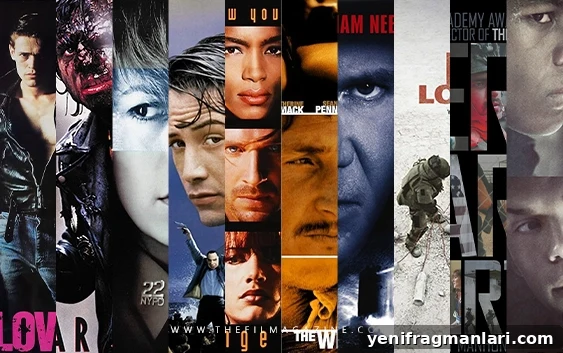
Some directors will be remembered as essential figures in cinema history. In English-language Western cinema, Kathryn Bigelow is unquestionably one of those directors. From her debut in 1981 through her most recent feature in 2017, she has consistently delivered films that are entertaining and compelling—visually arresting, often thrilling, and carrying substantial thematic weight. As the first woman to win the Academy Award for Best Director (at the 82nd Oscars), Bigelow’s achievement is historically significant. That milestone reflects the slow dismantling of barriers within a specific awards culture; other regions and festivals celebrate different benchmarks, but her win remains a notable step forward.
Born on November 27, 1951, and raised in San Carlos, California, Bigelow began her creative life as a painter, earning a Fine Arts degree in 1972. After collaborating with composer Philip Glass and exploring experimental work, she redirected her focus to filmmaking and earned an MFA from Columbia University. The irony that one of her professors was Andrew Sarris—a champion of auteur theory often criticized for being male-oriented—underscores how Bigelow’s career has helped broaden who we consider an auteur.
After a 1978 short film, The Set-Up, Bigelow directed her first feature a few years later and has rarely gone more than six years without releasing a new film. Her ten feature films have attracted major acting talent, including Willem Dafoe, Jamie Lee Curtis, Keanu Reeves, Ralph Fiennes, Jessica Chastain, Jeremy Renner, Anthony Mackie, Harrison Ford, and John Boyega. In recognition of her trailblazing work, the following ranks Bigelow’s features from least to most accomplished.
Follow @thefilmagazine on X (Twitter).
10. The Loveless (1981)
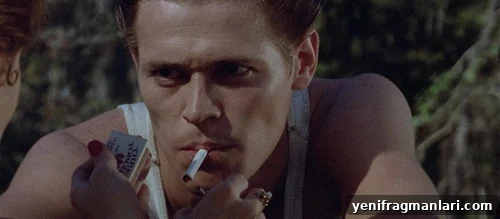
The Loveless, Bigelow’s co-directed debut with Monty Montgomery, introduced Willem Dafoe in one of his earliest leading roles. A stylized tale of leather-clad bikers, punk music, and small-town tension, it follows Dafoe’s Vance and his gang as they roll into a remote town, where a mechanical problem keeps them from leaving and sparks a tragic attachment to a diner owner’s daughter.
The film shows many hallmarks of an early effort—an economical plot, uneven performances, and a modest budget—but it also reveals Bigelow’s emerging command of camera movement, composition, and rhythm. Rather than crude point-and-shoot staging, scenes are carefully choreographed and intentionally paced. The movie unfolds slowly, but it effectively captures the rebellious youth culture of its moment and closes on a solemn, haunting note. Whether specific choices were Bigelow’s or Montgomery’s, the feature reveals a director finding her footing and hinting at greater ambition to come.
Recommended for you: Jane Campion Movies Ranked
9. The Weight of Water (2000)
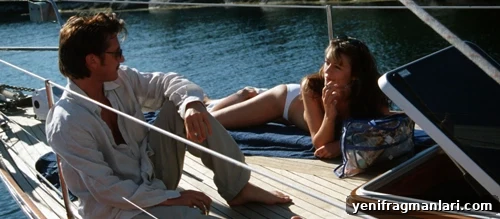
Adapted from Anita Shreve’s novel, The Weight of Water attempts to balance a modern domestic drama with a historical crime mystery. With strong personnel—Sean Penn, Ciarán Hinds, and cinematographer Adrian Biddle—the film offers striking visuals and promising elements on paper.
However, the dual timelines never fully cohere. The historical storyline is more compelling, while the contemporary thread, centered on a strained marriage and an investigation into past events, functions largely as a framing device and often interrupts the film’s momentum. Despite attractive imagery and capable performances, the film struggles with structural weaknesses that prevent it from making a lasting impact.
8. Blue Steel (1990)
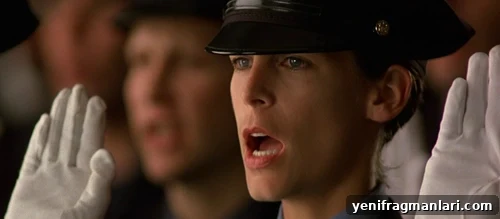
Bigelow’s first full-throttle thriller stars Jamie Lee Curtis as Megan Turner, a newly minted NYPD officer who shoots a suspect during a convenience store robbery only to discover there was no weapon. Placed on leave, she soon becomes entangled with a mysterious man who pulls her into a deadly cat-and-mouse game.
Roger Ebert compared the film to Halloween, noting Curtis’s lineage as a scream queen reinvented in a tough urban setting. Bigelow brings style and polish, rendering Curtis as both hunter and hunted. The movie leans into genre conventions—some sequences verge on cliché—but solid direction and effective pacing make it a commendable, if not groundbreaking, thriller.
7. K-19: The Widowmaker (2002)

Bigelow took on a very different challenge with this submarine drama about a Soviet ballistic missile submarine suffering a reactor malfunction. Starring Harrison Ford and Liam Neeson, the film is a tense, claustrophobic study of leadership, duty, and survival.
Bigelow’s direction excels at building suffocating tension and conveying the men’s desperation in cramped quarters. She provides intimate moments that humanize the crew and sustain suspense as the reactor’s temperature rises. While the film is expertly crafted, it plays out as solid, well-executed formula rather than a fresh or revolutionary take on the genre.
6. The Hurt Locker (2008)

The Hurt Locker is widely regarded as Bigelow’s crowning achievement. Winner of the Best Picture Oscar and the award for Best Director (making Bigelow the first woman to receive it), the film follows a U.S. Army bomb squad in Iraq and stars Jeremy Renner and Anthony Mackie as contrasting personalities drawn together by the pressures of war.
The opening bomb-defusal sequence is a masterclass in tension and craft, and Bigelow’s choice of handheld cinematography imparts a documentary-like immediacy. Themes of voyeurism and the allure of danger echo throughout the film. Yet the movie has provoked debate for its portrayal of non-American characters and its perceived pro-American slant. Some scenes also drag, and the film’s episodic structure can feel loosely stitched together. Still, its technical achievements and immersive moments make it a landmark film.
Recommended for you: 21st Century Best Picture Oscar Winners Ranked
5. Zero Dark Thirty (2012)
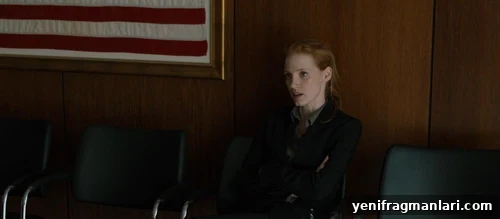
Following The Hurt Locker’s tense, procedural energy, Zero Dark Thirty chronicles the decade-long hunt for Osama bin Laden through the eyes of a driven CIA analyst, Maya, played by Jessica Chastain. The film balances large-scale intelligence work with intimate character moments, and Chastain’s performance grounds the story with a compelling mix of ferocity and humanity.
Bigelow demonstrates an ability to handle complex, politically fraught material with technical precision. The film’s depiction of interrogation and torture drew widespread controversy, and questions about the accuracy and ethical implications of those scenes continue to spark debate. Regardless of political stance, the film showcases Bigelow’s command of narrative scale and procedural detail.
4. Detroit (2017)
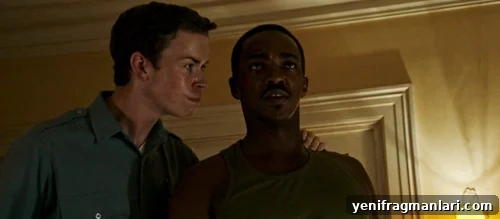
Bigelow’s Detroit dramatizes the Algiers Motel incident during the 1967 Detroit riots, a chilling episode marked by police brutality and racial injustice. With a strong cast including Will Poulter, Anthony Mackie, and John Boyega, the film reconstructs the event with unflinching intensity.
Using documentary-style handheld cinematography, Bigelow sustains a suffocating sense of immediacy—particularly in a central 40-minute sequence set inside the motel that plays out almost in real time. The ensemble performances anchor the film’s brutality and moral urgency, even if some characters serve more as vantage points on the events than as fully rounded individuals. Detroit is a powerful, often uncomfortable dramatization of a painful moment in American history.
3. Point Break (1991)
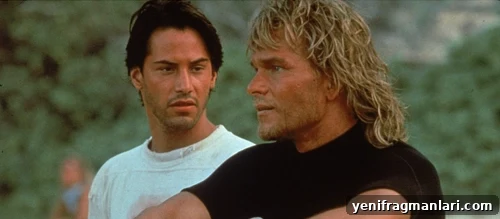
Point Break is the film that cemented Bigelow’s reputation with mainstream audiences. Keanu Reeves plays FBI agent Johnny Utah, who goes undercover among a group of surfer-bank-robbers led by Patrick Swayze’s charismatic Bodhi. The film blends action, surf culture, and philosophical opposition—an exhilarating mix of adrenaline and personal conflict.
Now a cult classic, Point Break is big, brash, and unapologetically American. It occasionally veers into excess, but the film’s kinetic energy, memorable set pieces, and the chemistry between Reeves and Swayze make it an endlessly entertaining ride. It’s a lighter, more playful side of Bigelow’s filmography and a perfect example of her flair for spectacle.
Recommended for you: Where to Start with Keanu Reeves
2. Near Dark (1987)
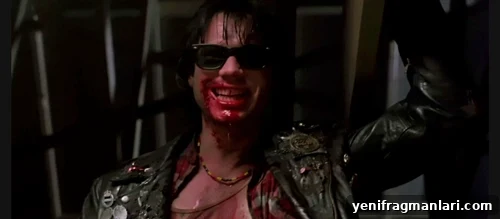
Near Dark, Bigelow’s sophomore feature, is a southern-gothic vampire road movie that blends the youthful rebellion of The Loveless with sharper storytelling and stronger production values. Following young Caleb after he’s bitten by a nomadic band of vampires, the film explores his conflict between newfound dark freedom and ties to his family.
The film is beautifully shot and populated with haunting imagery—the moonlit hilltop scene remains especially evocative. A powerful cross-cutting sequence shows Caleb’s moral torment against the vampires’ revelry, creating a scene that is both viscerally felt and emotionally resonant. Near Dark is a standout in Bigelow’s early career and a high-water mark for genre filmmaking in the 1980s.
Recommended for you: Sofia Coppola Movies Ranked
1. Strange Days (1995)
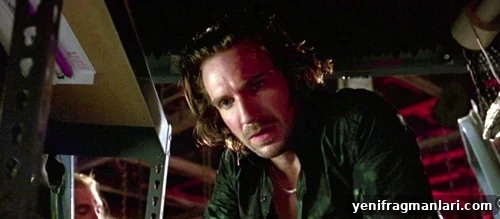
Strange Days is often overlooked today, yet it remains Kathryn Bigelow’s most accomplished and daring film. Featuring Ralph Fiennes, Angela Bassett, Vincent D’Onofrio, and Juliette Lewis, and co-written by James Cameron, the film is a grim and intelligent piece of cyberpunk set on the cusp of the millennium.
Ralph Fiennes plays Lenny Nero, a dealer of illicit SQUID recordings—tapes that replay another person’s recorded sensory experience. When Lenny uncovers a tape that exposes violent misconduct, he becomes entangled in a violent conspiracy that threatens to explode into widescale unrest. The movie combines gritty futurism, social commentary about voyeurism and media, and high-octane set pieces with human-scale drama.
Though it struggled at the box office, Strange Days’ combination of intelligence and visceral immediacy makes it a masterpiece of the genre. Its exploration of memory, reality, and racial and political tensions remains strikingly relevant. For many fans and critics, this film represents Bigelow at her boldest and most visionary—the best in her filmography.
Recommended for you: 10 Unsung Women Filmmakers of the Silent Era
Which Kathryn Bigelow film do you consider her finest? Has she secured a place among the most influential filmmakers of her era? Share your thoughts in the comments, and follow @thefilmagazine for more movie lists and discussions.