
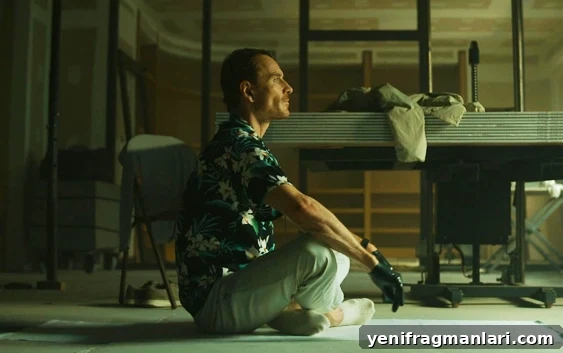
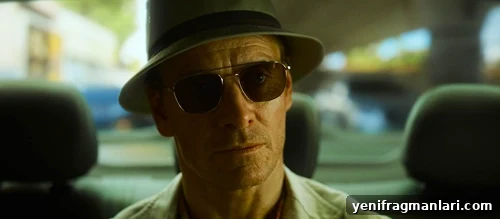
The Killer (2023)
Director: David Fincher
Screenwriter: Andrew Kevin Walker
Starring: Michael Fassbender, Tilda Swinton, Arliss Howard, Charles Parnell
David Fincher’s place among the most influential filmmakers of his generation is well established. His filmography includes acclaimed titles that remain part of cultural conversation: films such as Se7en, Gone Girl and The Social Network have cemented his reputation for precision, mood and technical mastery. Yet even a director of Fincher’s stature produces work that is sometimes overshadowed, misunderstood, or re-evaluated over time. For every widely celebrated triumph there are quieter entries that find appreciation later, or that remain divisive. With the release of The Killer on a major streaming platform, the same questions arise: will this film be seen as a masterpiece, pass quietly into the catalog, or grow in esteem with time?
The Killer follows a professional assassin, portrayed by Michael Fassbender, who finds himself the target of an international manhunt after an assignment goes wrong. The premise is familiar—the lone, highly skilled operative navigating a world of contracts, rules and consequences—but familiarity is not a flaw when execution is precise. The narrative leans into the procedural and psychological aspects of its protagonist rather than spectacle, and that choice shapes the film’s tone and impact.
The film opens in Paris with a measured sequence that introduces both the protagonist and his philosophy. Fassbender’s voiceover narration guides us through the killer’s perspective: the most difficult element of his profession is not danger but boredom. That opening is deliberate, cold and meticulously composed—long, steady takes and still frames establish an atmosphere of control and detachment. It’s an elegant piece of filmmaking that accomplishes a great deal with economy, immediately conveying the killer’s discipline and emotional distance.
Writer Andrew Kevin Walker and Fincher establish a set of rules for the killer—rules that function as a moral compass for the character and a repeating motif for the audience. These rules anchor the character’s behavior and allow us to understand the consequences when those rules are disrupted. When the mission unravels, the protagonist is forced into situations that test his code. Fincher uses this moral tension to create a quiet tug-of-war between the audience’s instincts and the character’s internal logic, often leading viewers to anticipate one outcome while the film chooses another.
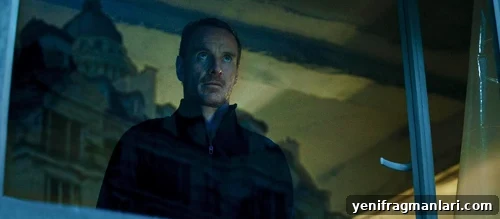
Michael Fassbender anchors the film with a restrained, physical performance. Much of the story is narrated rather than spoken in dialogue, so Fassbender communicates through posture, movement and quiet expression. The result is an embodiment of a professional killer whose every motion conveys training and efficiency. Fincher’s direction mirrors that restraint: action sequences are controlled and economical rather than bombastic. For viewers expecting extended, high-octane set pieces, the film may feel deliberately muted. Yet that restraint deepens the impact of the moments when violence does erupt, making them feel intensely consequential.
Fincher’s signature meticulousness—already visible in characters like Gone Girl’s Amy Elliott Dunne and The Social Network’s Mark Zuckerberg—applies equally here. The Killer’s world is rendered with surgical clarity: lighting, composition and sound design work together to create a cold, clinical atmosphere that reflects the protagonist’s mindset. Small details and precise staging communicate character and stakes more effectively than overt exposition, and the film rewards attentive viewing.
Concerns that a director’s work in the streaming era might lose cultural staying power are understandable; some projects find a smaller immediate audience when released directly to a platform rather than a prolonged theatrical run. Still, The Killer demonstrates that Fincher can adapt his style to this environment without sacrificing the qualities that define his best work. The film feels like a return to form in many respects: assured, exacting and thoughtfully restrained.
On paper the story is conventional, but its execution—rooted in character study, atmosphere and disciplined craft—elevates it. The Killer is a taut, polished thriller driven by performance and directorial control. It may not gratify viewers who expect continuous action, but for those who appreciate a precise study of a calculating protagonist, it stands out as one of the stronger, more memorable films of its year.
Score: 23/24
Rating: 5 out of 5
Recommended for you: David Fincher Movies Ranked