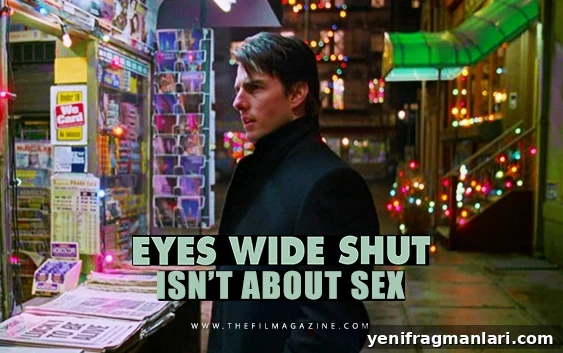
Have you ever wondered why Eyes Wide Shut, a film that premiered in mid-July, is set during Christmas? Twenty-five years on, that question — like many that surround Stanley Kubrick’s final film — still invites debate. Kubrick died shortly after approving the final cut, and he kept tight control over the film’s publicity, instructing that little be revealed before release. That secrecy fuels speculation, but the choice to set the film at Christmas feels deliberate rather than arbitrary. After all, this is a Stanley Kubrick film: details matter.
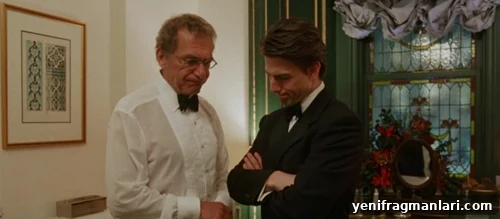
On the surface, Eyes Wide Shut is a story about sex and desire. It follows Dr. Bill Harford (Tom Cruise) and his wife Alice (Nicole Kidman), a comfortable Manhattan couple from an upper-middle-class background. The couple attends an evening party hosted by Bill’s wealthy client Victor Ziegler (Sydney Pollack). There they break off into separate flirtations — Alice is approached by a distinguished Hungarian man, while Bill encounters two young models. Later, Bill is summoned to a private room where he finds Ziegler with a naked woman, Mandy (Julienne Davis), who appears to be overdosing on drugs. Bill saves her life and promises Ziegler that he will keep silent about what he has seen.
The next evening, after smoking cannabis together, Bill and Alice have an argument that dramatically shifts the narrative. Alice confesses that during a past holiday she saw a naval officer in a hotel lobby and felt such lust for him that she would have abandoned Bill and their child for a single night with the man. Though the encounter was only a fantasy, the revelation destabilizes Bill. Her admission propels him into an obsessive, nocturnal odyssey through New York — visiting a patient’s apartment, a prostitute’s room, a Greenwich Village bar — culminating in one of cinema’s most notorious sequences: Bill’s intrusion into a masked, ritualistic orgy.
At the masked gathering Bill is identified as an interloper and ordered to leave. A masked woman offers herself as a distraction to protect him and later is found dead. Bill, investigating the corpse at the morgue, recognizes her as Mandy — the same woman he saved at Ziegler’s party. This time, according to the doctors, drugs have killed her. Bill’s earlier silence about the overdose becomes morally and emotionally fraught when he realizes the broader, more sinister consequences of the world he has glimpsed.
When Bill confronts Ziegler, it becomes clear that the party was connected to a powerful, shadowy circle. Ziegler warns him to stay silent: the people involved are dangerous and influential. Despite the threat, Bill eventually confesses the entire story to Alice. In the film’s final, famously terse exchange, Alice responds not with recrimination but with an imperative meant to restore intimacy and move them forward together.
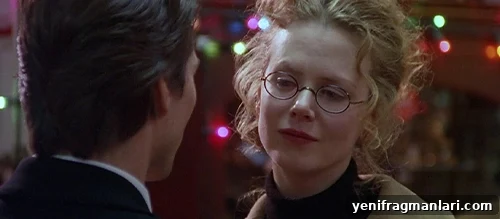
Many readings of Eyes Wide Shut focus on the psychological—Bill’s crisis of trust and masculine identity after learning that his wife can desire another man. Alice’s confession forces Bill to confront hidden facets of both their sexualities and the limits of fidelity. The couple appears, by the film’s end, to reach a fragile acceptance of those concealed parts of themselves.
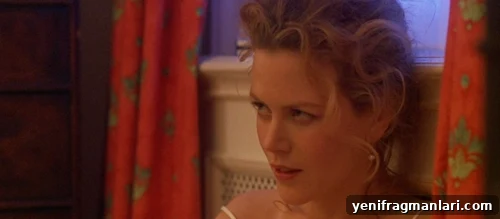
But a strictly psychological interpretation misses crucial socio-economic and gendered dimensions Kubrick embeds throughout the film. In an early exchange, Bill tells Alice that women “don’t think like that,” revealing his blind spot about female desire. Until her revelation, Alice is often framed visually as an object of the male gaze — nude, reflected in mirrors, admired by others. Her confession reverses that position: she claims sexual agency, and the film responds by exposing Bill’s ignorance and vulnerability.
This gendered imbalance ties into a broader theme: commodification. The film constantly portrays human relationships as transactional. Bill’s encounters reveal social disparities: the taxi driver, a hotel clerk, a restaurant waitress, a costume seller — all function within systems of exchange where money shapes behavior and dignity. Even Bill’s friendships carry economic overtones; Ziegler is a client, not a confidant. Kubrick repeatedly links characters to money, suggesting that wealth is synonymous with power and moral latitude.
That is why the Christmas setting is meaningful. Placing the story during the season of heightened consumerism underscores the film’s critique of a society where commerce and spectacle overshadow authentic human connection. The holidays, usually associated with warmth and family, become an ironic backdrop for transactions that degrade people and conceal exploitation. In a season of gift-giving and commercial excess, Kubrick stages a tale of prostitution, ritualized violence, and the casual use of human life as props — a bleak commentary on inequality and moral corruption.
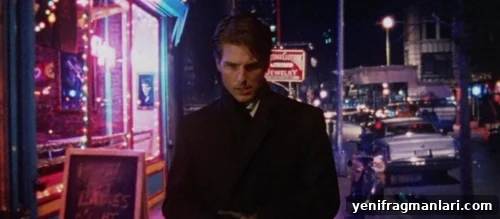
Prostitution in Eyes Wide Shut functions as both literal sex work and a metaphor for commodified relations. The exploitation visible at the orgy is not isolated; similar imbalances permeate suburban living rooms and cramped hotel rooms alike. The film deliberately draws parallels: a child’s toy on a prostitute’s bed echoes the Harfords’ own daughter, reminding viewers that the consequences of commodification ripple outward and affect the vulnerable.
Kubrick’s method is precise and elliptical. He layers visual cues and recurring motifs rather than spelling out conclusions. That restraint is intentional: interpreting the film solely through a psychological lens risks missing its broader indictment of social and economic systems. Eyes Wide Shut is not merely a study of erotic obsession; it is a portrait of a society where wealth insulates the powerful, permits violence, and reduces people to commodities. The film’s title itself suggests a willful blindness — our eyes may be open, but we remain unaware of the structures that corrupt our lives.
Written by Declan O’Reilly
You can find more of this writer’s work at Declan O’Reilly Portfolio.