
Twisters (2024)
Director: Lee Isaac Chung
Screenwriter: Mark L. Smith
Starring: Daisy Edgar-Jones, Glen Powell, Anthony Ramos, Brandon Perea, Maura Tierney, Sasha Lane
Blockbusters often invite criticism: massive budgets, glossy surfaces, and an emphasis on spectacle over substance. Many of them feel formulaic, prioritizing effects and marketing over character and story. Yet Twisters (2024), produced by Amblin Entertainment and released through major studios, bucks several of those expectations. Rather than offering empty spectacle, it delivers a crowd-pleasing blend of thrills, grounded emotion, and surprisingly well-crafted character work that feels more satisfying than most summer tentpoles.
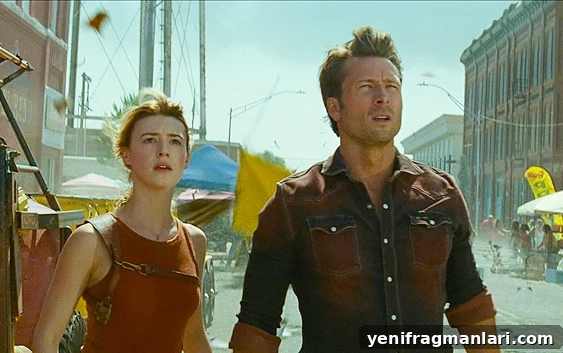
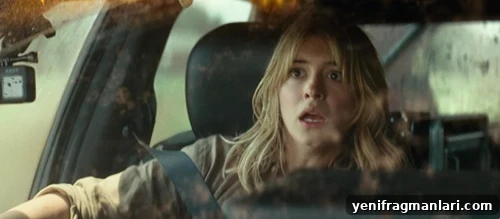
The film centers on Kate Carter (Daisy Edgar-Jones), a meteorologist who walked away from storm chasing after a traumatic PhD experiment five years earlier. When Javi (Anthony Ramos), a former colleague, reaches out with news of a new storm research initiative, Kate reluctantly returns to the field. The mission brings her to the open plains of Oklahoma, where ferocious twisters are forming. Alongside a team of researchers, she crosses paths with a group of high-energy independent storm chasers led by Tyler Owens (Glen Powell), social-media-savvy thrill-seekers who chase tornadoes for content and clicks. The friction between scientific caution and viral bravado provides much of the film’s tension and humor.
Although a follow-up in spirit to the 1996 original, this installment largely stands on its own. It borrows certain structural elements and concepts—the race to understand and capture tornado behavior, competing approaches to storm research, and a machine reminiscent of the original film’s Dorothy device—but it avoids heavy-handed callbacks or fan-service. Instead, the filmmakers update the material for a modern audience, preserving the core appeal of disaster cinema while refocusing the story on new characters and contemporary conflicts. This choice allows the screenplay by Mark L. Smith and the direction from Lee Isaac Chung to explore fresh tonal beats without being tethered to the earlier film’s nostalgia.
One of the film’s notable strengths is its cast. Daisy Edgar-Jones gives a restrained, convincing performance as Kate, balancing scientific rigor with the vulnerability of someone carrying past trauma. Glen Powell’s Tyler provides a charismatic counterpoint: cocky and media-savvy but capable of moments of real humanity. Their chemistry is a steady anchor through the movie’s shifts in pace and scale. Anthony Ramos and the supporting ensemble manage to elevate characters who could easily have been one-note archetypes; they find moments of warmth and credibility that make the stakes feel personal and immediate.
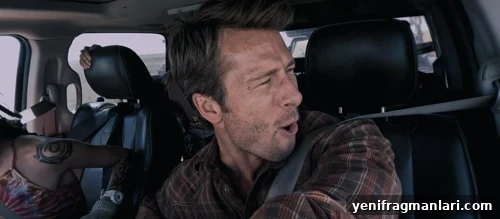
Visually, the film earns its blockbuster billing. The tornado sequences mix practical effects and modern CGI to create intense, kinetic set pieces. At times the filmmakers employ handheld camerawork to convey the chaos and disorientation of being in a storm; while this choice occasionally makes action harder to parse, it also helps sell the immediacy and terror of the situation. Overall, the effects work supports the drama rather than overpowering it, and the most effective scenes are those that balance spectacle with small, human moments—such as a sequence where Kate shepherds a frightened mother and child into the hollow of a public pool for shelter. Those quieter beats, crafted by a director familiar with intimate storytelling, give the finale emotional weight beyond the typical disaster-film thrills.
The film also wrestles with contemporary questions about risk, responsibility, and the role of media. The presence of a YouTuber-style chasing crew introduces a moral tension: are these amateurs reckless exploiters of danger, or passionate documentarians who bring attention to scientific work? The script doesn’t offer simple answers. Sometimes it celebrates the curiosity and courage of independent chasers; at other moments it criticizes the performative aspects of virality. That unevenness can feel clumsy, but it’s also honest in recognizing the complexity of modern media culture and the mixed motives that drive people toward dangerous pursuits.
Pacing is generally strong. The film moves briskly through its setup into escalating disaster sequences while leaving room for character beats that matter. The second act includes a sequence of large-scale destruction that showcases the production’s resources, but it never sacrifices the smaller human stories for pure pyrotechnics. The soundtrack and sound design amplify the physical threat of the storms without drowning out dialogue, and the editing usually finds a balance between tension and clarity.
If the movie has flaws, they lie in a few predictabilities of blockbuster plotting: a handful of familiar conventions and a couple of characters who could have been more fully developed. But those are minor quibbles in a picture that mostly gets what it sets out to do: entertain, move, and occasionally surprise. The film’s success stems from a willingness to pair big-scale action with a quieter, character-driven core.
In short, Twisters is a reminder that large-scale cinema can still offer warmth and intelligence alongside thrills. It’s a polished, crowd-pleasing disaster movie that earns emotional moments through performance and careful direction rather than relying solely on visual spectacle. For viewers seeking an exciting, human-centered blockbuster, this is one of the better examples of the genre in recent years.
Score: 19/24
Rating: 3 out of 5.