
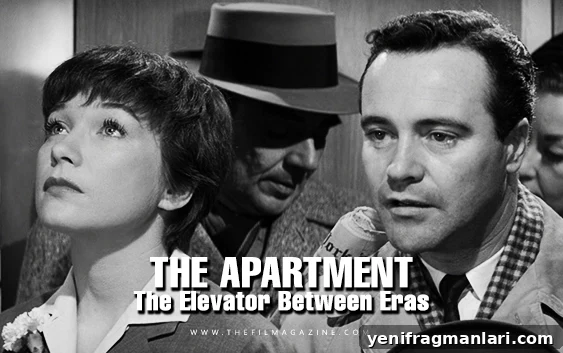
Winner of the Academy Award for Best Picture in 1961 and ranked number 54 in the British Film Institute’s Sight & Sound poll of the greatest films ever made, The Apartment has remained a touchstone of American cinema for more than six decades. After Billy Wilder and screenwriter I.A.L. Diamond scored a controversial comic triumph with Some Like It Hot the year before, they returned with a film that blends sharp comedy and serious human observation. The Apartment showcases new, more nuanced performances from Jack Lemmon, Shirley MacLaine, and Fred MacMurray, and presents a story that is as emotionally affecting as it is witty. While Some Like It Hot is often cited as a cultural turning point against the Hays Code, The Apartment offers a quieter, more contemplative critique of postwar ambition and moral compromise through the point of view of C.C. “Bud” Baxter, an overlooked everyman.
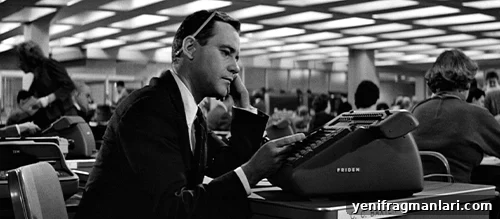
Bud Baxter is an insurance company employee in the Ordinary Policy Department, working in a corporate behemoth whose headquarters employs more people than a midsize city. The film opens with a classical Hollywood-style voiceover in which Baxter describes his average day and his unusual arrangement: to rise in the company he provides executives with the use of his apartment for clandestine trysts. This favor has propelled him upward, but it comes at a steep personal cost. The voiceover introduces the premise and then recedes, leaving the camera to observe Baxter’s increasingly fraught interior life.
The Apartment is a romantic comedy in broad terms, yet its setting and themes make it something more complex: a social critique wrapped in humor. Released at the turn of the 1960s, the film captures the twilight of classical Hollywood and the dawn of a new cultural era. An early scene has Baxter settling in to watch a broadcast of Grand Hotel (1932) on his small television with a TV dinner, only to be interrupted repeatedly by commercials. That moment functions as a subtle indictment of commercialization and the encroaching dominance of television—a symbol of changing tastes and shrinking cinematic authority. Baxter’s domestic life resembles a hotel more than a home, and the consumerist interruptions on his screen underscore how pervasive the pursuit of profit has become.
As the story unfolds, Baxter’s optimism and ambition give way to disillusionment. He grows increasingly ashamed of enabling the infidelities of his superiors and of the compromises he has made to climb the corporate ladder. Shirley MacLaine’s Fran Kubelik, an elevator operator whose warmth and vulnerability are central to the film’s emotional core, undergoes her own awakening. When both characters finally recognize the moral and emotional costs of their situations, they choose connection over complacency and reunite as a new year begins.
The film’s conclusion, set at the start of 1960, symbolically marks the end of Old Hollywood and foreshadows the coming New Hollywood movement. Over the next decade, American cinema shifted: color displacement of earlier black-and-white conventions, the unraveling of strict production codes and the emergence of the MPAA ratings, and a growing interest in stories that rejected studio formula in favor of grittier, more independent voices. Films such as Bonnie and Clyde, The Graduate, In the Heat of the Night, Rosemary’s Baby, and Midnight Cowboy embraced new storytelling methods and production models that reflected changing social attitudes.
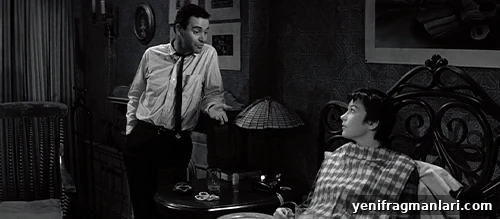
Wilder had already explored displacement and obsolescence in his 1950 film Sunset Boulevard, and The Apartment revisits similar themes from a different angle. Both films feature protagonists who feel trapped—whether in a decaying mansion or inside a dehumanizing corporate machine. The Apartment’s setting inside a profit-driven office culture makes its critique sharper; it captures the longing for advancement and the hollowness that can accompany achieving conventional success. Ultimately, Wilder suggests that fulfillment often comes not from reaching the top floor but from the people who know us at our worst and choose to remain.
Critics and audiences have long recognized The Apartment’s tonal blend. The Saturday Review’s Hollis Alpert famously called it “a dirty fairy tale,” a description that highlights the film’s mixture of cynicism and romanticism. Its influence is visible in later romantic comedies, particularly in the trope of a character racing across New York City to reclaim love on New Year’s Eve—a sequence that echoes through films like When Harry Met Sally. Jack Lemmon himself summed up the film’s core tension by calling it a story about the “misuse of the American Dream.” The Apartment is simultaneously a critique of corporate ambition, a meditation on loneliness, and a testament to human connection forged in unexpected places.
By Kyra Lieberman
You can support Kyra Lieberman in the following places:
Portfolio: Kyra Lieberman
Blog: & More
X (Twitter): @kyralieberman
Instagram: @kyralieb