
Get Carter (1971)
Director: Mike Hodges
Screenwriter: Mike Hodges
Starring: Michael Caine, Ian Hendry, Britt Ekland, John Osborne, Geraldine Moffat, Dorothy White, Bryan Mosley, Alun Armstrong, Petra Markham
Released in 1971, Get Carter remains a raw, uncompromising entry in British crime cinema. Far from losing its edge over time, the film maintains a chilling potency: its shocks are not merely sensational but integral to the merciless logic of the story. Directed and written by Mike Hodges from Ted Lewis’s novel Jack’s Return Home, the film strips away glamour and sentiment to expose a grim, industrial Tyneside where violence and moral decay are everyday facts.
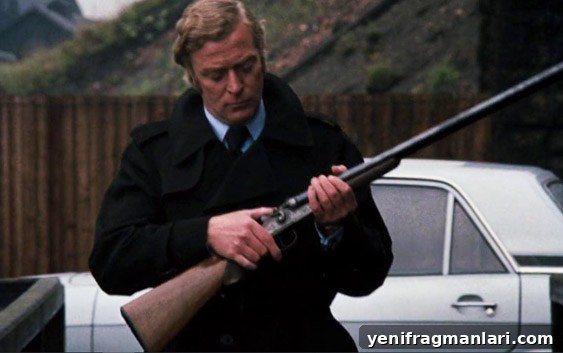
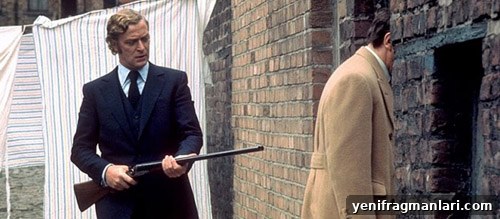
Michael Caine plays Jack Carter, a London-based gangster who returns to Newcastle to attend his brother’s funeral. Ostensibly there for family, Carter’s real purpose is to investigate suspicious circumstances surrounding the death, supposedly caused by a drink-driving accident. As he probes the local criminal scene, Carter uncovers a seedy world of exploitation and pornographic scandal that triggers an escalating campaign of ruthless retribution. What begins as an investigation becomes the portrayal of a man driven to ferocity by betrayal and grief.
The plot initially unfolds in a complex, sometimes confusing way: many minor players and murky motivations can blur together, demanding patience from viewers. Yet Hodges’s intention is not to create a mystery to be neatly solved, but to chart Carter’s transformation. Once the film commits to this emotional core, the narrative focus narrows and the relentlessness of Carter’s campaign becomes the primary engine. The “whodunnit” elements are present, but only the barest details are required to witness the brutal efficiency of his vengeance.
At the center of the film’s power is Michael Caine’s performance. Known for his charm and screen charisma, Caine subverts audience expectations: Carter is not an affable anti-hero but a cold, frightening presence who rarely hesitates to harm innocents if they stand between him and the truth. Caine delivers the role with controlled minimalism—small gestures, a single line that encapsulates his contempt for his hometown, and a moment of private sorrow that humanizes him without excusing his monstrous choices. When his violence erupts, it is sudden and devastating, underscoring how close to the surface Carter’s rage always is.
Hodges’s direction reinforces this economy. Scenes are lean and purposeful; nothing is wasted. The soundtrack, produced on a shoestring budget, complements the film’s austere mood with a gritty, British tone. Cinematography favors unsettling close-ups and compositions that force the audience into an almost voyeuristic position, implicating the viewer in the film’s moral collapse. These visual choices heighten tension and make rewatching the film a revealing experience, each frame offering symbolic detail or foreshadowing.

The choice to film across Newcastle-upon-Tyne and the North East lends the picture an unmistakable texture. Industrial landscapes, brutalist structures and coal-era collieries create an environment that feels hostile and claustrophobic. Local actors and distinctive regional performances—small but memorable turns—add authenticity and atmosphere, turning the setting into a character in its own right. The bleak coastal colliery that closes the film provides a desolate, almost apocalyptic backdrop for Carter’s final acts, one that reflects the social and economic realities of the region at that time.
Get Carter is unafraid to depict cruelty and misogyny; these elements make it a difficult watch for many, but they are essential to the film’s honest portrayal of the criminal underworld. It does not romanticize violence or offer easy moral conclusions. Instead, it presents a stark view of how crime corrodes individuals and communities. Hodges and producer Michael Klinger used limited resources to striking effect, crafting a film with production values that feel deliberate and unembellished.
The film’s legacy rests on its uncompromising approach, Hodges’s confident direction, and Caine’s haunting lead turn—an amalgam that helped redefine the British gangster film by refusing to soften its subject matter with irony or sentiment. Get Carter remains a vital, influential work that continues to unsettle and compel, a benchmark of British cinema that shows how uncompromising storytelling and disciplined filmmaking can produce enduring power.
22/24