
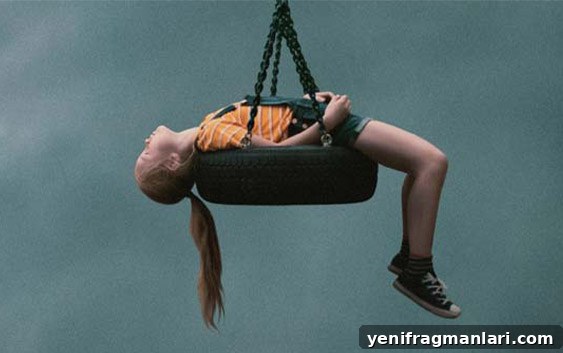
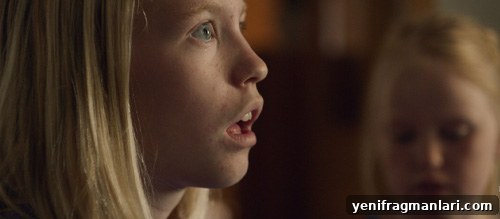
The Innocents (2022)
Director: Eskil Vogt
Screenwriter: Eskil Vogt
Starring: Rakel Lenora Fløttum, Alva Brynsmo Ramstad, Sam Ashraf, Mina Yasmin Bremseth Asheim, Ellen Dorrit Petersen, Morten Svartveit
Eskil Vogt’s The Innocents (2022) is a measured, atmospheric Norwegian psychological horror that blends elements of coming-of-age drama with supernatural suspense. While mainstream adaptations of Stephen King remain plentiful, Vogt’s film occupies a different lane: a slow-burning, art-house exploration of childhood power, isolation, and moral ambiguity. Set in a suburban Scandinavian housing estate and the bordering wilderness, the movie feels at once intimate and uncanny.
From the opening scenes, The Innocents signals that it will rely on mood and character rather than cheap scares. The story follows four children — Ida, Anna, Aisha, and Ben — who discover extraordinary abilities and must confront the consequences of wielding them. Vogt allows the film to breathe, giving the audience time to observe the kids as they learn, experiment, and test friendships. These quieter moments are crucial: the film’s emotional stakes depend on how well we come to know this group before tension escalates.
The pacing is deliberately restrained, which amplifies the psychological unease. When the film shifts toward horror, it does so subtly yet unrelentingly. The violence, often brief and abrupt, cuts into the calm with a physical and moral shock. Visual choices — including lingering long-zoom shots and carefully composed framings — build a creeping dread that prolongs the viewer’s discomfort. Vogt’s direction favors implication over explicitness, allowing fear to worm under the skin and make the audience imagine outcomes more terrifying than anything shown on screen.
The centerpiece of the movie is the evolving dynamic among the children. As their powers emerge, friendship and loyalty are tested, and resentments simmer beneath surface play. The film handles these interpersonal shifts with sensitivity and restraint, showing how small cruelties and misunderstandings can escalate when amplified by supernatural force. Vogt avoids melodrama; instead, he stages moral conflicts that are realistic in their ambiguity. Adults are present but largely oblivious, which strengthens the sense that these battles belong to the children alone.
The film’s finale is a quietly devastating set piece staged across a lake. There are no pyrotechnics or overwrought effects — just a tense psychological face-off rooted in everything the characters have become over the preceding runtime. By concentrating the climax on character rather than spectacle, Vogt underscores the film’s central theme: that rites of passage and inner turmoil can be as dangerous and transformative as any external threat. The sequence plays out in daylight and public spaces, emphasizing that some struggles, while visible, remain misunderstood by the wider world.
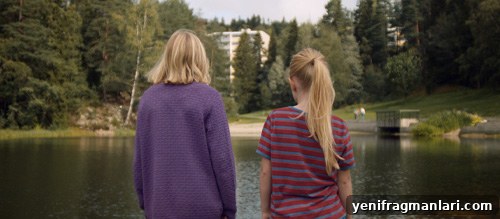
Visually, The Innocents contrasts architecture and nature to reflect competing forces in the story — apartment blocks and communal façades on one side, dark, enveloping trees on the other. Cinematography and production design subtly reinforce the film’s thematic oppositions: childhood versus adulthood, control versus wildness, conformity versus difference. Even small design choices, such as the film’s closing credits rolling in an atypical direction, echo the sense that this world is shifted and slightly out of kilter.
Performances by the young cast are central to the film’s success. The actors convey a believable mix of curiosity, cruelty, fear, and tenderness that anchors the narrative. Their portrayals avoid caricature; instead, the children feel like complex, changing people whose choices matter. Supporting adult performances add texture without dominating the story, reinforcing the film’s focus on how children negotiate moral responsibility in the absence of full parental comprehension.
Tonally, the movie is quiet, unnerving, and emotionally resonant. It forgoes a conventional horror score and loud sound design in favor of ambient soundscapes and careful silence, which leaves space for the audience to inhabit the children’s interior worlds. The result is a film that reads as both psychological drama and supernatural thriller — one that asks what would happen if the turbulence of adolescence could be externalized into literal power.
For viewers seeking thoughtful, character-driven horror with strong thematic depth, The Innocents offers a compelling experience. It lingers after the credits, prompting reflection on the nature of growing up, the unseen battles faced by young people, and the fragile boundaries between innocence and culpability.
Score: 20/24