
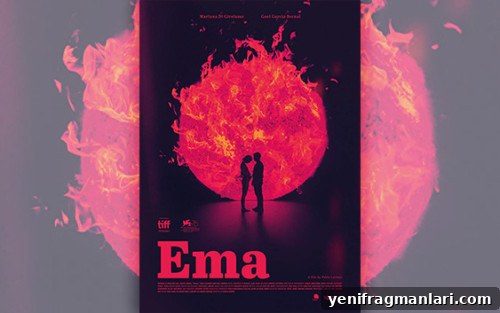
Ema (2019)
Director: Pablo Larraín
Screenwriters: Guillermo Calderón, Alejandro Moreno
Starring: Mariana Di Girolamo, Gael Garcia Bernal, Santiago Cabrera, Paola Giannini, Cristián Suárez, Mariana Loyola
Pablo Larraín’s Ema is a vivid, restless film that pulses with color, sound and emotion. Centered on the volatile relationship between a dancer, Ema (Mariana Di Girolamo), and her partner Gastón (Gael García Bernal), the film explores identity, parenthood and the refusal to conform. Larraín stages the story through striking visual choices and a kinetic rhythm that feels closer to a performance piece than a conventional drama, delivering an experience that lingers long after the credits roll.
The film opens with a striking image—a traffic light in flames—that immediately signals its bold visual language and sets the tone for a story that repeatedly challenges norms. From the first frame, Larraín establishes a world where color and movement carry as much meaning as dialogue. The cinematography and production design work together to create a sensuous atmosphere that amplifies Ema’s psychological landscape: bright hues, fluid camera work and deliberate set pieces make the film feel both modern and mythic.
At the heart of Ema is a portrait of a woman attempting to reclaim herself. Di Girolamo’s performance is magnetic—her physicality and presence anchor the film even when the narrative takes unexpected turns. Larraín allows the character to be contradictory: joyful and destructive, tender and defiant. The emotional center of the film revolves around Ema’s fractured family life, including her relationship with an adopted child, and the ways in which societal expectations—about gender, parenting and class—press on personal freedom.
Gael García Bernal gives a grounded, sympathetic performance as Gastón, whose own tensions mirror the film’s themes of identity and belonging. The chemistry between the leads is complicated and honest; scenes of intimacy and confrontation feel lived-in and rarely clichéd. Supporting performances add texture without pulling focus away from Ema’s journey, allowing Larraín’s layered script to reveal motivations and secrets at a measured pace.
Structurally, Ema resists a tidy, cause-and-effect narrative. Instead, it unfolds as a sequence of episodes, images and musical moments that illuminate the characters’ inner lives. The film’s editing and score contribute to a sense of propulsion—at times disorienting, at other times euphoric. Dance sequences function as both emotional release and narrative punctuation, reflecting Ema’s struggle to define herself on her own terms. This emphasis on movement and rhythm places Ema among contemporary films that use performance to interrogate identity.
One notable strength of the film is how it handles themes of sexual empowerment and nonconformity. Ema negotiates gender and desire in ways that feel authentic to the character rather than didactic. Larraín’s direction is unapologetically bold: he leans into discomfort where necessary and allows moments of tenderness to emerge organically. The result is a film that challenges heteronormative expectations without resorting to easy answers or sentimental resolutions.
Visually and tonally, Ema shares affinities with other daring works of recent world cinema: its willingness to blend melodrama with experimental impulses positions it as part of a broader movement in South American film that favors bold aesthetic choices and intimate storytelling. The film’s production values are high, and Larraín balances cinematic polish with an edge of unpredictability that keeps the viewer engaged.
While Ema may frustrate viewers seeking a conventional plot, those open to an emotive, sensory approach will find a richly rewarding film. It is a work that asks to be felt as much as understood, offering a portrait of a woman insisting on self-determination in a world that often prefers tidy categories. With memorable performances, daring visuals and a restless energy, Ema stands out as one of the most compelling and original films of its year.
20/24