
Speak No Evil (2024)
Director: James Watkins
Screenwriters: James Watkins, Christian Tafdrup, Mads Tafdrup
Starring: James McAvoy, Mackenzie Davis, Scoot McNairy, Aisling Franciosi, Alix West Lefler, Dan Hough, Kris Hitchen
Politeness is an unspoken social contract that smooths interactions and keeps small tensions from boiling over. In the United States, in particular, people are often taught to stay agreeable through awkward or uncomfortable moments, to say “yes” when they mean “no,” and to tolerate inconvenience rather than risk seeming rude. That surface calm can hide growing unease, and when the façade finally cracks the consequences can be severe. The 2024 English-language remake of Speak No Evil explores that fracture — the cost of silence and the danger of mistaking politeness for safety.
Coming only two years after the original Danish film, this American version faced understandable skepticism. The original was praised for its cultural specificity and relentless tension, and European independent films often remain niche when they cross to U.S. audiences. The remake aims to broaden the story’s reach, but in the process it sacrifices some of the subtle cultural texture that made the first film so chilling. Marketing choices, including an overly revealing trailer, further risked exposing the film’s carefully built suspense to viewers before they entered the theater. For a film that trades on ambiguity and slow-burn tension, losing mystery to promotion can blunt the experience.
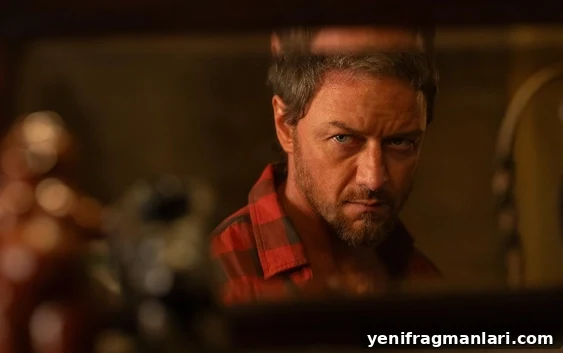
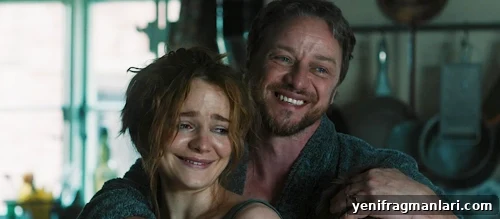
What distinguishes this adaptation is a strong cast anchored by James McAvoy as Paddy. McAvoy crafts a performance that blends disarming charm with a simmering menace, lulling the audience with warmth before unveiling increasingly unsettling behavior. His performance is notable for its realism: unlike some of his more overtly theatrical roles, here his threat feels plausible and immediate. Mackenzie Davis is equally compelling as Louise, conveying a mounting dread through restrained gestures and expressive stillness. Together they sustain the film’s emotional core even when the narrative stretches for broader dramatic beats.
Under James Watkins’s direction and Tim Maurice-Jones’s cinematography, the film uses its setting as more than backdrop. The countryside house becomes a character in its own right — at once familiar and menacing — transforming from welcoming refuge into a claustrophobic trap. Details such as the couple’s Tesla function as visual shorthand for surface-level values and contradictions, reinforcing the film’s critique of appearances versus reality. Watkins, whose past work includes atmospheric thrillers, here demonstrates a keen ability to manufacture tension from everyday discomforts rather than relying on formal shock tactics.
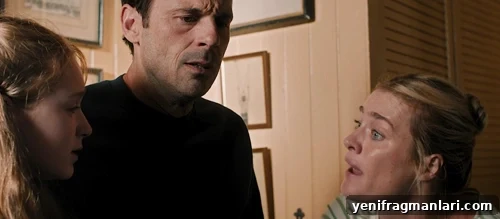
The film’s power comes from calibrated awkwardness: scenes that begin as small social missteps escalate, imperceptibly at first, into boundary violations and manipulations. Watkins excels at capturing those micro-moments when something feels wrong but you can’t yet name it. As exchanges grow darker and the characters grapple with the realization that escape may not be possible, the film generates a tight, almost suffocating atmosphere. Rather than leaning on jump scares, the remake commits to a restrained and patient build-up that makes the eventual confrontations more devastating.
The film also engages with societal dynamics—most notably ideas of masculinity and family roles. It probes the pressure on men to be protectors and the resulting shame when they feel they have failed. These themes enrich the story, but the film sometimes attempts to tackle multiple social questions at once, which can dilute their impact. The thematic scope occasionally feels broad rather than deeply probed, yet Watkins still manages to raise uncomfortable questions about control, reputation, and the compromises people make to avoid conflict.
Is the remake necessary? That depends on what a viewer seeks. Fans of the original may find the American version less bleak and more dramatically blunt; it replaces some of the earlier film’s existential dread with a more conventional, chaotic finale. For a wider audience unfamiliar with the Danish original, however, this adaptation offers a compelling, well-acted entry point into the story’s unsettling exploration of manners and menace.
Overall, Speak No Evil (2024) is a tense, well-crafted film that examines how courtesy can be weaponized and how silence can become complicity. It may not eclipse the original’s raw intensity, but it stands on its own as a disturbing reflection on social etiquette and the hidden costs of keeping the peace.
Score: 15/24
Rating: ★★★ (3 out of 5)
Written by Jake Fittipaldi
Support Jake Fittipaldi:
Instagram: @jakefittipaldi
Letterboxd: /jakefittipaldi