
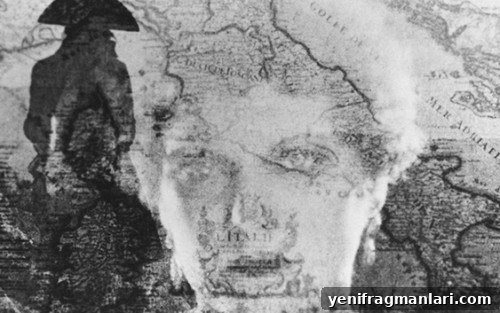
Abel Gance is recognized as one of the most influential directors in 20th-century French cinema. His bold experimentation with form and technique helped shape a visual language that later generations of filmmakers—from avant-garde practitioners to critics and directors associated with the French New Wave—would study and cite as an important precedent.
Gance’s most celebrated and best-known film remains the silent epic Napoleon (1927). This ambitious work stands as a landmark of the silent era and an outstanding example of the epic genre, notable for its inventive editing, striking compositions, and technical daring.
Napoleon can be seen as a high point of French avant-garde cinema in the 1920s. Gance explored a wide range of cinematic possibilities: rapid cutting and jump cuts to shape rhythm and psychological interiority; complex superimpositions to layer meaning and image; and an experimental widescreen projection method known as Polyvision, which he developed to expand the visual field and heighten spectacle.
One of the film’s most striking sequences is the long snowball fight that takes place while Napoleon is still a schoolboy. There Gance combines superimposition, extreme close-ups, and rapid editing to create the sense of viewing events through the protagonist’s perception. Superimposed images emphasize fleeting impressions; extreme close-ups bring the viewer face-to-face with Napoleon’s reactions; and quick cuts compress time and convey the internal energy and nascent strategic imagination of the character. The episode functions as a cinematic foreshadowing of Napoleon’s future as a leader and tactician, told through a visual grammar that was revolutionary for its era.
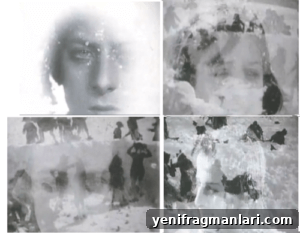
Snow fight sequence: close-ups on Napoleon’s face and superimposition.
Throughout the sequence, camera movement and editing combine to produce sensations of excitement, confusion, and alertness. Some shots read as precursors to what modern viewers understand as handheld or mobile camera work: brisk, intimate, and immediate. These choices help communicate the emotional and psychological state of the young protagonist while also demonstrating Gance’s skill at integrating form and feeling.
Perhaps the most famous technical innovation in Napoleon is Polyvision. This method involved recording separate images on three cameras and projecting three film strips side by side to create an exceptionally wide, triptych-like image on the screen. Gance employed Polyvision most notably in the film’s final sequence, using the triptych to expand the visual scale and to present multiple perspectives simultaneously. While Gance originally intended to use Polyvision in more sequences, the financial and logistical demands of shooting and projecting three reels at once made broader use impractical.
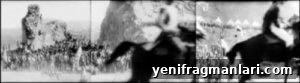
An example of Polyvision (triptych composition)
Polyvision offered several creative advantages. It allowed Gance to widen the image plane without relying on a simple split-screen, and it enabled dense visual compositions in which each of the three panels could carry distinct but related information. Rather than cutting between moments, Gance could present simultaneous actions, contrasts, or panoramic spectacle across the triptych, saturating the viewer’s field of vision while still composing each section with intention.
Film historians often remark that the wide-format spectacle achieved by Polyvision anticipated later widescreen systems such as Cinerama, which became popular in the 1950s. Although Polyvision did not become a standard practice, its conceptual ambition and its dramatic effect on audiences remain important in the history of cinematic technique.
Across Napoleon, Gance makes deliberate use of light, framing, camera movement, montage, and image layering to build a film grammar that communicates character, emotion, and narrative energy. His combination of formal rigor and imaginative risk-taking produced an influential work that continues to inform how filmmakers think about editing, perspective, and the expressive potential of the cinema.
Bibliography and further reading
Abel, Richard. French Cinema: The First Wave, 1915–1929. Princeton University Press, Princeton, 1987.
Brownlow, Kevin. “Napoleon”: Abel Gance’s Classic Film. Alfred A. Knopf, New York, 1983.