
Sting (2024)
Director: Kiah Roache-Turner
Screenwriter: Kiah Roache-Turner
Starring: Ryan Corr, Alyla Browne, Penelope Mitchell, Robyn Nevin, Noni Hazelhurst, Silvia Colloca, Danny Kim, Jermaine Fowler
A giant spider movie: a premise that immediately raises the question of originality. Writer-director Kiah Roache-Turner approaches that challenge head-on, consciously embracing genre influences while trying to carve out a slightly different tone. The film places its story inside a snowbound apartment block, a claustrophobic setting that turns the building into both a character and a battleground. Only the occasional visitor crosses the threshold—most notably Frank the Exterminator (Jermaine Fowler)—as residents struggle to cope with the unexpected and the monstrous.
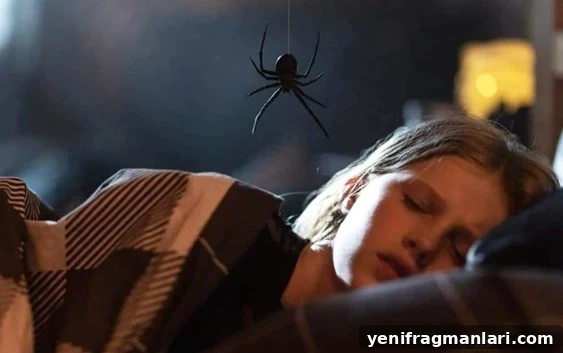
The story begins simply: a young girl named Charlotte, played memorably by Alyla Browne, finds a small spider and dubs it “Sting.” Unbeknownst to her, the creature is an alien that has just crashed into the building. While Charlotte explores the ducts and hallways like any curious child, Sting uses those same confined passages to hunt, feed and grow—becoming progressively more dangerous as it increases in size and ambition. The film wastes no time revealing the threat; from the opening moments we know exactly what we’re dealing with and why it matters, so the narrative quickly moves from mystery to confrontation.
Roache-Turner chooses to temper pure horror with a strain of dark humor and self-awareness. The movie is aware of the weight of its influences and occasionally pokes fun at itself rather than making everything relentlessly grim. That choice is a gamble: leaning too far into stylistic flourishes or comic beats could undermine the tension, while playing everything completely straight would have felt repetitive given the long history of monster films. The director balances on that edge for much of the runtime, injecting moments of levity without turning the film into a full-on comedy.
That balance largely succeeds because of the performances, especially Browne’s. Her Charlotte is at once resourceful and authentic as a twelve-year-old: brave, emotional and capable of surprising resilience. Browne navigates scenes of family tension and personal loss with believable vulnerability, then pivots to determined action when the situation demands it. Some of the film’s attempts to deepen the family drama don’t land perfectly on the page, but Browne’s presence helps carry those beats, making them feel earned rather than sentimental.
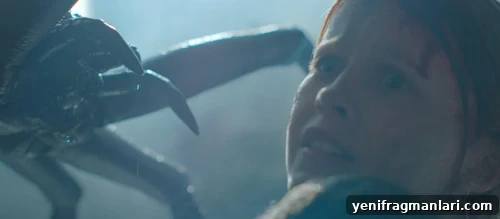
When the film commits to scares, it delivers efficiently. The rating restrictions mean it cannot linger in graphic territory, but practical and visual effects combined with effective sound design produce scenes that will make many viewers squirm. The jump scares and tense set pieces are not revolutionary, but they serve the film’s goal: to unsettle, to provoke a reaction, and to move the story forward without stalling for breath. For viewers who have a particular fear of spiders, those moments will hit harder and carry an extra charge.
There is a contemporary layer to the film as well. Set in a world still adjusting to the aftereffects of prolonged isolation, the apartment block scenario feels resonant: neighbors cut off from each other, an unseen threat that can spread without being immediately noticed, and the heightened anxiety that comes from being trapped in familiar spaces that suddenly feel hostile. The movie even toys with the idea that the creature mirrors modern media habits: a sound like a notification that tempts and distracts, and failing technology that isolates people further. These are suggestive touches rather than fully developed metaphors, but they add texture and make the film feel attuned to the moment.
Stylistically, the director allows for a few bold camera moves and inventive shots, using the confined architecture to create tension and dramatic reveal. Those choices sometimes flirt with excess—occasionally distracting from the horror they aim to amplify—but more often they enhance the mood and keep the film visually engaging. The pacing is brisk: at roughly ninety minutes, the movie doesn’t overstay its welcome and maintains momentum through a compact runtime.
The film’s weaknesses are the ways it wears its influences on its sleeve. References to classic creature-features and family-centered horror are obvious throughout, and while the movie pays homage with affection, it never quite transcends those models to become truly original. The family drama, while heartfelt, occasionally feels undercooked compared with the more tightly focused monster sequences. Still, these flaws are forgivable in a film that largely achieves what it sets out to do: provide a tense, entertaining, occasionally funny entry into the subgenre.
Overall, Sting is an enjoyable and surprisingly effective little horror film. It doesn’t reinvent the wheel, but it uses familiar parts well—solid lead performances, a committed central antagonist, and a director who understands tone and pacing. For viewers looking for a compact, character-driven creature feature with enough scares to keep them on edge, Sting delivers a satisfying ninety-minute blast of arachnophobic thrills.
Score: 17/24
Rating: 3 out of 5.