

This article was originally published to SSP Thinks Film by Sam Sewell-Peterson.
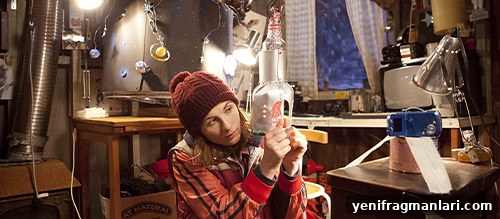
Adult Life Skills (2016)
Director: Rachel Tunnard
Screenwriter: Rachel Tunnard
Starring: Jodie Whittaker, Lorraine Ashbourne, Alice Lowe, Brett Goldstein, Ozzy Myers, Eileen Davies, Edward Hogg
Rachel Tunnard’s Adult Life Skills is a gently offbeat British independent film that handles grief with uncommon honesty and a dry, often very funny sense of observation. Centered on Anna (Jodie Whittaker), a woman who refuses to conform to expectations after a family tragedy, the film blends awkward humor with moments of genuine sorrow. For viewers searching online for an Adult Life Skills review, this film offers a quietly distinctive take on loss, recovery, and the strange ways people try to carry on.
After the sudden death of her twin brother, Anna retreats from the world and stages a peculiar kind of exile: she moves into the family garden shed. There she occupies herself with creating homemade “thumb films” — tiny, improvisational movie fragments that let her revisit the past while avoiding the future. Living with her mother (Lorraine Ashbourne) and under the watchful, impatient gaze of relatives and colleagues, Anna drifts through a life that looks like it hasn’t been made up yet. The arrival of Clint (Ozzy Myers), an imaginative young boy who is grappling with his own family crisis, becomes the catalyst for subtle change. Babysitting him opens up new emotional territory for Anna and forces her to confront the limitations of her coping mechanisms.
Tunnard’s screenplay is careful not to sentimentalize grief. Instead, it presents mourning as a messy, sometimes contradictory process. The film never reduces loss to a single emotion; it shows how grief can be stubborn, ridiculous, and oddly creative. Jodie Whittaker’s performance anchors the movie: she plays Anna as unglamorous, truthful, and stubbornly childlike in all the ways that matter. Her wardrobe of mismatched, secondhand garments and her tendency to show up at work in whatever she finds on the floor give the character a strikingly real, lived-in quality. Fans of British indie cinema will appreciate how the costume and production design contribute to the film’s authentic tone.
The comedic moments land with a wryness that complements the emotional core. Small, sharp one-liners — like an incredulous sigh at a grim workplace encounter followed by the line “Sometimes I wish the Suffragettes hadn’t bothered” — reveal the film’s appetite for absurdity. Alice Lowe’s brief but memorable role captures an irreverent British humor, while Lorraine Ashbourne’s mother showcases a volatile, blunt practicality that both maddens and grounds Anna.
Clint’s character is a highlight: the boy is both precocious and oddly wise, delivering lines that cut through self-pity with surprising clarity. When he tells Anna, “I want to be like you when I’m older… sad and angry all the time,” the statement is comic and heartbreaking at once. Later, his offhand wisdom — “The sad bit’s he’s dead, not talking about him” — helps Anna see that remembrance and conversation, not denial, are the routes back to life.
Cinematically, the film makes effective use of its West Yorkshire locations, with landscapes that feel both bleak and oddly picturesque. The movie’s modest visual style — unpretentious but thoughtfully composed — matches the working-class authenticity of its characters. The way Tunnard weaves film-within-film sequences into the narrative gives Adult Life Skills thematic richness: the homemade movies act as a shelter, a memorial, and at times a barrier to moving forward. That layered approach gives the film emotional resonance without resorting to melodrama.
As a writer-director, Rachel Tunnard demonstrates a clear knack for blending humor and pain, and the film’s unfussy aesthetic keeps attention on character and performance. For viewers who appreciate British independent films that tackle serious subjects with a light touch and sincere heart, this is a work worth discovering. The film respects the complexity of grieving without flattening it into a lesson — instead it trusts the audience to sit with discomfort until acceptance arrives.
Ultimately, Adult Life Skills is an intimate, unvarnished story about how people survive loss and, slowly, find ways to live fully again. It doesn’t offer tidy answers, but it gives a humane portrait of recovery: small acts of care, awkward conversations, and the curious power of creativity can all become part of healing. Jodie Whittaker’s performance, the film’s dry humor, and Tunnard’s empathetic direction make this a memorable entry in contemporary British indie cinema.
20/24