
Raya and the Last Dragon (2021)
Directors: Don Hall, Carlos López Estrada, Paul Briggs, John Ripa
Screenwriters: Qui Nguyen, Adele Lim
Starring: Kelly Marie Tran, Awkwafina, Izaac Wang, Gemma Chan, Benedict Wong, Daniel Dae Kim, Sandra Oh, Alan Tudyk
Raya and the Last Dragon arrived as a refreshing original feature from Walt Disney Animation Studios at a time when large studios frequently relied on sequels, remakes, and established franchises. It stands out as an original animated adventure that blends heartfelt character work, striking visual design, and energetic action into a cohesive whole. Set in the fictional land of Kumandra, the film draws clear inspiration from Southeast Asian cultures and landscapes while remaining a distinct fantasy world populated by richly imagined regions and communities.
The story centers on Raya, a young warrior tasked with reuniting a fractured land and finding the last dragon to help stop a returning threat known as the Druun. The film’s emotional core is built around themes of trust, healing, and community. Raya’s journey is not only physical — traversing varied and vividly rendered regions — but also deeply personal: learning to accept help, to forgive, and to believe in others even after betrayal. Those themes give the film emotional stakes that complement its visual spectacle.
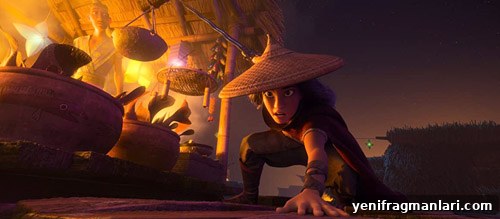
Visually, Raya is a standout. The production design emphasizes distinct environments that feel lived-in: each portion of Kumandra has its own cultural cues, color palettes, and architectural motifs. These choices deepen the sense that the characters inhabit a real, layered world rather than a generic backdrop. The animation combines sweeping action sequences with intimate character moments, and the film often balances large-scale set pieces with quieter scenes that allow emotional beats to land.
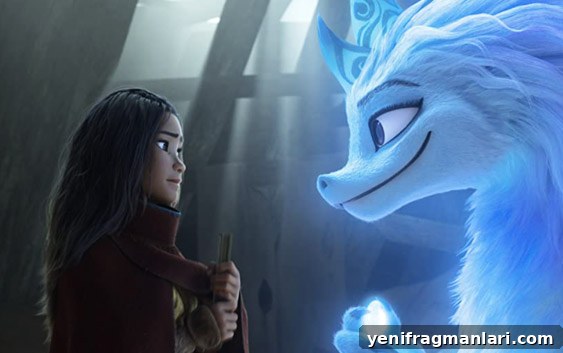
Although the film is not a musical, it still embraces the lighter touches expected in family animation. The pairing of Raya and the dragon Sisu — voiced with warmth and comic timing — creates one of the film’s most enjoyable relationships. Voice performances throughout the cast are strong and grounded. Kelly Marie Tran gives Raya a voice that feels determined and vulnerable at once, while Awkwafina brings humor and surprising emotional depth to Sisu. Supporting actors round out the ensemble with personalities that keep the group dynamic lively and engaging.
In terms of tone, Raya mixes adventure genres: elements of heroic quest tales are present alongside globe-trotting, artifact-driven action reminiscent of classic adventure films. The narrative has predictable contours common to family-oriented animated stories, so seasoned viewers may anticipate certain developments. Yet predictable structure does not mean the film lacks impact; many scenes still deliver genuine emotional resonance and exciting sequences, especially when the story leans into character-driven decisions rather than spectacle alone.
One of the film’s strengths is how it builds empathy for a diverse cast of characters. The supporting ensemble — a motley band of allies Raya meets on her quest — brings humor, heart, and different perspectives that enrich the story. Their interactions provide lighter moments and allow the film to explore trust and reconciliation from multiple angles. Directors Don Hall, Carlos López Estrada, Paul Briggs, and John Ripa guide these interactions with an eye for rhythm and chemistry, producing a group dynamic that feels authentic and warm.
Sound design and the film’s score accentuate both action and quieter emotional passages. Music and effects are used to heighten tension in combat scenes and to underscore moments of wonder when the story leans into its fantastical elements. These audio elements work in concert with the visuals, supporting the movie’s atmosphere without overwhelming it.
Overall, Raya and the Last Dragon represents a high point for the studio in recent years. It demonstrates that animated features can still surprise and move audiences through original worldbuilding, thoughtful themes, and compelling characters. While the plot occasionally follows familiar beats, the film’s strengths — rich animation, memorable performances, and a sincere emotional core — make it a rewarding experience for families and adults alike. It’s a film that invites repeat viewings and conversation about trust, community, and the importance of coming together to heal.
21/24