
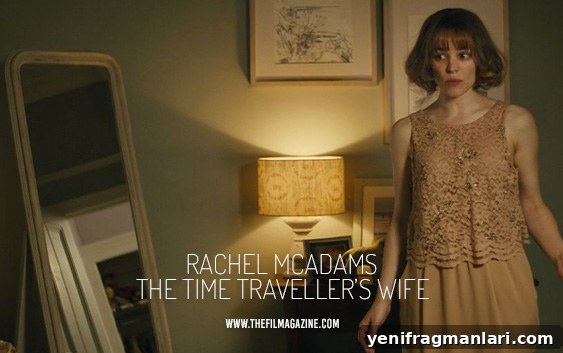
Rachel McAdams — where is your agency? And why do you keep turning up as the partner of time-travellers?
Across her career McAdams has repeatedly been cast as the love interest of men who slip through time. If you count her roles deliberately written around time travel, this pattern shows up in several high-profile films. Is she signaling something, or has she been quietly cornering a very specific niche?
McAdams is a versatile performer, able to move between sharp comedy and grounded drama. She’s played unforgettable, hard-edged characters — Regina George in Mean Girls being a prime example — and yet a noticeable portion of her screen work has involved playing women whose romantic lives are defined by men who travel through time. That recurring type raises questions about agency, representation, and the stories Hollywood chooses to tell about women in romance films.
I have a simple theory: in these stories McAdams often becomes a modern version of the Manic Pixie Dream Girl — but one that exists to be remade. When a man can travel through time and redo encounters, the woman across from him becomes a figure he can repeatedly shape until she fits his ideal. That dynamic rewards the male character’s fantasy more than it respects the woman as an autonomous person.
Example One: Inez — Midnight in Paris (2011)

In Woody Allen’s Midnight in Paris, McAdams plays Inez, described bluntly in the film as the materialistic fiancée. The narrative sidelines her while the male protagonist, Gil, slips into nostalgic fantasies of other eras. Inez’s practical dislike of Paris is framed as a personal failing — the film positions her as the obstacle to Gil’s romantic ideal rather than as a character with her own interior life or legitimate reasons for her choices.
Yes, the script gives Inez flaws — she’s unfaithful, for example — but the imbalance is telling: the man gets to roam and reinvent himself through time, while the woman is left in the present to suffer consequences. The film privileges the male protagonist’s yearning for an imagined past over the real, complicated person beside him.
Example Two: Claire Abshire / De Tamble — The Time Traveler’s Wife (2009)

The Time Traveler’s Wife hinges on a premise that foregrounds questions of consent and destiny. Henry, who involuntarily jumps through time, first encounters Claire when he is older and she is younger; she, however, has already known him for most of her life because future versions of him have visited her in earlier years. The result is a romance that can feel predetermined and imbalanced.
The film tries to give Claire agency — she initially refuses Henry’s proposal when she reaches the appropriate stage in her life — but she eventually marries a man who has already been shaping moments of her past. That structure raises difficult questions: did Henry’s repeated visits create the conditions for Claire’s love, or did some preexisting fate make her his partner? Either way, the narrative repeatedly places Claire in the role of patient partner, waiting for Henry to leave and return on his own terms.
Recommended reading: Wuthering Heights Films Ranked
Example Three: Mary — About Time (2013)
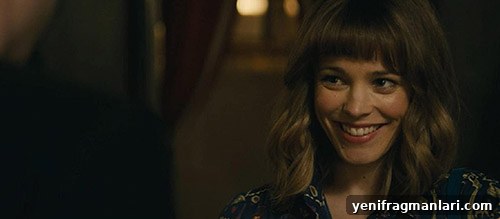
In About Time, McAdams plays Mary, a character whose existence in the story is largely shaped by the protagonist Tim’s repeated manoeuvres through time. The film opens with an awkward meet-cute — and then Tim rewinds and reconstructs their first encounters until the version he wants exists. He remembers details Mary once revealed in interactions he later engineers, and uses those memories to manipulate their encounters. That process turns courtship into a kind of performance Tim calibrates for maximum success.
There are striking problems with that dynamic. Tim controls events and edits moments to suit his preferences; Mary remains unaware that the timeline she experiences has been tampered with. The film treats her more like a character in a game being optimized than a full person with independent experience. The implication is uncomfortable: if a man can alter first impressions and intimate encounters at will, he can effectively craft the partner he desires without her consent to those alterations.
Recommended reading: Cinema’s Biggest F**bois
Across these three films a pattern emerges. McAdams is repeatedly cast as the charming, attractive love interest who becomes the emotional centre of a man’s time-bending journey — but in practice those roles often limit her independence. The male characters travel, change, and correct themselves; the women wait, adapt, forgive, and absorb consequences. That dynamic both satisfies a romantic fantasy — the idea of a love so central the universe rearranges itself — and elides questions of real partnership, consent, and female agency.
Why an actor of McAdams’ range accepts these parts is not something we can know from the films alone. What we can observe is how these stories speak to broader cinematic tendencies: they recycle a particular kind of romantic fantasy in which men are given narrative mobility and women are asked to be the stable object of desire. Those films remain enjoyable to many viewers, but they also merit a closer look when it comes to how they represent relationships and the people inside them.
Ultimately, Rachel McAdams is talented enough to play many kinds of roles. These recurring time-travel romances reveal more about the stories Hollywood keeps repeating than they do about her abilities. If audiences want richer, more equitable depictions of love, the next round of time-travel stories could give female characters the same freedom to move, change, and shape their own destinies.