
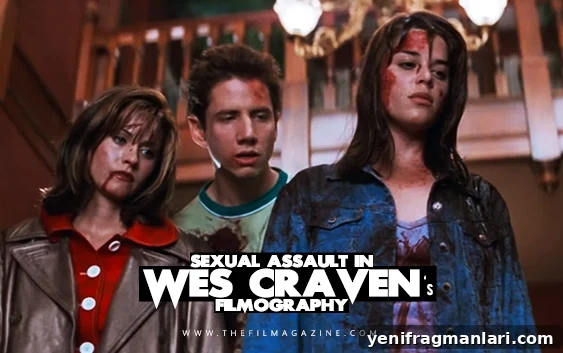
Sexual violence appears repeatedly across horror cinema, from Rosemary’s drugged impregnation in Rosemary’s Baby to the killer stalking sorority girls in Black Christmas. The slasher subgenre in particular is built around sexualised violence: a male villain stalks a group of young people, often women, and only one—often called the “final girl”—survives. She endures the worst of the attack, suffering physical and psychological harm, and ultimately fights back. Representations of sexual violence in horror have been sharply contested: critics call them exploitative or misogynistic, while others argue they can be empowering or emotionally cathartic. Like any depiction of trauma, these stories can harm or help. Few filmmakers grappled with this tension more persistently than Wes Craven, one of modern horror’s defining figures. From 1970s exploitation to postmodern deconstruction, Craven’s films repeatedly confront sexual violence and its implications.
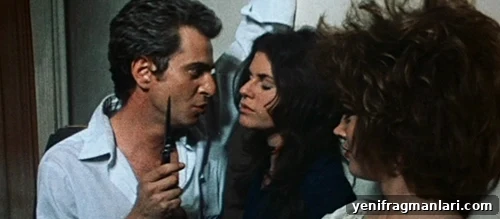
Craven’s career began in 1972 with the notorious exploitation film The Last House on the Left, which follows two suburban teenagers, Mari and Phyllis, who are abducted by a band of criminals during a night out. The girls are brutalised, raped, humiliated and murdered; the film then follows Mari’s parents as they take revenge on the perpetrators. Even now, the film is a punishing, uncomfortable watch. It reflects the anxieties of its era—particularly middle-class fears of urban violence—but it also establishes Craven’s long-running engagement with sexual violence. In this early work, rape is presented as the ultimate fear for women, equated with annihilation. Yet Mari and Phyllis are portrayed mainly as objects of pity rather than fully realised characters: their deaths occur early, shifting viewer identification to the avengers and extinguishing complex discussion of the assault itself.
Throughout the 1970s and early 1980s, sexual violence appears in Craven’s films but often lacks nuance. In The Hills Have Eyes, for example, an idealised all-American family confronts a violent, cannibalistic clan in the desert; the young daughter Brenda is raped by a member of the rival family. The scene draws on fear of the “other” and relies on visual cues—such as the unusual appearance of the attacker—to create disgust and horror. That approach undercuts the film’s attempt to equalise the brutalities of both sides and turns sexual violence into shock value rather than a subject to be examined with depth. Similarly, in the religious horror Deadly Blessing, an implied sexual threat—symbolised by a snake slipping into a woman’s bath—conveys an incubus-like menace without exploring the emotional consequences. These early films often treat sexual assault as set dressing for shock rather than as an experience with real psychological aftermath.
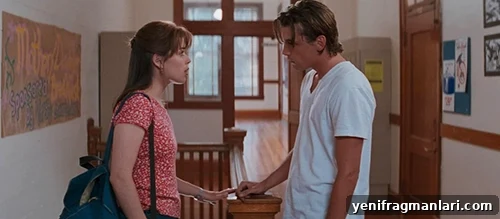
Craven’s representation of sexual violence evolves most clearly in Scream, a film that both critiques and revitalises the slasher genre. Released later in his career, Scream acknowledges the genre’s patterns and interrogates the relationship between sex, gender and violence. The story follows Sidney Prescott, who is still reeling from her mother’s rape and murder a year earlier. When a new masked killer targets Sidney and her classmates, the film forces her to revisit that trauma while surviving present threats. Crucially, Scream reframes sexual violence: the threat is not an anonymous monstrous “other,” but people Sidney trusts—most shockingly, her boyfriend Billy Loomis. The film literalises the genre’s familiar rule—that sexual activity invites punishment—by showing how a manipulative partner weaponises intimacy to control and hurt.
Unlike Craven’s earlier, more graphic depictions, Scream focuses on emotional truth. Billy’s manipulation—pressuring Sidney into sex, masking his disdain as affection—captures the slow, corrosive way abuse can take root in an intimate relationship. The film centres Sidney’s perspective, making the audience feel the betrayal and the horror of discovering someone trusted is capable of such calculated cruelty. That emotional focus makes the violence more affecting than any gratuitous depiction: the terror lies in the violation of trust and the realisation that the person you loved may have used you.
Craven continued to explore these dynamics in the 2005 thriller Red Eye. The film narrows its scope to the claustrophobic space of an airplane, where hotel manager Lisa encounters Jack Ripner, a charming stranger who reveals himself to be an assassin and coerces her into aiding a political murder by threatening her father. Red Eye uses the settings and interactions as an extended metaphor for sexual coercion. There is no explicit sexual assault on-screen, but the film makes the power imbalance and menace unmistakable: Jack’s seduction, his physical intimidation in a confined bathroom, and the way he exploits his perceived protection all mirror the tactics of sexual abusers. Lisa’s terror derives from the realization that she is trapped with someone who poses a sexually charged threat and from the loss of agency that accompanies that knowledge.
Both Scream and Red Eye are notable not simply for being less explicit, but for engaging with the lived realities of women in ways Craven’s earlier films largely did not. Billy and Jack are not caricatures; they present as ordinary, attractive, even caring men who gradually reveal misogyny and contempt. That shift matters. In real life, perpetrators of sexual violence are often familiar figures—partners, friends, colleagues—whose public demeanour conceals abusive tendencies. Craven’s later films emphasise that the threat is often intimate and ambiguous, not monstrous and distant. They probe the complex emotional responses victims can experience: fear, shame, confusion, lingering affection, and the struggle to reclaim agency.

That complexity makes these films uncomfortable but also more honest. Victims can feel conflicted about abusers they once loved; attraction and anger can coexist. By keeping the audience aligned with protagonists like Sidney and Lisa—by delaying the reveal of the abuser’s true nature—Craven gives viewers space to experience those conflicting emotions. The mixed responses audiences have to characters like Billy and Jack—ranging from fascination to revulsion—reflect how complicated and messy real reactions to abuse can be. This ambiguity is challenging but necessary: the most chilling moment is often not the physical attack itself, but the recognition that the person you trusted is capable of harming you.
Watching Craven’s early films can feel exploitative because they often treat sexual violence as sensational spectacle. By contrast, Scream and Red Eye aim to understand fear—its sources and its emotional fallout—and in doing so, they become more genuinely terrifying. They show how sexual violence can strip away control and dignity, but also how survivors can reclaim agency. Rather than equating rape with inevitable doom, these later films allow their protagonists to survive, heal and assert themselves. In that sense, Craven’s later work moves horror toward a more thoughtful engagement with real trauma, offering both catharsis and a deeper reflection on the relationship between misogyny, intimacy and violence.
Written by Isy Santini
You can support Isy Santini in the following places:
X (Twitter): @dogsydni
Letterboxd: /sydnisan
Medium: @isysantini