The Godfather (1972)
Director: Francis Ford Coppola
Screenwriter: Mario Puzo, Francis Ford Coppola
Starring: Marlon Brando, Al Pacino, James Caan, Robert Duvall, Lenny Montana
The Godfather stands as one of the most influential films in American cinema. Released in 1972, Francis Ford Coppola’s adaptation of Mario Puzo’s novel achieved both critical acclaim and box office success, including three Academy Awards at the 45th Oscars, among them Best Picture. The film follows the Corleone family, a New York crime dynasty rooted in Sicilian tradition, and charts the tragic transformation of Michael Corleone from an outsider and war veteran into the ruthless head of the family.
The production of The Godfather was far from straightforward. Coppola, already an emerging auteur, brought a clear personal vision to the project — co-writing the screenplay with Mario Puzo, persuading Marlon Brando to join the cast as Vito Corleone, and involving members of his own family in the production. These choices gave the film a distinct intimacy and depth. At the same time, Coppola clashed with studio executives at Paramount and faced limitations common for filmmakers transitioning from more independent work. Despite these tensions and compromises, the finished film remains a masterful blend of storytelling, character study, and cinematic craft. Its success also enabled Coppola greater creative freedom for subsequent work, notably allowing him to shape The Godfather Part II with fewer constraints.
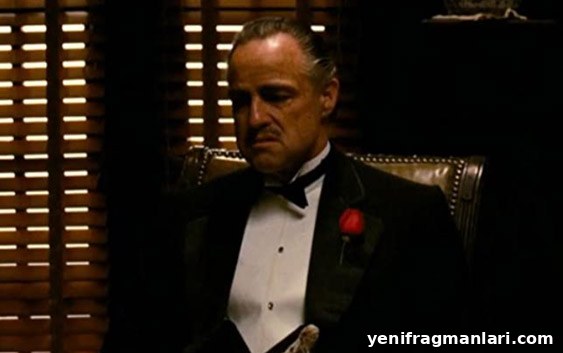
Marlon Brando’s performance as Vito Corleone remains a defining aspect of the film. He won the Academy Award for Best Actor for the role but famously declined the statuette, sending Sacheen Littlefeather to speak on issues affecting Native Americans. Brando’s portrayal is multifaceted: at once a calculating and feared mob boss, a tender family patriarch, and a man who commands respect in his community. Early scenes—particularly those set during the wedding that opens the film—establish Vito’s dual nature: the loving family figure and the unforgiving criminal leader who surrounds himself with loyal enforcers like Luca Brasi (Lenny Montana).
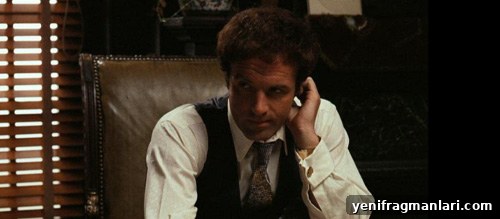
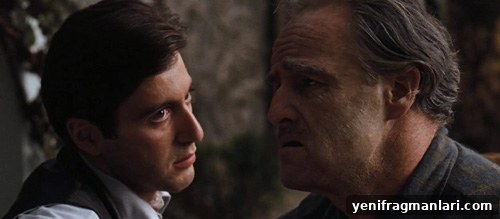
Al Pacino, James Caan, and Robert Duvall delivered performances that earned each a Best Supporting Actor nomination. Pacino’s Michael is central to the film’s emotional arc. Initially determined to remain uninvolved in his family’s illegal operations, Michael is gradually drawn into the world he once rejected. His decisive action when his father is threatened—relocating Vito’s hospital bed and arranging protection—marks the moment his fate begins to change. Robert Duvall’s Tom Hagen functions as the family’s consigliere, negotiating favors and protecting the family’s interests, famously handling an extortion attempt involving a film producer. James Caan’s Sonny is the impulsive eldest son, a volatile force whose temper and recklessness ultimately lead to a violent end at a toll booth—one of the story’s most brutal and consequential moments.
The film’s depiction of violence is integral to its impact. Coppola uses violence not merely for shock, but as a means to reveal character and consequence. Moments of brutality are balanced with quiet, intimate scenes that flesh out the human cost of the Corleones’ world. Even lines that have become iconic for their dark humor, such as “leave the gun; take the cannoli,” operate within a context of loss, loyalty, and moral compromise.
Female characters in The Godfather are relatively limited in screen time and agency, often positioned at the margins of the narrative. They suggest archetypal roles more than fully developed characters, reflecting the patriarchal environment central to the film’s themes. This imbalance would be somewhat addressed in the sequel, where Diane Keaton’s Kay develops greater visibility and agency in relation to Michael.
Today, The Godfather retains its stature not only because of its storytelling and performances, but also for its historical significance in American film. It helped bring auteur-driven filmmaking into the mainstream and shaped how Hollywood could embrace director-led projects. Coppola’s personal imprint on the film—his insistence on character detail, his collaboration on the script, and his casting choices—made it a landmark achievement. The film continues to influence filmmakers and remains an essential reference point in discussions of cinematic power, family, and morality.
21/24